
Malcolm I of Scotland (c.897–954)
Malcolm I was King of the Scots from 943 to 954. Son of Donald II, he succeeded Constantine II and continued the early medieval House of Alpin during a period of consolidation after the Viking era.
Overview
Malcolm I (Gaelic: Máel Coluim mac Domnaill), born around 897 and died 3 December 954, was King of the Scots from 943 until his death. He belonged to the early medieval dynasty often called the House of Alpin and took the throne after the long reign of his kinsman Constantine II. Contemporary records of his life are sparse; most information comes from surviving chronicles and annals compiled in Ireland and Scotland.
Image gallery
3 Images
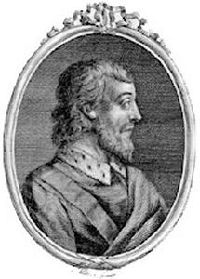

Background and accession
Malcolm was a son of Donald II, an earlier king of the Scots, and thus part of the royal kin-group that traced authority back to Kenneth MacAlpin (traditionally dated to 843). He became king when Constantine II, his first cousin once removed, renounced the throne and retired to a religious life. The transition continued a line of kingship that, in medieval sources, is often presented as a roughly continuous royal succession for about a century.
Reign and activities
Surviving sources attribute few specific acts to Malcolm, but his decade on the throne fits into a period of recovery and consolidation after repeated Viking incursions and shifting power among Scots, Britons, and Norse settlers. Kings of this era typically led military expeditions, negotiated with neighbouring polities such as the English of Northumbria and the Britons of Strathclyde, and sought to secure territory and tribute. Malcolm's reign likely involved such efforts, though detailed campaign accounts are not preserved.
Relations, warfare, and government
Like other early medieval Scottish rulers, Malcolm's authority rested on kin networks, control of key forts and settlements, and the loyalty of regional magnates. He operated in a landscape shaped by Gaelic, Pictish and Norse influences. Chronicles record intermittent conflict on Scotland's borders and occasional raids into northern England during the tenth century, reflecting fluid frontiers rather than fixed national boundaries.
Death and succession
Malcolm died on 3 December 954. Medieval sources describe his death as violent, though details vary and are not fully reliable; some note he was slain in battle or in a violent encounter. He was succeeded by his son Indulf (Illulb mac Máel Coluim), continuing the dynastic succession. For the succession and family connections see accounts of Constantine II and related annals.
Legacy and historical assessment
Modern historians treat Malcolm's reign as part of a formative century in which the kingship that became medieval Scotland consolidated its position. Because contemporary records are limited, Malcolm is less prominent than some successors, but he represents continuity of the ruling line after the era traditionally begun under Kenneth MacAlpin. His reign illustrates the fragmentary and local nature of political power in tenth‑century Britain and the reliance on later chronicles to reconstruct early Scottish history.
- Also known as Máel Coluim mac Domnaill in Gaelic.
- Ruled 943–954, succeeding Constantine II who abdicated.
- Succeeded by his son Indulf; records of actions and battles are scarce.
Related articles
Author
AlegsaOnline.com Malcolm I of Scotland (c.897–954) Leandro Alegsa
URL: https://en.alegsaonline.com/art/125729