
2 Pallas
2 Pallas is a large, primitive asteroid in the main belt, discovered in 1802. It is one of the most massive belt bodies and notable for its high orbital inclination and primitive composition.
Overview

Image gallery
9 Images


Physical characteristics
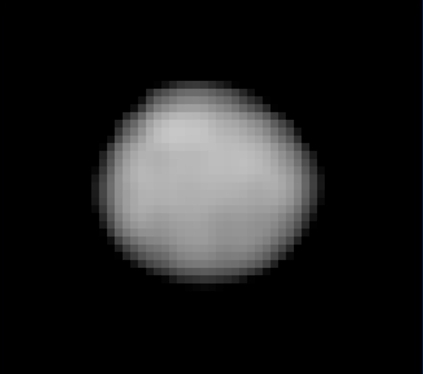
Pallas is a large, roughly spheroidal but noticeably irregular body composed of primitive, carbon-rich material. Spectrally it is classed among the darker, volatile-bearing types that preserve early solar-system materials. Its diameter makes it comparable to other major belt members, and current mass estimates attribute around seven percent of the total mass of the central asteroid belt to Pallas and a few of its neighbors combined. Its size and density indicate it has not relaxed to a perfect sphere and bears the scars of an early, violent collisional history.
Orbit and rotation
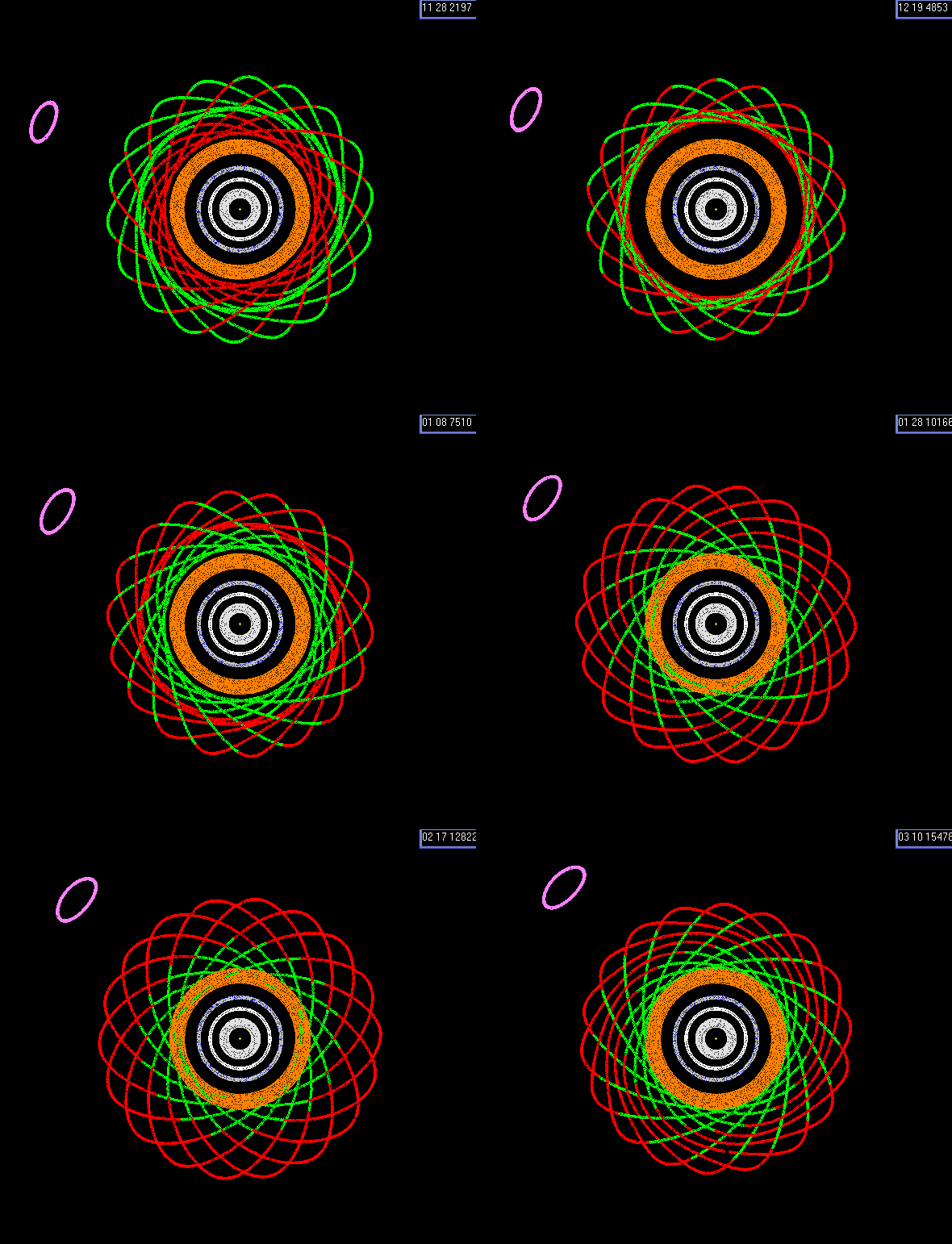
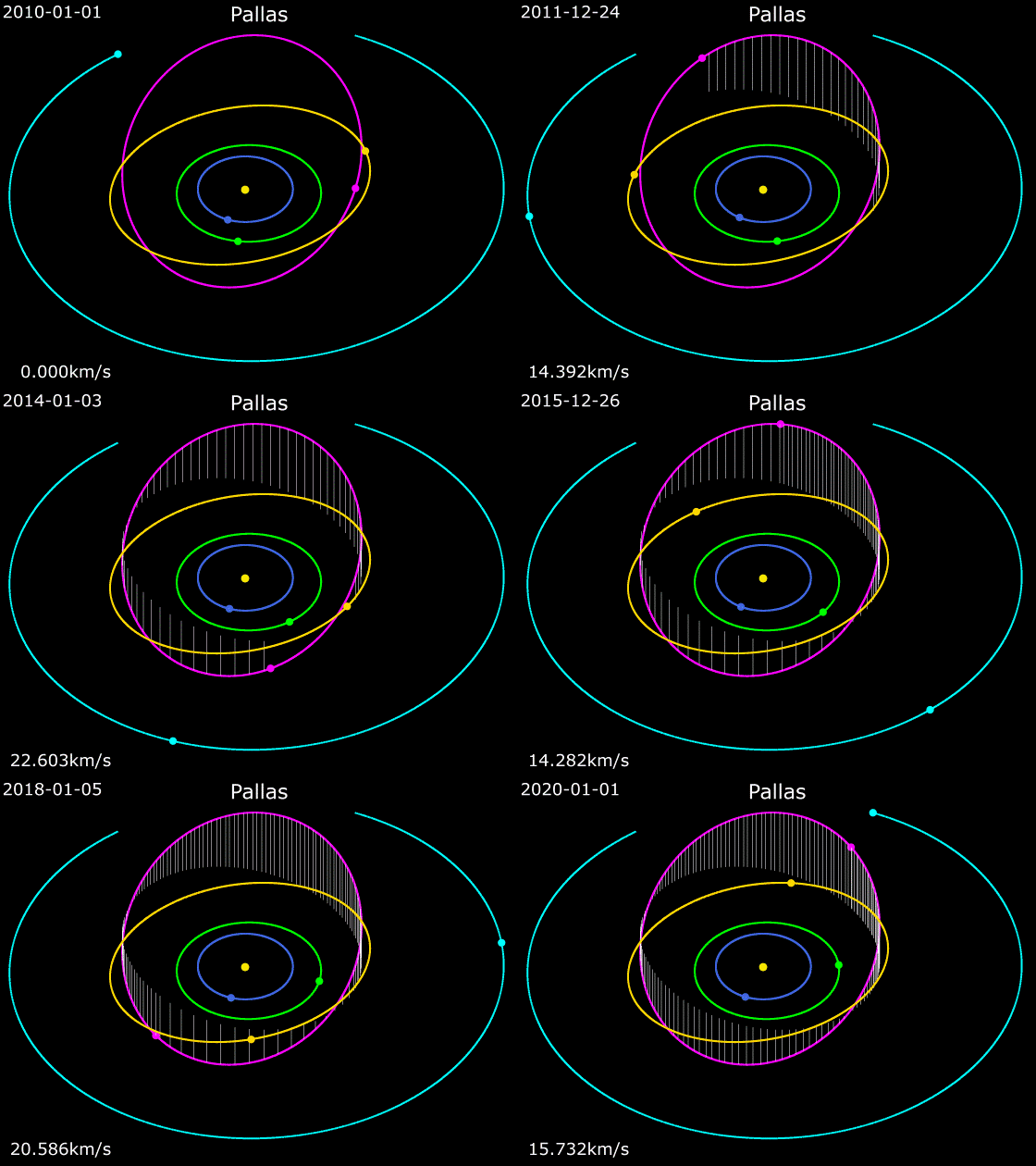
Pallas follows an orbit in the main belt but with an unusually large inclination relative to the plane of the planets. This tilted path makes its dynamics and collisional environment different from many other large belt asteroids. Its rotation period and axial orientation have been measured by telescopic observations and light-curve analysis, revealing a body whose spin and shape reflect past impacts and re-accumulation.
Discovery and historical context
The discovery of Pallas came shortly after the first recorded minor planet and contributed to the early debate over planets versus small bodies. Observers in the nineteenth century produced drawings and position measurements that established its orbit. Over time, improvements in spectroscopy and imaging refined knowledge of Pallas’s composition and surface properties.
Scientific importance and study
Pallas is of interest because it likely preserves primitive material from the era of planet formation. Studying its surface composition, structure and collisional history helps scientists trace the distribution of volatile and organic-rich material in the early Solar System. Because of its high orbital inclination, Pallas has not been visited by an interplanetary spacecraft; remote sensing from Earth and space telescopes remains the primary source of data.
Notable facts
- Second major asteroid discovered and named after a mythological figure.
- One of the most massive bodies in the main belt and a leading reservoir of primitive material.
- Distinguished by a high orbital inclination and an irregular shape that records a violent past.
Related articles
Author
AlegsaOnline.com 2 Pallas Leandro Alegsa
URL: https://en.alegsaonline.com/art/112796
Sources
- ssd.jpl.nasa.gov : "JPL Small-Body Database Browser"
- books.google.com : Dictionary of minor planet names, Volume 1
- iau-comm4.jpl.nasa.gov : "High-Precision Ephemerides of Planets—EPM and Determination of Some Astronomical Constants"
- doi.org : 10.1007/s11208-005-0033-2