
Zeppelin: history, design, uses and legacy of the rigid airship
A Zeppelin is a type of rigid dirigible airship pioneered by Count Ferdinand von Zeppelin; used for transport, reconnaissance and advertising, its heyday ended after the Hindenburg disaster.
Overview
A Zeppelin is a class of rigid dirigible — a lighter‑than‑air aircraft with a fixed internal framework that maintains the envelope's shape. Zeppelins belong to the broader family of airships, which remain aloft because they enclose a low‑density lifting gas. Unlike non‑rigid blimps, Zeppelins derive structural integrity from an internal girder system so that their outer skin does not need to be pressurized to hold form.
Image gallery
10 Images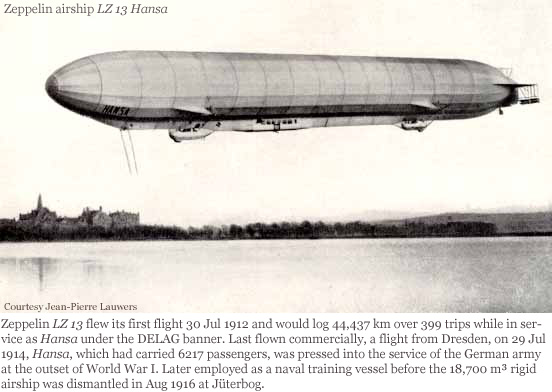



Design and main characteristics
Typical features include a rigid skeleton of metal girders, a series of internal gas cells, an external fabric covering, a control cabin, engine gondolas and control surfaces (rudders and elevators). The rigid frame allows larger sizes and more complex internal arrangements than non‑rigid types. Propulsion originally used petrol or diesel engines mounted in separate cars; modern concepts explore electric or hybrid drives for quieter, more efficient operation.
- Structure: framework of rings and longitudinal girders
- Gas cells: multiple compartments reduce the risk of total loss from a leak
- Control: aerodynamic control surfaces plus thrust vectoring in some designs
- Types: rigid (Zeppelin), semi‑rigid, and non‑rigid (blimp)
Early history and development
The rigid airship concept is most closely associated with Count Ferdinand von Zeppelin, who pushed years of experiments in the late 19th and early 20th centuries. Zeppelins first saw notable use as reconnaissance and long‑range patrol aircraft in World War I. After the war, various nations and private firms developed passenger and mail services that showcased transcontinental and transatlantic capability.
Operational use, the Hindenburg and decline
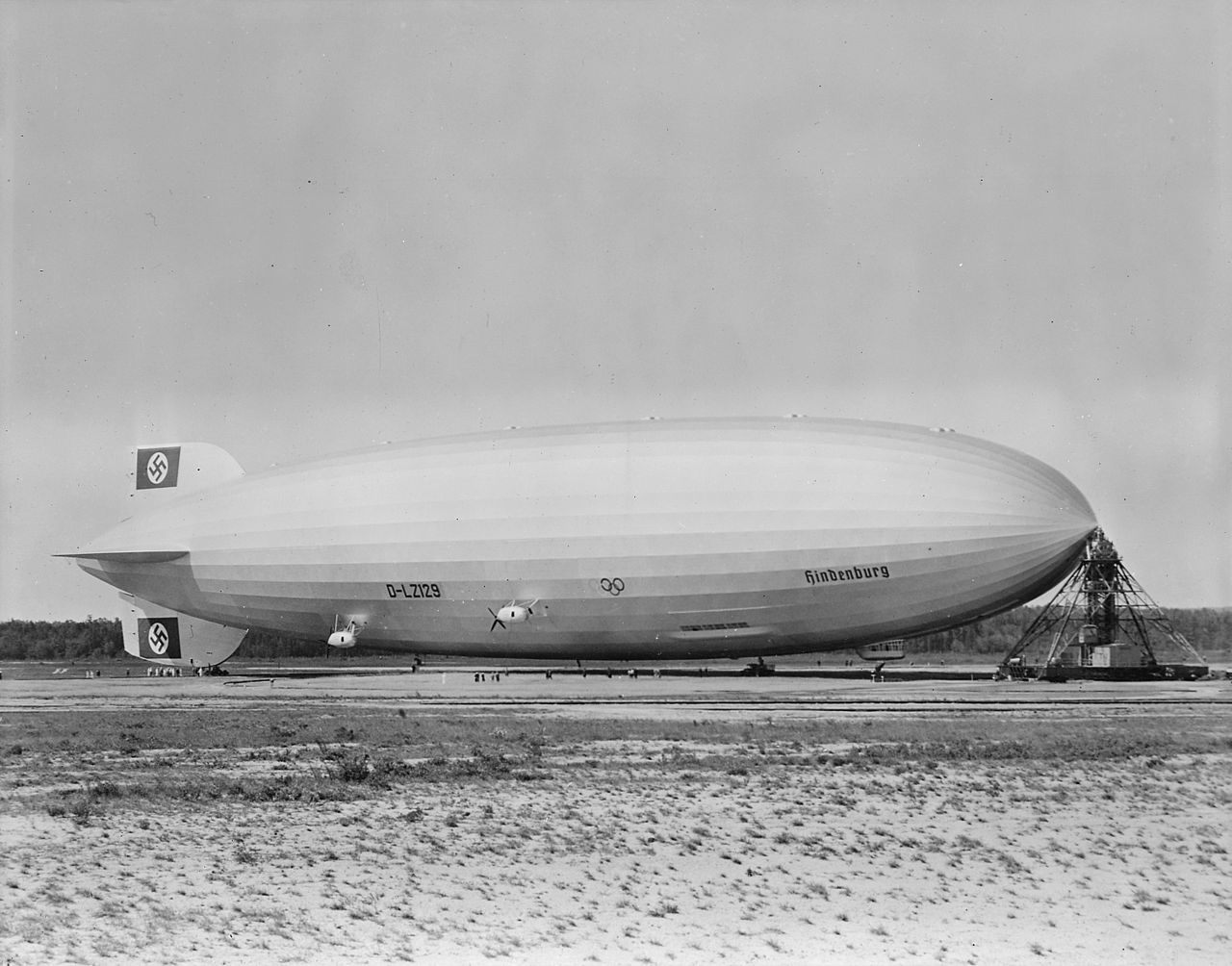
In the interwar period Zeppelins operated as luxury passenger liners on scheduled routes. The most infamous disaster involved the LZ 129 Hindenburg, which burst into flames while landing at Lakehurst on May 6, 1937. The ship had completed a Germany‑to‑New Jersey voyage when the ignition and rapid conflagration ended the era of routine passenger flights. Contributing factors included the use of hydrogen as lifting gas (helium was scarce and largely controlled by other countries) and the combustible outer materials.
Politically, lighter‑than‑air craft were used for a range of purposes: reconnaissance and bombing in wartime, and in some cases, propaganda — notably by regimes such as Nazi Germany in the 1930s — where aerial pageantry and aerial advertising served public relations goals. Remaining German rigid airships were phased out or dismantled early in World War II, and resources were reallocated to other industrial needs.
Modern use, revival and proposals
Interest in rigid and semi‑rigid airships has persisted. Modern models emphasize safety improvements, use inert helium rather than hydrogen, employ more fire‑resistant materials, and test new propulsion and control systems. The concept has been revisited for niche roles: low‑noise observation platforms, long‑endurance scientific and communications stations, heavy‑lift logistics to remote sites, and sightseeing flights. Tourist and promotional uses remain familiar: companies operate large airships for aerial advertising and passenger rides.
- Examples of contemporary activity include hybrid aircraft projects and the revival of semi‑rigid designs such as the Zeppelin NT family.
- Proposed uses include cargo delivery to areas without infrastructure and atmospheric monitoring.
Notable distinctions and legacy
Zeppelins are often conflated with all rigid airships, and the name has become a generic label in many languages. Key distinctions to remember: Zeppelins are rigid dirigibles; blimps are non‑rigid; semi‑rigid types combine features of both. The Hindenburg disaster changed public perception and regulatory practice, shifting commercial aviation investment toward heavier‑than‑air aircraft. Nevertheless, the Zeppelin legacy endures in engineering, public imagination and in periodic technological revivals.
For further reading on technical summaries, operational history and modern developments see related resources: design summaries, transatlantic services, accident analyses, airship museums and collections, and contemporary reports on tourism and advertising uses.
Related articles
Author
AlegsaOnline.com Zeppelin: history, design, uses and legacy of the rigid airship Leandro Alegsa
URL: https://en.alegsaonline.com/art/110518