
Airship — lighter-than-air powered aircraft
An airship is a powered, steerable lighter-than-air aircraft that remains aloft using a buoyant gas. It includes rigid, semi-rigid and non-rigid types and has roles in transport, patrol, advertising, and research.
Overview
An airship is a powered, steerable aircraft that stays airborne primarily because its envelope contains a gas less dense than the surrounding air. Unlike airplanes, which depend on forward motion and wings for lift, an airship can remain aloft while stationary. It is a type of lighter-than-air aircraft, able to carry crew, equipment or cargo within an attached gondola or cabin.
Image gallery
10 Images



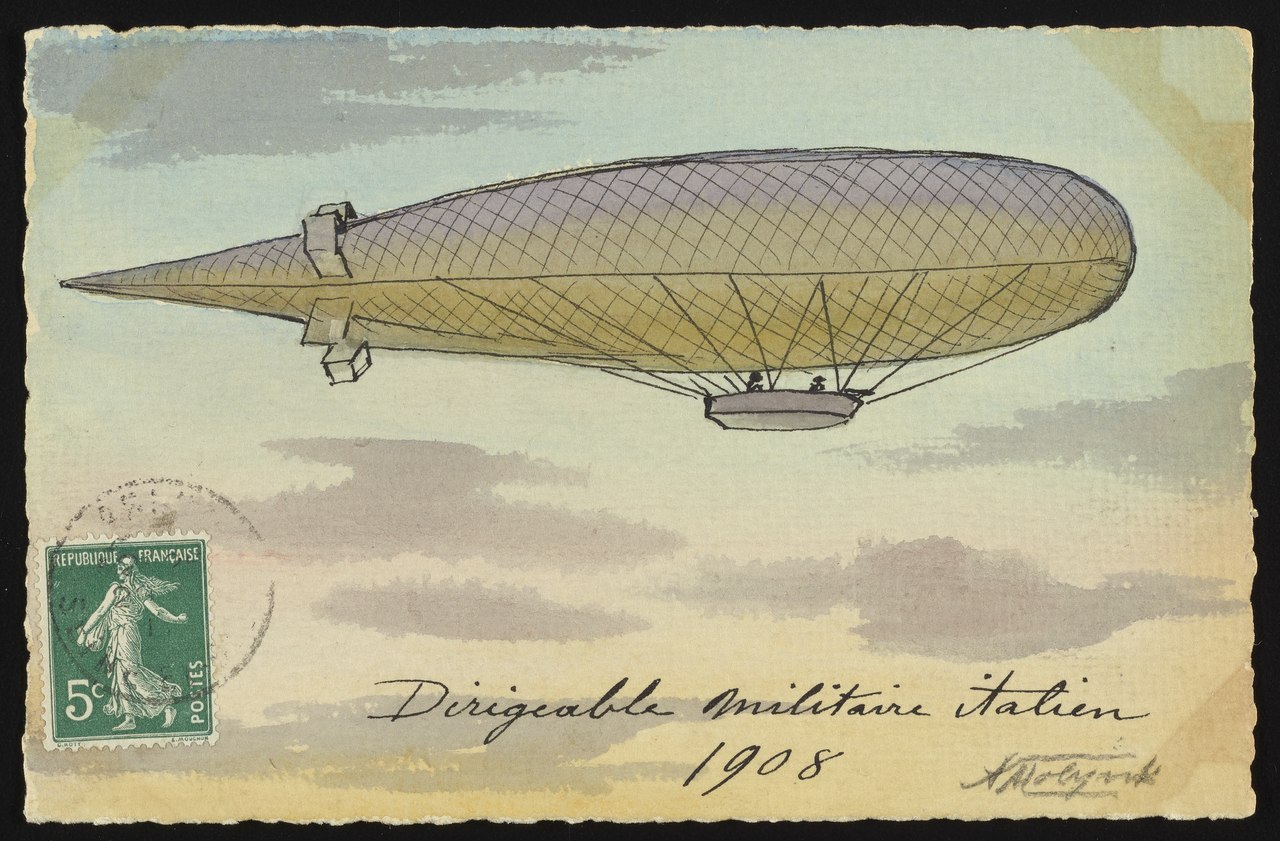

Design and main components
Most airships share a common set of parts. The large fabric or composite envelope holds the lifting gas; internal ballonets or air bags compensate for pressure and volume changes. A gondola (or control car) beneath the envelope contains the crew, payload and some systems. Engines, propellers and movable fins give thrust and directional control, while internal structure can range from flexible fabric to rigid frames. Lift commonly comes from hydrogen or, more safely, helium. Modern projects increasingly favor helium because it is non-flammable and easier to manage than hydrogen; see lifting gas discussions for more.
Types
- Rigid airships: an internal framework supports the shape and separate gas cells. Famous examples include early 20th-century designs known generically as "Zeppelins."
- Semi-rigid airships: combine a partial structure with internal pressure to retain shape.
- Non-rigid airships (blimps): rely entirely on internal gas pressure to keep the envelope inflated; they lack a fixed internal keel.
History and development
Airships evolved from free balloons in the 19th century as designers added propulsion and steering. They saw significant use for passenger travel and reconnaissance in the early 20th century. Rigid designs achieved long-range flights, but public confidence declined sharply after high-profile accidents in the 1930s, including the Hindenburg disaster, which highlighted the risks of flammable lifting gases. Military, commercial and scientific interest persisted, leading to safer helium-filled designs and later experimental revival efforts.
Uses and modern applications
Airships have been used for passenger transport, surveillance, advertising (sky-banners and camera platforms), meteorological research and cargo concepts. Their ability to hover, carry heavy loads relative to power consumption, and operate from unprepared sites makes them attractive for persistent observation, remote logistics and ecotourism. Contemporary prototypes explore long-endurance surveillance, heavy-lift cargo and low-carbon freight solutions while addressing past operational limits in speed, weather sensitivity and infrastructure needs.
Distinctions and notable facts
Airships differ from free balloons in that they have engines and control surfaces to steer and propel themselves. They are distinct from helicopters and fixed-wing aircraft by relying on buoyancy for primary lift. Regulatory oversight covers certification, helium sourcing and operational safety. For further reading on terminology and technical details, consult general aviation resources and historical summaries available at airship surveys and archived technical collections such as historical records.
Questions and answers
Q: What is an airship?
A: An airship is a lighter-than-air aircraft that floats in the sky using a lifting gas that is more lightweight than air.
Q: How does an airship stay up in the sky?
A: An airship stays up in the sky by floating like a balloon without moving as it is filled with a lifting gas that is more lightweight than air.
Q: What is the difference between an airship and an aeroplane?
A: An airship does not need to move to stay up in the sky as it is filled with a lifting gas that is more lightweight than air, whereas aeroplanes stay up in the sky by moving.
Q: What is the difference between an airship and a balloon?
A: An airship has an engine for power and a way to control its direction of movement, while a balloon does not have an engine or a way to control its direction of movement.
Q: Does an airship have an engine for power?
A: Yes, an airship has an engine for power.
Q: How does an airship control its direction of movement?
A: An airship has a way to control its direction of movement.
Q: How is an airship different from a balloon in terms of their ability to control its direction of movement?
A: An airship has a way to control its direction of movement, while a balloon does not have a way to control its direction of movement.
Tags
Related articles
Author
AlegsaOnline.com Airship — lighter-than-air powered aircraft Leandro Alegsa
URL: https://en.alegsaonline.com/art/1710