
500 Series Shinkansen
A distinctive high-speed train introduced by JR West in the late 1990s, the 500 Series Shinkansen served as a Nozomi flagship and later as an all-stations Kodama on the Sanyo Shinkansen corridor.
Overview
The 500 Series Shinkansen is a high-speed train type introduced in Japan in the late 1990s and operated by West Japan Railway Company (JR West). Conceived as a flagship train for the Nozomi services on the Tokaido and Sanyo Shinkansen corridors, it became well known for its striking, aerodynamic appearance and high cruising speed. Today the class no longer runs the top-tier Nozomi services and is used on slower, all-stations Kodama workings.
Image gallery
10 Images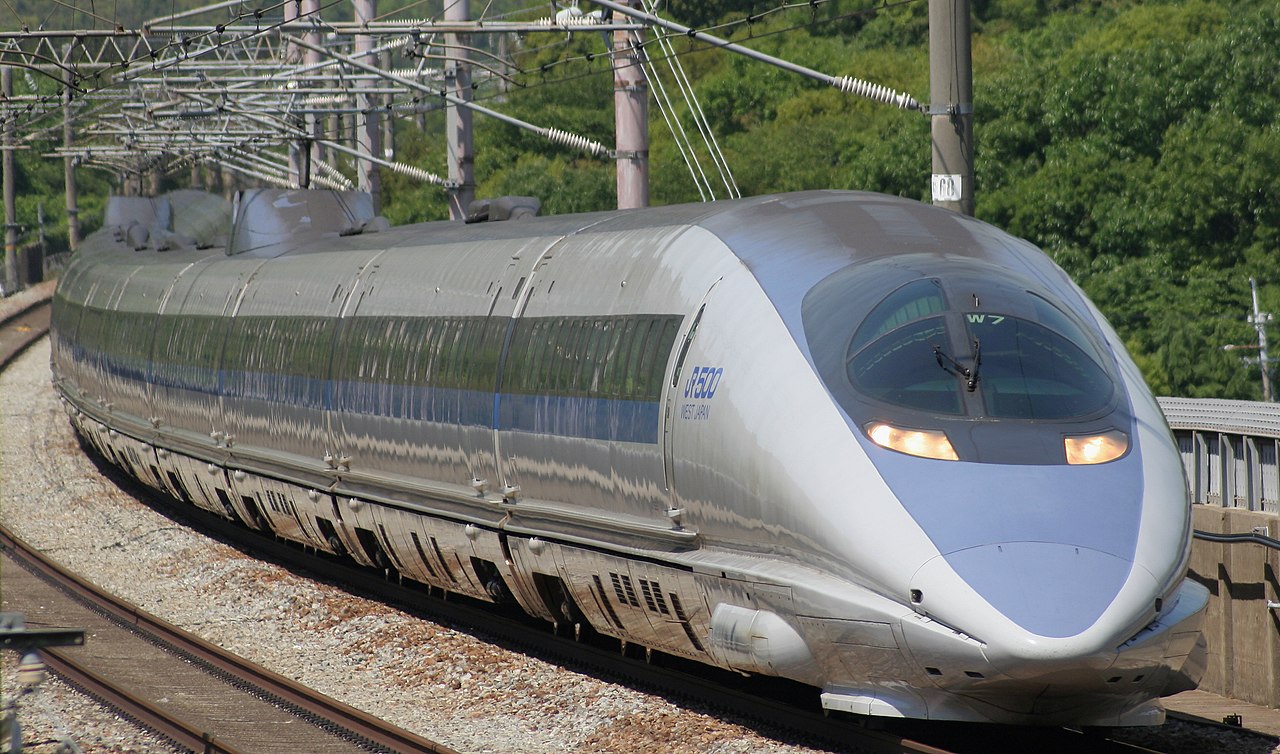


Design and technical characteristics
The 500 Series combined a futuristic, pointed nose and a low-profile body to reduce aerodynamic drag and tunnel boom. Sets were delivered as long formations intended for high-capacity, high-speed schedules. Each original set comprised 16 cars, and development emphasized both performance and passenger comfort. The trains were an expensive investment at introduction; individual sets cost on the order of several billion yen. For an overview of high-speed rail in the region see high-speed train overview.
Service history and development
Introduced to revenue service in the late 1990s, the 500 Series operated as the Nozomi flagship for more than a decade. Advances in signalling, energy efficiency and newer train types later shifted the Nozomi role to newer fleets, and the 500 Series was withdrawn from primary Nozomi duty around 2010. After that change, multiple sets were reconfigured for all-stations Kodama work on the Sanyo Shinkansen between Shin-Osaka and Hakata; some sets were shortened to better match capacity requirements. For context on Japan's rail network see Japan rail overview.
Operations and current role
As used on Kodama services, the 500 Series operates at lower average speeds than during its Nozomi era but continues to be valued for reliability and its distinctive appearance. Typical operation is concentrated on the Sanyo Shinkansen corridor; timetable and stopping patterns are adjusted to suit all-stations services. Technical and operational summaries of Shinkansen lines can be found at Shinkansen lines reference.
Legacy and notable facts
The 500 Series made an impression on public perception of modern trains: its styling influenced later high-speed designs and it remains popular among rail fans and modelers. Although only a small number of sets were built, the type demonstrated the trade-offs of extreme aerodynamic design and high development cost versus operational flexibility. Key points include:
- Introduced in the late 1990s as a Nozomi flagship.
- Originally formed as 16-car sets; delivered as a limited-production series (nine sets at introduction).
- High development and production cost—each set represented a significant investment (cost reference).
- Withdrawn from top-tier Nozomi services around 2010 and reassigned to Kodama all-stations services, with some sets shortened for new duties.
The 500 Series remains a recognizable chapter in the evolution of Japanese high-speed rail, illustrating how design ambitions, passenger expectations and operational needs intersect in long-lived rolling stock.
Related articles
Author
AlegsaOnline.com 500 Series Shinkansen Leandro Alegsa
URL: https://en.alegsaonline.com/art/112951