
Yersinia pestis: the bacterium that causes plague
Yersinia pestis is a Gram-negative bacterium that causes bubonic, septicemic and pneumonic plague; historically linked to major pandemics and still found in animal reservoirs worldwide.
Overview
Yersinia pestis is a Gram-negative, nonmotile bacterium often described as a coccobacillus that is the central pathogen behind classic plague syndromes. Identified as the infectious agent of bubonic plague, it also produces septicemic plague and pneumonic plague, three related clinical presentations that have caused repeated human mortality in a series of historical epidemics. The organism is best known for its association with the medieval Black Death, the pandemic of the mid-14th century. That event, dated roughly from 1347 to 1353, reduced the population of much of Europe by a large proportion and reshaped societies.
Image gallery
3 Images

Biology and transmission
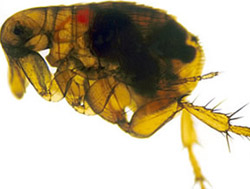
Y. pestis is a facultative intracellular pathogen that can survive inside and outside host cells. It typically appears with bipolar staining in microscopy and grows well on common laboratory media under appropriate containment. The bacterium circulates in wild rodent populations and is maintained by flea vectors. Fleas become infected after feeding on a bacteremic host; subsequent blockage of the flea's foregut and forced regurgitation increase the efficiency of transmission when the flea bites another mammal. Human cases generally result from flea bites, direct contact with infected animals, or inhalation of respiratory droplets in the case of pneumonic disease.
Clinical forms and key features
Y. pestis causes three principal clinical syndromes, each with distinct manifestations and public-health implications:
- Bubonic plague: sudden fever, painful swollen lymph nodes (buboes), and systemic illness; classically associated with flea-borne transmission.
- Septicemic plague: bloodstream infection that can lead to disseminated intravascular coagulation, shock and tissue necrosis.
- Pneumonic plague: lung infection that may be primary (inhaled) or secondary (spread from bloodstream); it is the most rapidly progressive and can be transmitted person-to-person by droplets.
Timely antibiotic treatment (for example, aminoglycosides, tetracyclines or fluoroquinolones) markedly reduces mortality; without therapy, fatality rates are high, especially for pneumonic and septicemic forms. Diagnosis uses culture, serology and molecular methods, and ancient DNA studies have helped detect Y. pestis in archaeological remains.
History, discovery and debates
The bacterium was first isolated in 1894 by the physician Alexandre Yersin during an outbreak in Hong Kong, while he was associated with the Pasteur Institute; it was originally named Pasteurella pestis and later reclassified as Yersinia pestis in the 20th century. During the late 19th and early 20th centuries multiple pandemics, including the so-called Third Pandemic that began in Asia, spread the disease to many regions. Modern analyses using DNA recovered from human remains—including material extracted from teeth—have detected Y. pestis genetic signatures in victims of past outbreaks, supporting its involvement in at least some historical plagues. However, historians and epidemiologists continue to debate whether Y. pestis alone accounts for the rapid spread and pattern of mortality in all medieval pandemics.
Modern occurrence, control and notable facts
Although widespread pandemics are no longer common, Y. pestis persists in enzootic cycles in many parts of the world and causes sporadic human cases. Public-health control relies on surveillance of animal reservoirs, vector control (reducing flea populations), rapid case recognition, antibiotic therapy, and isolation of contagious pneumonic cases. Laboratories working with the organism follow high-level biosafety measures because of its historical impact and potential as an agent of biological concern. There are multiple known biovars and genetic lineages of Y. pestis, reflecting its evolutionary history and geographic spread. Current research continues into vaccines, improved diagnostics and the pathogen's interaction with hosts and vectors.
For further reading on microbiology, clinical management and historical studies related to Y. pestis, see specialized references and public-health resources: microbiology overview, pathogenesis summaries, clinical disease, septicemic disease details, epidemic history, Black Death studies, 14th-century timelines, pandemic chronologies, biographical note on Yersin, Hong Kong outbreaks, 1894 accounts, ancient DNA research and archaeological analyses.
Related articles
Author
AlegsaOnline.com Yersinia pestis: the bacterium that causes plague Leandro Alegsa
URL: https://en.alegsaonline.com/art/109806
Sources
- ncbi.nlm.nih.gov : Pasteurella, Yersinia, and Francisella. In: Baron's Medical Microbiology (Baron S et al., eds.)
- pubmed.ncbi.nlm.nih.gov : 7959865
- pnas.org : "Detection of 400-year-old Yersinia pestis DNA in human dental pulp: An approach to the diagnosis of ancient septicemia"
- pubmed.ncbi.nlm.nih.gov : 9770538
- pubmed.ncbi.nlm.nih.gov : 11825781