
Wild goat (Capra aegagrus)
A wild caprine native to parts of Europe and Asia, ancestor of the domestic goat; adapted to rocky habitats and notable for its horns, climbing ability, and cultural importance.
The wild goat (Capra aegagrus) is a species in the Caprinae subfamily, closely related to other wild caprines and recognized as the main wild ancestor of the domestic goat. Its range extends across parts of Europe and Asia, including areas of Europe, central Asia, the Middle East and regions of Asia Minor. As a free-living mammal, the wild goat does not depend on humans for food, shelter or medical care and occupies a variety of dry, rocky and mountainous landscapes.
Image gallery
4 Images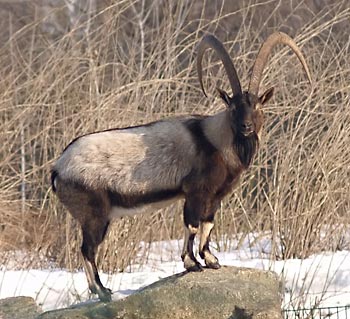


Characteristics
Wild goats are medium-sized ungulates with sturdy bodies and well-developed hooves adapted for steep, uneven terrain. They typically show sexual dimorphism: males are bulkier and carry larger, recurved horns while females have smaller, more slender horns. Coat color varies by population, from sandy brown to gray and may change with the seasons. Their dentition and digestive system are adapted to a largely herbivorous diet of grasses, shrubs and woody plants.
Habitat and behaviour
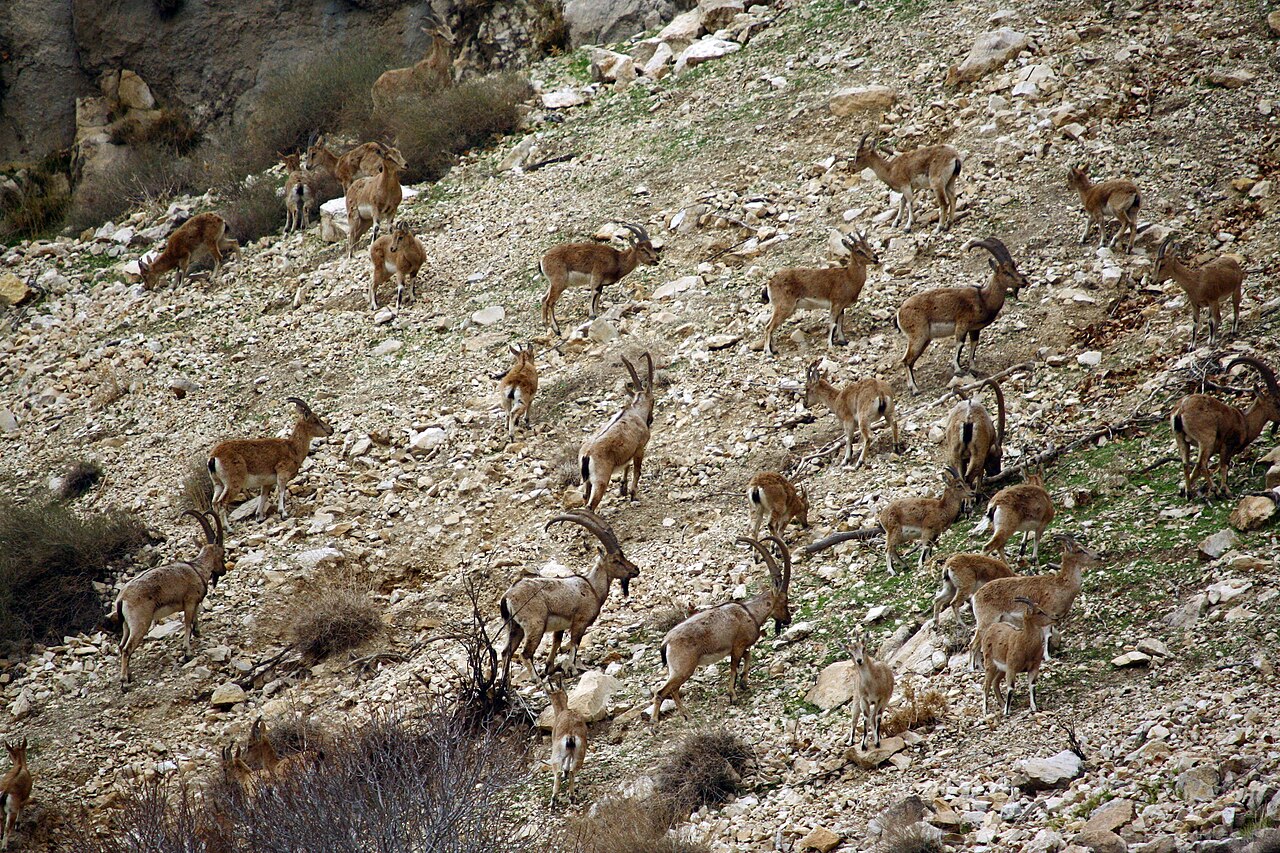
These animals favor rocky hillsides, cliffs and open slopes where their agility offers protection from predators. Wild goats form social groups that differ by sex and age—females and young often gather in herds while adult males may be solitary or form bachelor groups outside the mating season. Breeding occurs seasonally; males compete for access to females during the rut. Foraging patterns depend on local vegetation and climate, and populations may migrate short distances to find food or shelter.
Relationship with humans and history
Archaeological and genetic evidence indicates that populations of wild goats were among the principal ancestors of the domestic goat (domestic goat), with domestication events occurring in the Neolithic period around the time agriculture spread. Throughout history wild goats have been hunted for meat and hides and have appeared in local folklore and art. Their adaptability contributed to the successful domestication and global spread of goats as livestock.
Conservation, uses and notable facts
Wild goat populations face threats from habitat loss, hunting pressure, disease transmission and hybridization with feral or free-ranging domestic goats. Conservation measures commonly include protected areas, hunting regulation and efforts to limit interbreeding with domestic animals. Ecologically they play roles in shaping plant communities by selective browsing. Taxonomically they are placed within the broader Caprinae group, and they remain a focus for studies of domestication, adaptation to rugged environments, and human-wildlife interactions.
For further reading on regional populations and management practices, consult specialized sources and regional conservation assessments: for example, habitats in Europe and central Asia differ markedly from those in the Middle East, affecting local behaviour and conservation strategies. More general information about caprine taxonomy and domestication can be found via resources linked to domestic goat studies.
Related articles
Author
AlegsaOnline.com Wild goat (Capra aegagrus) Leandro Alegsa
URL: https://en.alegsaonline.com/art/108065