
Wild turkey (Meleagris gallopavo)
Large North American game bird, the wild turkey is a forest-adapted species ancestral to the domestic turkey; notable for its social behavior, distinctive plumage, and habitat across much of the U.S. and southern Canada.
Overview
The wild turkey (Meleagris gallopavo) is the most widespread of the two turkey species and is native to North America. It is a large ground bird valued by hunters, wildlife watchers, and as the progenitor of the domesticated turkey. Wild turkeys occur naturally across much of the United States and into southern Canada, and they have been reintroduced into areas where numbers once declined.
Image gallery
10 Images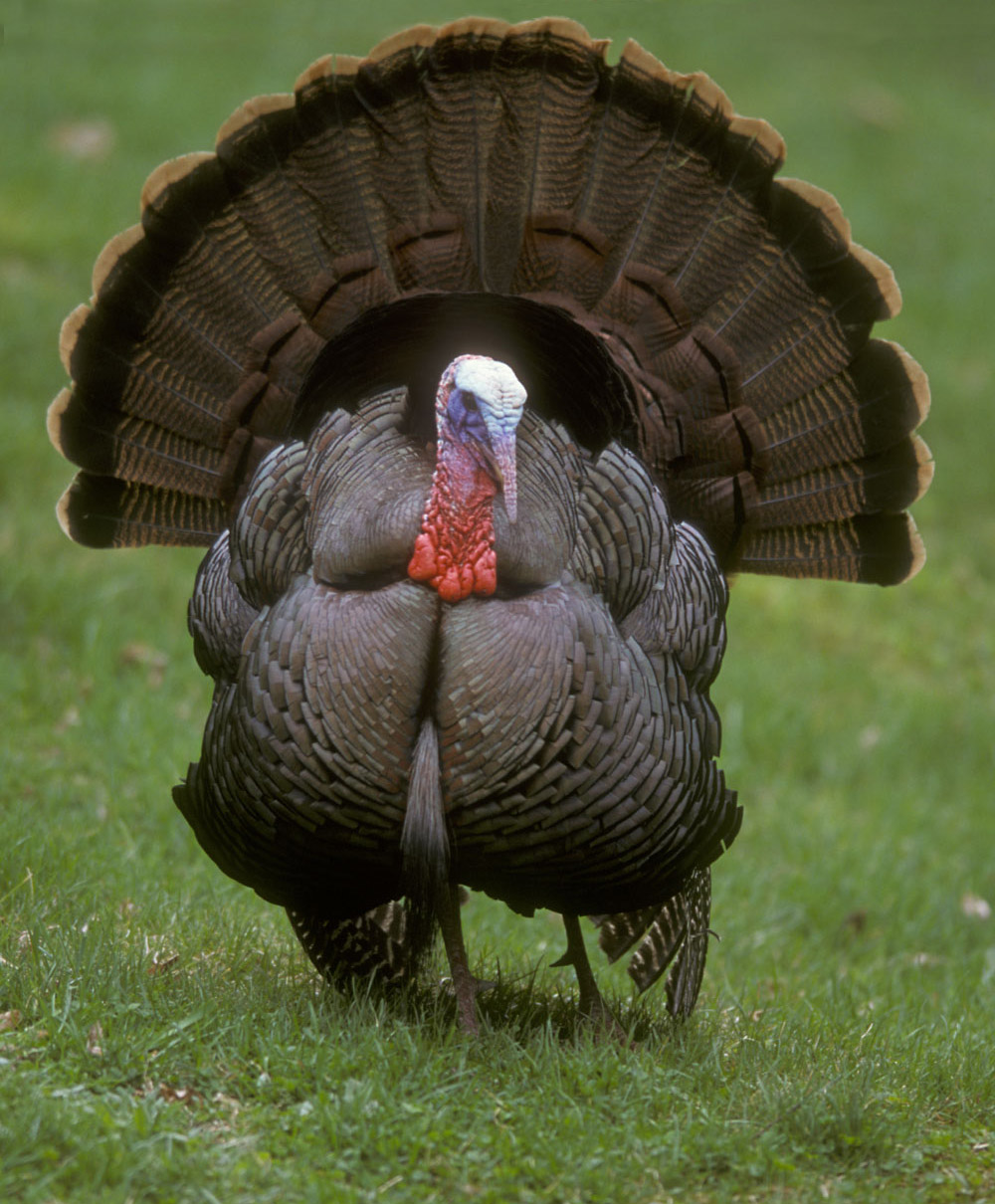





Physical characteristics
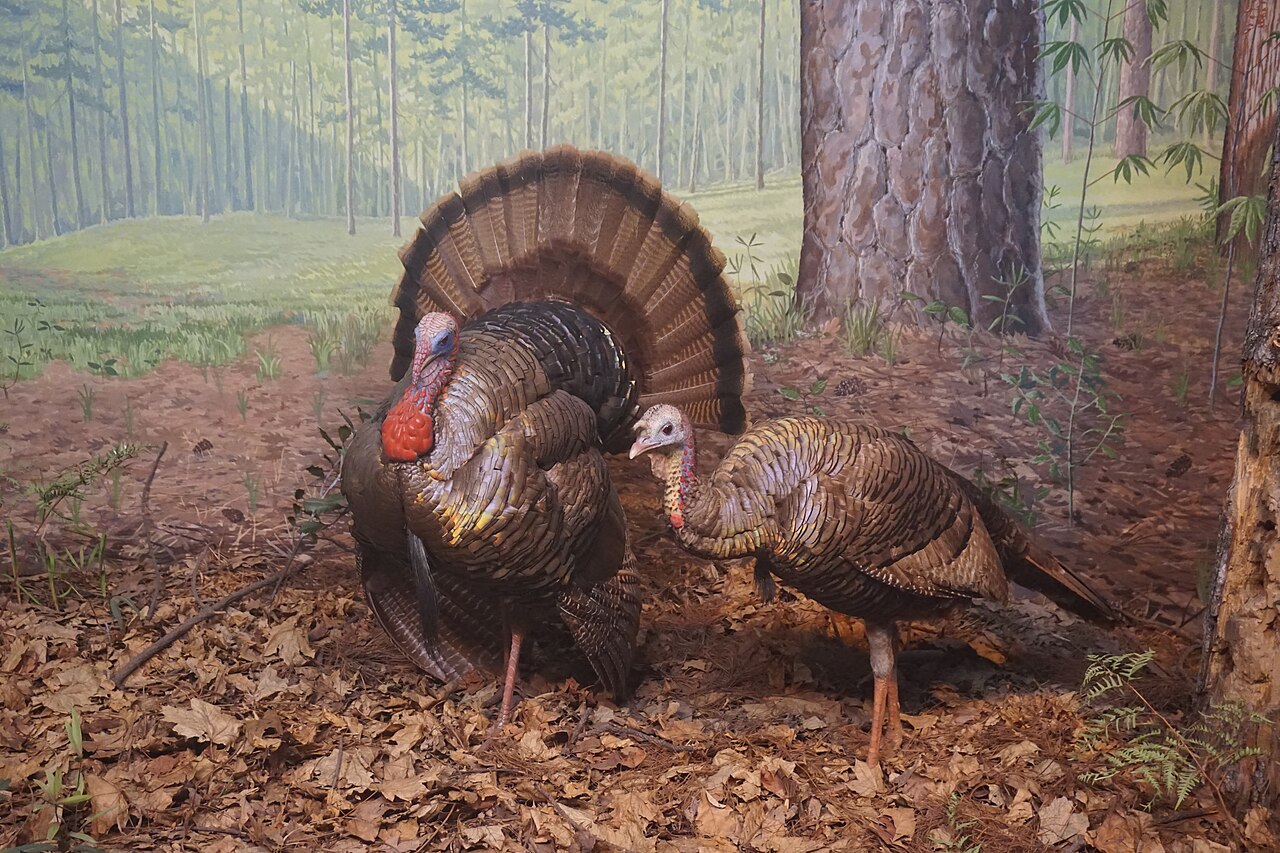
Adult males (toms) are larger and more ornate than females (hens), exhibiting iridescent body feathers, a fan-shaped tail, and a bare head and neck that change color with mood. Key field marks include a long neck, strong legs adapted for walking and scratching, and a wingspan that allows short, powerful bursts of flight. Identification details are summarized below.
- Plumage: bronze and copper iridescence in adults.
- Head and neck: sparsely feathered, variable blue and red skin.
- Size: large-bodied; males heavier than females.
- Vocalizations: gobbles, clucks, purrs used in social contexts.
Habitat and range
Wild turkeys favor wooded landscapes with a mix of open and covered areas. They are commonly associated with forests—especially hardwood and mixed conifer–hardwood stands—that include openings for feeding and escape. Suitable openings may be pastures, fields, orchards, and seasonal wetlands. The combination of roost trees, brood-rearing cover, and nearby food resources determines local abundance.
Behavior and diet
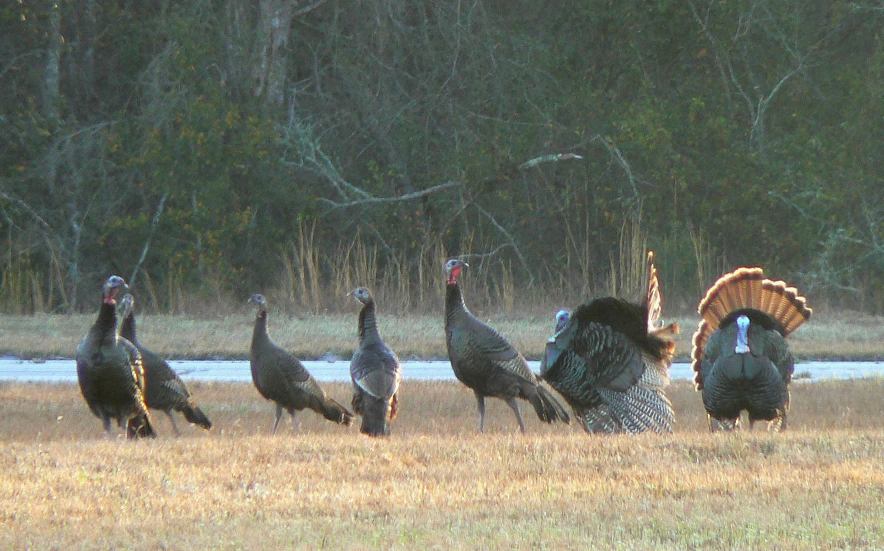
Wild turkeys are social and form flocks outside the breeding season. They roost in trees at night, forage on the ground by scratching for seeds, fruits, acorns, invertebrates, and small vertebrates, and use display behaviors during courtship. Reproductive activity peaks in spring when males display and females select nesting sites on the ground beneath dense cover.
Domestication, management, and conservation
Domesticated turkeys are descended from wild stock and were selectively bred for traits such as larger breast muscles and calmer temperaments. In the wild, populations have been managed through habitat conservation, regulated hunting, and translocation programs. Conservation achievements in the 20th century restored wild turkey numbers in many regions, though local threats include habitat loss, disease, and vehicle collisions.
Notable distinctions
The term "wild turkey" distinguishes this species from the domestic varieties raised on farms and from the other turkey species in the world. For further information on taxonomy, regional populations, and management practices, consult authoritative resources and regional wildlife agencies via links provided above.
Questions and answers
Q: What is the scientific name of the wild turkey?
A: The scientific name of the wild turkey is Meleagris gallopavo.
Q: Where can wild turkeys be found?
A: Wild turkeys can be found across much of the United States and southern Canada.
Q: What kind of forests do wild turkeys prefer?
A: Wild turkeys prefer hardwood and mixed conifer-hardwood forests with scattered openings such as pastures, fields, orchards, and seasonal marshes.
Q: Can wild turkeys adapt to any kind of plant community?
A: Yes, wild turkeys can adapt to any dense plant community as long as there is cover and openings to fly out.
Q: What kind of forests seem to be the best for wild turkeys?
A: Open, mature forests with a variety of tree species seem to be best for wild turkeys.
Q: What is the domesticated turkey?
A: The domesticated turkey has been tamed and bred from wild turkeys, by people, to raise on farms.
Q: How do the wild turkey and domesticated turkey differ?
A: The wild turkey is a large bird found in the wild, while the domesticated turkey has been tamed and bred by people to raise on farms.
Related articles
Author
AlegsaOnline.com Wild turkey (Meleagris gallopavo) Leandro Alegsa
URL: https://en.alegsaonline.com/art/108073
Sources
- books.google.com : Webster's II New College Dictionary
- books.google.com : The turkey: an American story
- npr.org : "Why a turkey is called a turkey"