
West Azarbaijan Province (Iran)
West Azarbaijan is a diverse Iranian province centered on the city of Urmia, known for its multiethnic population, varied terrain, Lake Urmia, cross-border links and agricultural economy.
Overview
West Azarbaijan (Persian: آذربایجان غربی; Kurdish: Azerbaycanî Rojawa; Azerbaijani: Qərbi Azərbaycan) is one of the administrative provinces of Iran, classified among the country's northernwestern regions and listed with other provincial units on national maps and records (see provinces). The provincial capital is Urmia, a longstanding regional center of commerce and culture.
Image gallery
2 Images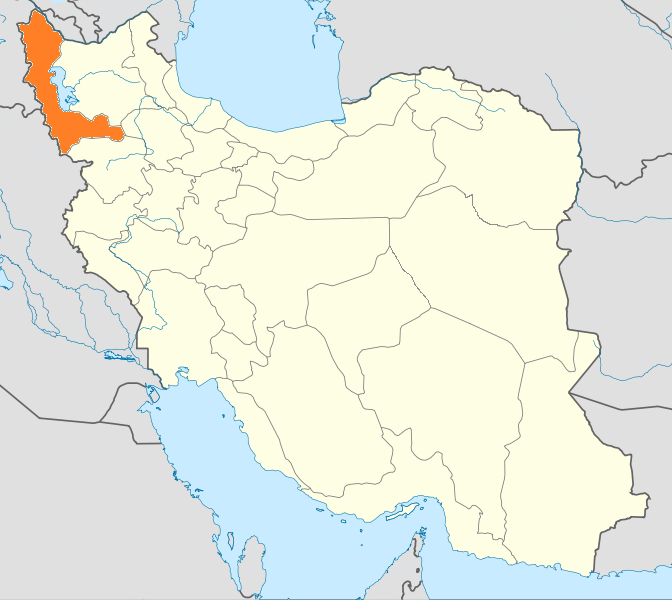

Geography and environment
The province covers tens of thousands of square kilometres and includes a variety of landscapes: fertile plains, highlands of the Zagros foothills, and saline basins. A defining geographic feature is Lake Urmia, a large inland lake whose fluctuating level and salinity have had a major influence on local ecology, agriculture and settlement patterns. West Azarbaijan shares international frontiers with Turkey and Iraq and touches the Nakhchivan exclave of Azerbaijan, making it strategically located for cross-border contacts.
Population and languages
Residents of the province form a multiethnic mosaic. The majority communities are Azerbaijani Turks and Kurds, alongside Persians and smaller groups including Assyrians and Armenians, particularly in some towns and villages. Languages commonly heard include Azerbaijani Turkic, Kurdish dialects and Persian, reflecting the area's cultural complexity. Urmia and other urban centers host religious and cultural institutions tied to these communities.
History and cultural heritage
The region has a long history as a crossroads between Anatolia, the Iranian plateau and the Caucasus. Over centuries it has been influenced by various Persian, Turkic and local Kurdish polities and was involved in historic trade routes. Archaeological remains, churches, mosques and caravanserais attest to a layered cultural heritage. In modern times the province has been shaped by national developments in Iran and by its borderland character.
Economy and transport
Agriculture is a mainstay: orchards, grain cultivation, horticulture and livestock husbandry predominate where soils and water permit. The region's markets also depend on cross-border trade and transport corridors linking Iran with neighbouring countries. Major roads and some rail links connect Urmia and other cities to provincial towns and to national networks, supporting both internal commerce and international exchange.
Administration and notable facts
Administratively the province is divided into counties and districts centered on principal cities such as Urmia, Khoy, Mahabad, Miandoab and Salmas. Environmental concerns—most notably the shrinking and salinization of Lake Urmia—have attracted scientific and policy attention because of their effects on farming, public health and biodiversity. The province is also known for its regional cuisines, seasonal festivals and a mix of urban and rural lifestyles that reflect its ethnic and historical diversity.
Key features
- Capital: Urmia
- Names in local languages: Persian آذربایجان غربی, Kurdish Azerbaycanî Rojawa, Azerbaijani Qərbi Azərbaycan
- Notable natural landmark: Lake Urmia
- Part of the administrative divisions of Iran; national context: Iran
Related articles
Author
AlegsaOnline.com West Azarbaijan Province (Iran) Leandro Alegsa
URL: https://en.alegsaonline.com/art/107325
Sources
- countrystudies.us : "Geography: Turkic-speaking Groups"
- books.google.com : page 1765
- books.google.com : page 21
- books.google.com : page 1
- books.google.com : page 69