
Kurdish language
Kurdish (kurdî) is an Indo‑Iranian language spoken by Kurds across parts of the Middle East. It comprises several major dialect groups, varied writing systems, and an extensive oral and literary tradition.
Overview
The Kurdish language (Kurdish: kurdî) is an Indo‑European language of the Iranian branch spoken by the Kurdish people. It is used across a region commonly called Kurdistan, which spans areas of Iran, Iraq, Syria and Turkey. Kurdish is related to other Iranian languages, such as Persian, though it has developed distinct phonology, grammar and vocabulary over many centuries.
Image gallery
1 Image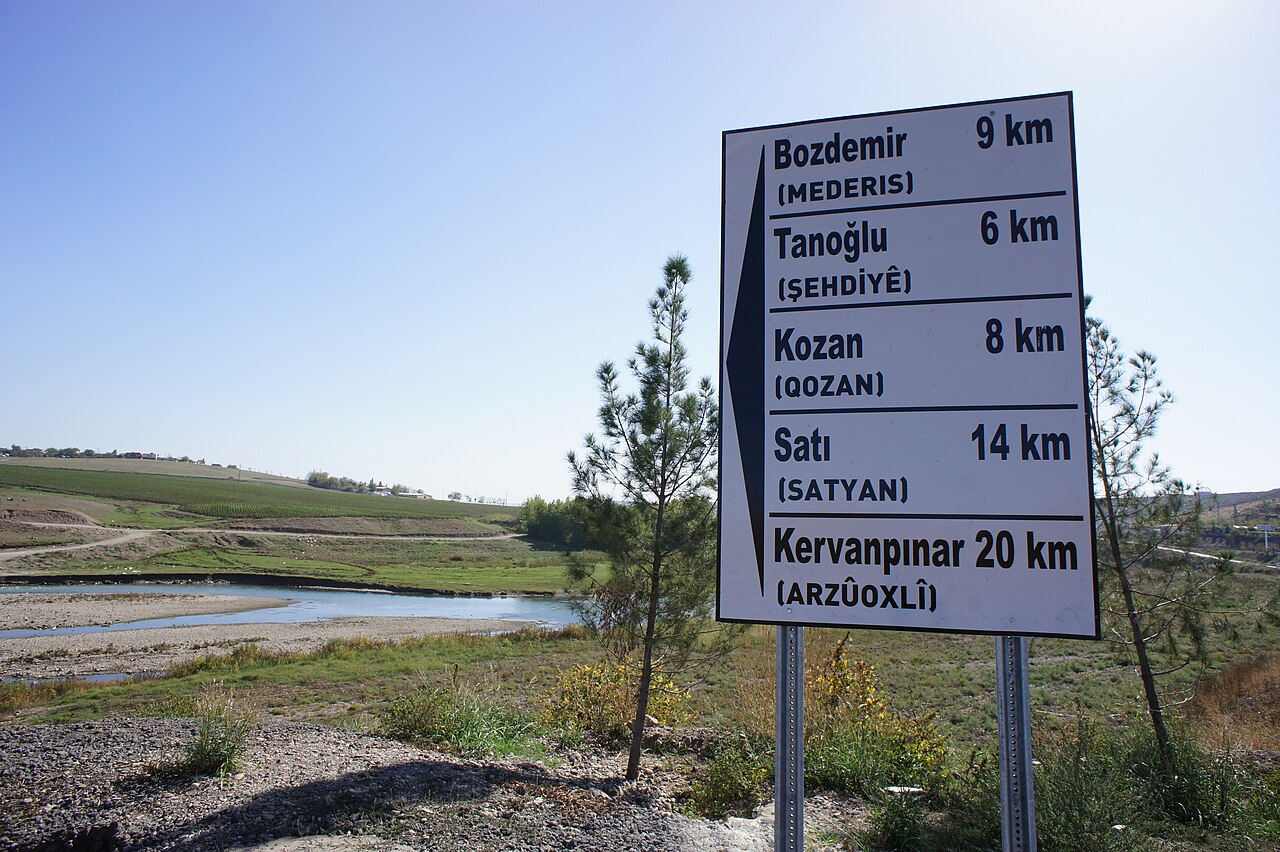
Dialects and varieties
Kurdish is not a single uniform tongue but a grouping of several varieties. The two most widely recognized groups are Kurmanji (Northern Kurdish) and Sorani (Central Kurdish). Other varieties often discussed by linguists include Gorani and Zazaki; their classification ranges from Kurdish dialects to closely related languages depending on the criteria used.
- Kurmanji: spoken largely in northern parts of the Kurdish area and by many diaspora communities.
- Sorani: prominent in central regions and used in administration and education in parts of Iraq and Iran.
- Gorani and Zazaki: distinct literary traditions and local usage; their status is debated.
Writing systems
Different Kurdish varieties use different scripts. Kurmanji is commonly written with a Latin‑based alphabet. Sorani typically uses a modified Arabic script. Historical manuscripts exist in earlier forms of the Perso‑Arabic script, and modern orthographies have been standardized in some regions but remain diverse across borders.
Linguistic characteristics
Kurdish displays features typical of Northwestern Iranian languages: a rich verbal morphology, gender distinctions in some varieties, and a tendency toward split ergativity in certain tenses or dialects. Word order is generally subject–object–verb, and postpositions are common. Vocabulary reflects long contact with neighboring languages, producing many loanwords and regional lexical differences.
History, literature and usage
Kurdish has a long oral tradition of poetry, song and storytelling, and a written literature that expanded markedly in the 20th century with newspapers, novels and scholarly works. The language’s public use and official recognition vary by country: for example, Kurdish has official or recognized status in the autonomous Kurdistan Region of Iraq, while in other states its use in education and broadcasting has historically been limited and is subject to national language policies.
Importance and notable facts
Kurdish serves as a central marker of cultural identity for millions of speakers. Its internal diversity means that literacy and media must adapt to regional standards. Efforts at standardization, education in mother tongue, and documentation of dialects continue among scholars and communities. For further general reading on the people and region associated with the language, see sources about the Kurdish people and Kurdistan.
Related articles
Author
AlegsaOnline.com Kurdish language Leandro Alegsa
URL: https://en.alegsaonline.com/art/54653
Sources
- kurdishacademy.org : "Kurdish Language – Kurdish Academy of Language"
- ethnologue.com : "Kurdish, Northern"
- modersmal.skolutveckling.se : "Geographic distribution of the Kurdish language"