
West Berlin: The Western Sectors of a Divided City (1949–1990)
West Berlin was the section of Berlin administered by the United States, Britain and France from 1949 to 1990, a Cold War enclave surrounded by East Germany and a focal point of postwar tensions and reunification.
Overview
From 1949 until German reunification in 1990, the term "West Berlin" described the three western sectors of Berlin administered by the United States, the United Kingdom and France. Created from occupation zones established at the end of World War II, West Berlin existed as a political and economic enclave inside the territory of the German Democratic Republic (East Germany). Although closely tied to the Federal Republic of Germany (West Germany) in many practical ways, West Berlin had a unique legal and diplomatic status as a city under continuing four-power occupation.
Image gallery
10 Images




Territory, governance and legal status
West Berlin comprised the American, British and French sectors established in 1945. The three Western Allies maintained authority there while the Soviet sector became East Berlin, which the government of East Germany claimed as its capital. Western governments did not accept that claim and continued to assert the city remained under four-power jurisdiction. In practice, West Berliners participated in West German economic life and politics, but the city was not formally incorporated into the Federal Republic; its representation in federal institutions was limited and mediated by special arrangements.
Key events and Cold War pressures
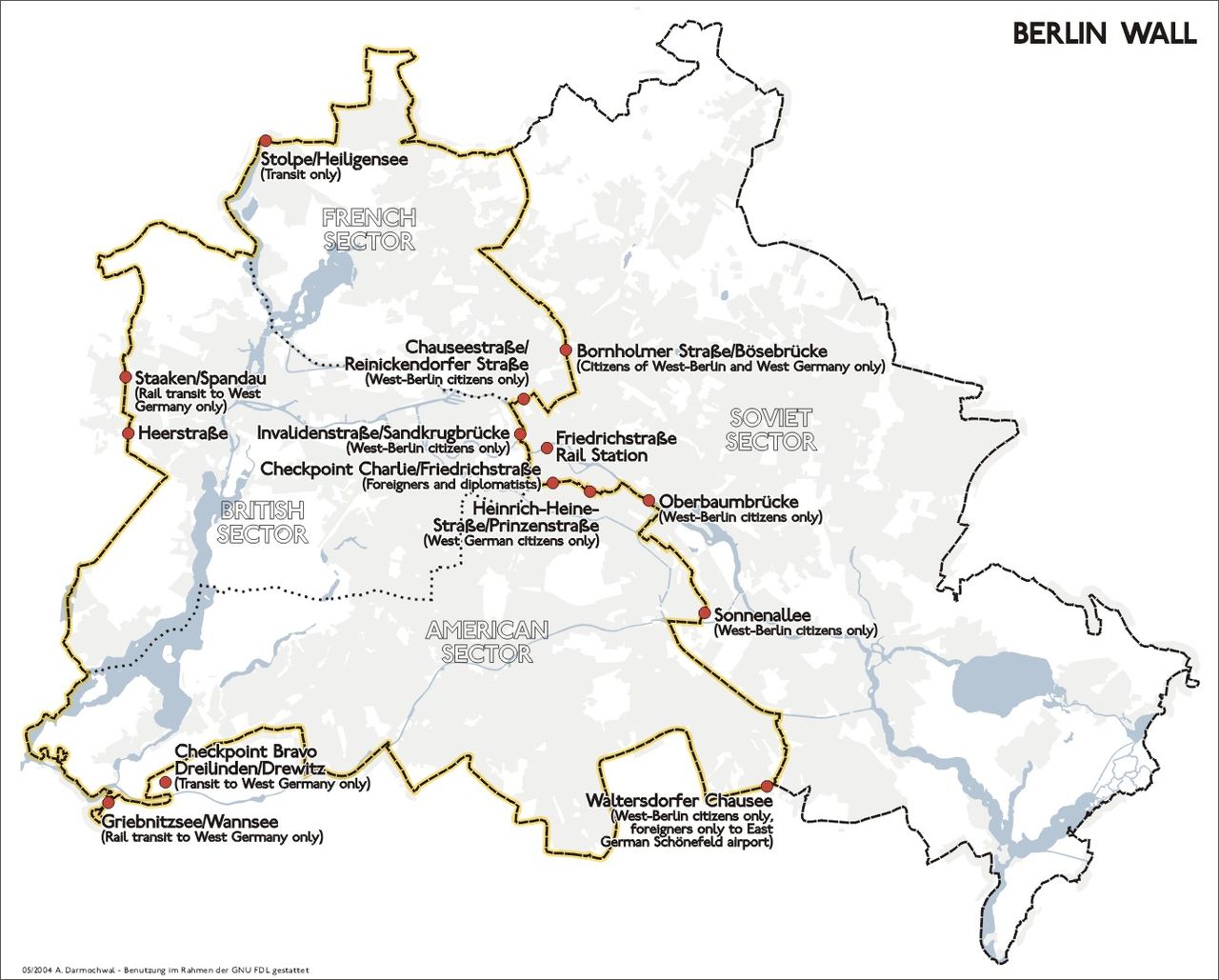
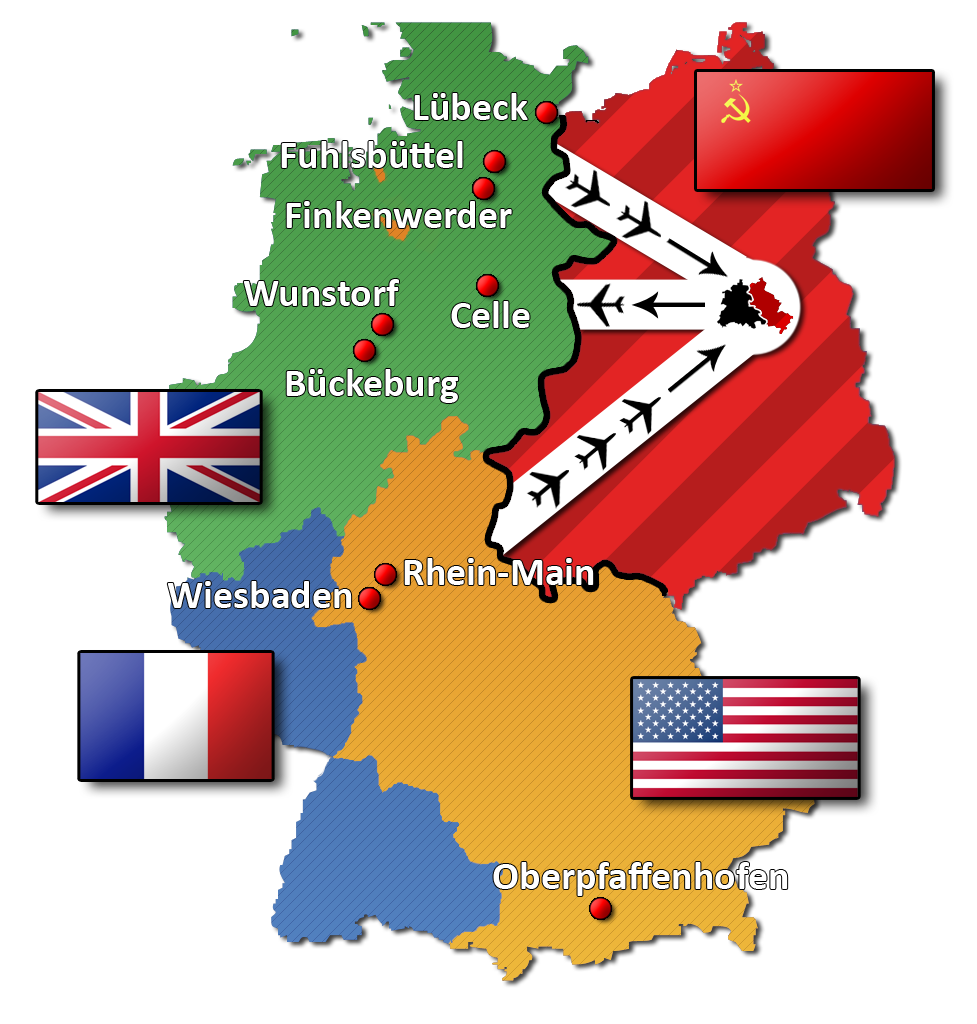
Several episodes illustrate West Berlin's central role in the early Cold War. In 1948–1949 the Soviet blockade of the city triggered the Berlin Airlift, a large Allied operation that supplied the western sectors by air until the blockade ended. In 1961 the government of East Germany, backed by Soviet authorities, erected the Berlin Wall, encircling West Berlin and cutting off most direct land routes to West Germany. The wall became an enduring symbol of division until mass protests and political change in 1989 led to its fall and the restoration of free movement.
Daily life, economy and cultural life
Despite its isolation, West Berlin developed a vibrant economy and cultural scene. It used the currency of West Germany and maintained close economic ties to the Federal Republic; trade, investment and migration flowed largely toward the West. The city attracted intellectuals, artists and students and became known for its theaters, universities and a distinctive nightlife. Border controls and travel restrictions shaped daily routines and family relationships, while checkpoints such as Checkpoint Charlie became internationally recognized landmarks of Cold War tension.
Distinctive features and notable facts
- Administrative structure: West Berlin was governed locally but under the watch of the Western Allied authorities, who retained residual rights.
- Political representation: Residents enjoyed many social and economic rights of West German citizens, while some parliamentary representation remained subject to special arrangements.
- International focus: The city's status attracted diplomatic, military and humanitarian attention, making it a frequent subject of negotiation among the Allies and the Soviet Union.
Reunification and legacy
The events of 1989–1990 ended the division. Following the fall of the wall and negotiations among the four powers and the two German states, Berlin was reunified and became the capital of a united Germany. West Berlin's decades as a Western enclave left a lasting imprint on the urban landscape, civic institutions and popular memory: its architecture, memorials and cultural institutions continue to reflect both the pressures of Cold War division and the process of reintegration into a single city-state. For further context on the occupying powers, see documents on the occupied sectors, and for the broader relationship with the Federal Republic consult sources on West Germany. For background on the Soviet role and East German perspectives, see Soviet-era records and commentary, and for cultural or linguistic aspects the term in the German language is noted by authorities on German usage. More detailed timelines and primary documents may be found via archival references and specialized studies on Berlin and the Cold War period in East Berlin.
Questions and answers
Q: What was West Berlin?
A: West Berlin was the western part of Berlin that was occupied by the American, British, and French sectors between 1949 and 1990.
Q: Was West Berlin a part of West Germany or East Germany?
A: No, West Berlin was not a part of West Germany or East Germany, although it was integrated with West Germany.
Q: What happened to the Soviet sector in Berlin?
A: The Soviet sector became East Berlin, which East Germany claimed as its capital.
Q: Did the Western Allies accept East Germany's claim on East Berlin?
A: No, the Western Allies did not recognize East Germany's claim on East Berlin. They believed that the whole city was still under four-power occupation.
Q: When was the Berlin Wall built?
A: The Berlin Wall was built in 1961, and it surrounded West Berlin.
Q: How did the West Germany government refer to West Berlin?
A: The West Germany government referred to West Berlin as "Berlin (West)."
Q: What was the official name of East Berlin?
A: The official name of East Berlin was "Berlin, Hauptstadt der DDR" (Berlin, Capital of the GDR), or simply "Berlin," by East Germany.
Tags
Related articles
Author
AlegsaOnline.com West Berlin: The Western Sectors of a Divided City (1949–1990) Leandro Alegsa
URL: https://en.alegsaonline.com/art/107333