
Berkelium (element 97)
Berkelium is a synthetic, radioactive actinide metal with symbol Bk and atomic number 97, produced in particle accelerators and used primarily for scientific research and the synthesis of heavier elements.
Overview
Berkelium is a man-made, synthetic chemical substance and an radioactive member of the periodic table classified as a chemical element. It carries the symbol Bk and has atomic number 97, placing it among the heavy elements in the actinide series. As a metal, berkelium shares many broad characteristics with its actinide neighbors: it is metallic in appearance, reactive in air, and exists only in minute laboratory-produced quantities.
Image gallery
7 Images
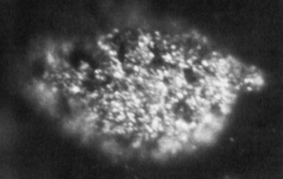




Characteristics
Berkelium is typically described as a silvery or gray metallic element that oxidizes when exposed to air and forms compounds such as oxides and halides. Chemically it behaves like other members of the actinide group and often displays a +3 oxidation state in its compounds. Because all known isotopes of berkelium are unstable, its chemistry is studied using very small samples produced in specialized facilities.
- Metallic nature: metallic appearance and properties.
- Family: Member of the actinide series.
- Production: Created by nuclear reactions, typically by bombarding lighter actinides such as americium with particles like helium nuclei or other ions.
Discovery and production
Berkelium was first produced in laboratory experiments in the mid-20th century at research facilities in California and was named for the city of Berkeley and the University of California, Berkeley. Early preparation involved irradiating targets of other transuranic elements with accelerated particles (for example, using alpha particles or other ions) to add protons and neutrons and reach the desired nuclear composition. Production is complex and yields only tiny amounts — usually micrograms or less — so berkelium is obtained almost exclusively in specialized national laboratories.
Isotopes, uses and importance
Several isotopes of berkelium have been identified; all are radioactive. Because of its scarcity and radioactivity, berkelium has no commercial applications and is used mainly for scientific investigation. Notably, berkelium isotopes have served as target material in the synthesis of heavier transuranium elements, helping researchers explore nuclear reactions, element formation, and the limits of the periodic table.
Safety and notable facts
Berkelium must be handled under strict radiological controls. Its radioactivity and chemical reactivity require shielding, containment, and remote techniques to protect personnel. The element does not occur in any significant amount naturally on Earth and is produced only in specialized facilities for research. For further reading about related elements and laboratory practices, consult authoritative sources and institutional safety guidelines.
References and additional information may be sought through institutional pages and scientific reviews; the placeholders below link to further material: pronunciation and name, synthetic element context, radioactivity overview, elemental definition, periodic classification, atomic number details, metallic properties, actinide chemistry, americium relations, helium projectiles, ion bombardment methods, Berkeley city, UC Berkeley history.
Related articles
Author
AlegsaOnline.com Berkelium (element 97) Leandro Alegsa
URL: https://en.alegsaonline.com/art/10727
Sources
- periodic.lanl.gov : Los Alamos National Laboratory - Berkelium
- education.jlab.org : It's Elemental - Berkelium