
Beryl: mineral overview, varieties, formation and uses
Beryl is a beryllium-bearing cyclosilicate known for gem varieties such as emerald and aquamarine. This article covers its structure, common occurrences, notable varieties, uses and distinguishing features.
Beryl is a mineral belonging to the cyclosilicate group and is an important source of the metal beryllium. Chemically it is composed of beryllium, aluminum and silicate (commonly written as Be3Al2Si6O18) and forms prismatic hexagonal crystals. As a member of the broader cyclosilicate family, beryl's structure is built from rings of silica tetrahedra. It is also the second principal ore of beryllium, a light metal used in high‑technology applications.
Image gallery
10 Images


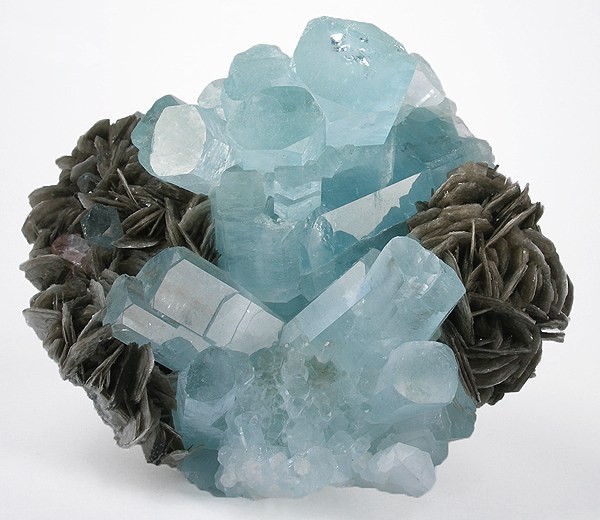
Characteristics and structure
Beryl crystals are typically hexagonal and can range from small gem-sized crystals to extraordinarily large prismatic specimens. On the Mohs scale beryl is relatively hard (about 7.5–8), which helps explain its good durability as a gemstone. Color in beryl is usually caused by trace impurities: chromium or vanadium produce green tones, iron is responsible for blue to blue‑green shades, manganese can give pink to red hues, and iron in other valence states yields yellow or golden colours. Optical and physical properties such as transparency, refractive index and crystal habit vary with composition and the presence of inclusions.
Varieties and notable examples
Beryl is best known for a number of gem varieties that are identified mainly by color and name. Well-known varieties include:
- Emerald — the green gem variety colored primarily by chromium and sometimes vanadium; prized for intense color and rarity. Emerald is one of the most famous gemstones derived from beryl.
- Aquamarine — the blue to blue‑green variety caused by iron; valued for clarity and sea‑like tones. See more under aquamarine.
- Morganite — pink beryl colored by manganese, popular in modern jewelry design.
- Heliodor — yellow to golden beryl, produced by iron; often used in faceted gems.
- Bixbite (red or red beryl) — a very rare red form of beryl prized by collectors.


The same mineral species therefore produces a broad palette of gem materials, each with distinct market and collector values determined by color, clarity and size.
Occurrence, formation and history
Beryl commonly forms in granitic pegmatites and in certain metamorphic rocks where beryllium‑rich fluids concentrate and precipitate the mineral. Hydrothermal processes can also produce gem‑quality crystals. Historically, beryl has been mined for gemstones for centuries, with classic localities supplying emeralds and aquamarines to early civilizations; modern mining additionally supplies beryl for industrial extraction of beryllium.
Notable facts include reports of exceptionally large beryl crystals: in some locations crystals many metres long have been documented, an unusual occurrence for most gem minerals — see accounts of very large specimens here. Collectors and museums prize large, well‑formed crystals for display, while gem cutters focus on color and clarity to produce faceted stones.
Uses and distinctions
Beyond gemstones, beryl's significance stems from its beryllium content, used in aerospace, electronics, and nuclear industries because of its stiffness, low density and thermal stability. Distinguishing beryl from similar minerals relies on crystal habit, hardness and chemical tests; for gem identification, inclusions and optical properties are important diagnostic features.
Related articles
Author
AlegsaOnline.com Beryl: mineral overview, varieties, formation and uses Leandro Alegsa
URL: https://en.alegsaonline.com/art/10942