
Bering Strait
Narrow sea passage between easternmost Asia and westernmost North America linking the Pacific and Arctic Oceans; key site for human migration, marine exchange, and Arctic geopolitics.
Overview
The Bering Strait is the narrow waterway that separates the eastern edge of Asia from the western edge of North America and connects the Pacific Ocean with the Arctic Ocean. It lies just south of the Arctic Circle near latitude about 65°40′N and is one of the planet's most important polar maritime passages. The strait is known in Russian as Берингов пролив and in geographic literature is described as a sea strait between prominent capes and peninsulas connecting two continents.
Image gallery
6 Images


Geography and physical characteristics
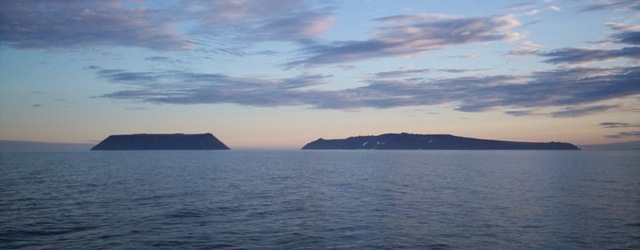
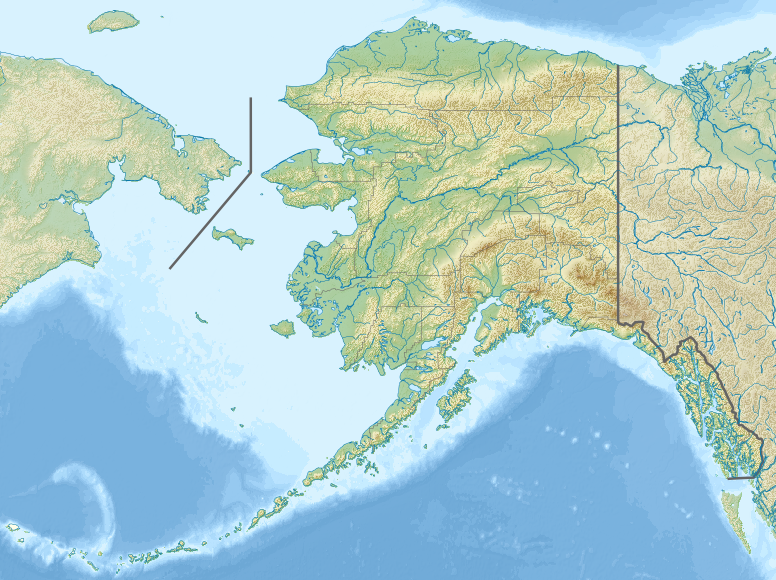
The Bering Strait spans a relatively short distance between Cape Dezhnev on the Chukchi Peninsula (Asia) and Cape Prince of Wales on Alaska's Seward Peninsula (North America). These land points mark the nearby edges of the continents of Asia and North America. The strait itself is shallow compared with many ocean passages and is characterized by broad shoals, seasonal sea ice, and a cluster of islands including the Diomede islands that sit at the midpoint. The nearby Cape Dezhnev area is described further at Cape Dezhnev and Alaska's Seward Peninsula at Seward Peninsula. The U.S. state of Alaska lies immediately to the east.
Oceanography and climate
The strait acts as a gateway for relatively fresher, warmer Pacific waters flowing north into the Arctic Ocean; this throughflow influences sea-ice formation, marine productivity and regional climate. Sea ice is a seasonal feature but has been diminishing in extent in recent decades, which affects navigation, wildlife, and indigenous ways of life. Its location just south of the Arctic Circle and near the latitude marker discussed at 65°40′N places the strait in a sensitive climatic zone.
History, migration and ecology
During past ice ages, when global sea levels were lower, a broad land connection known as Beringia linked Asia and North America, enabling human and animal migrations. As glaciers melted and sea levels rose at the end of the last glacial interval (the last ice age), that land bridge was inundated and the modern strait formed. The area supports important marine and bird life and has long been used by Indigenous peoples such as the Yupik, Inupiat and Chukchi for hunting, fishing and cultural exchange.
Modern importance and geopolitics
Politically and economically the Bering Strait is significant as a near-border zone between Russia and the United States. It is a strategic maritime chokepoint for ships transiting between the Pacific and Arctic, increasingly discussed in the context of commercial shipping, natural-resource access and Arctic policy. The Diomede islands close to the middle of the strait illustrate its unusual human geography and time-zone quirks: the International Date Line runs between them, so visitors can literally stand a day apart across a short channel.
Notable facts and current issues
- The strait is narrow but busy ecologically: it is a conduit for migratory whales, seals and seabirds and a focus for fisheries and subsistence harvests.
- Climate change is reducing seasonal ice and altering currents and ecosystems, with implications for local communities and international navigation.
- Because of its position, the strait links two oceans and two nations, making it a subject of scientific study and policy attention; for regional context see Russian sources and broader geographic entries like strait and Beringia.
For more detailed maps and specialized information on particular places mentioned above, consult entries for Cape Dezhnev, Seward Peninsula, Alaska, and continental descriptions of Asia and North America. Scientific overviews of Arctic change and ice-age history can be found through resources linked at last glacial studies and oceanographic summaries at latitude and climate portals.
Related articles
Author
AlegsaOnline.com Bering Strait Leandro Alegsa
URL: https://en.alegsaonline.com/art/10714