
Walter Munk: Pioneering Physical Oceanographer and Longtime Scripps Scholar
Overview of Walter H. Munk (1917–2019), his life, major contributions to physical oceanography, wartime service, awards, and lasting influence on ocean science and climate studies.
Overview
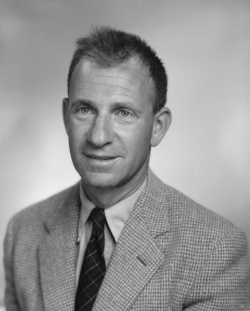
Walter Heinrich Munk (October 19, 1917 – February 8, 2019) was an Austrian-born American physical oceanographer whose research shaped modern oceanography and allied disciplines. A long-serving scientist at the Scripps Institution of Oceanography, he combined observational skill, mathematical insight and practical problem-solving to address ocean waves, tides, circulation, acoustic propagation and sea-level change. He has been recognized by numerous major prizes and medals during a career that spanned more than seven decades. More on his life.
Image gallery
9 Images


Early life and path to science
Munk was born in Vienna, then part of Austria-Hungary, into a Jewish family and spent his youth there before moving to the United States in 1932 for secondary education. He attended a boys' preparatory school in upstate New York and later pursued scientific work that led him to a long association with Scripps. His bicultural background and early emigration shaped both his perspective and career trajectory. Vienna background and historical context are relevant to his early years.
Research and notable contributions
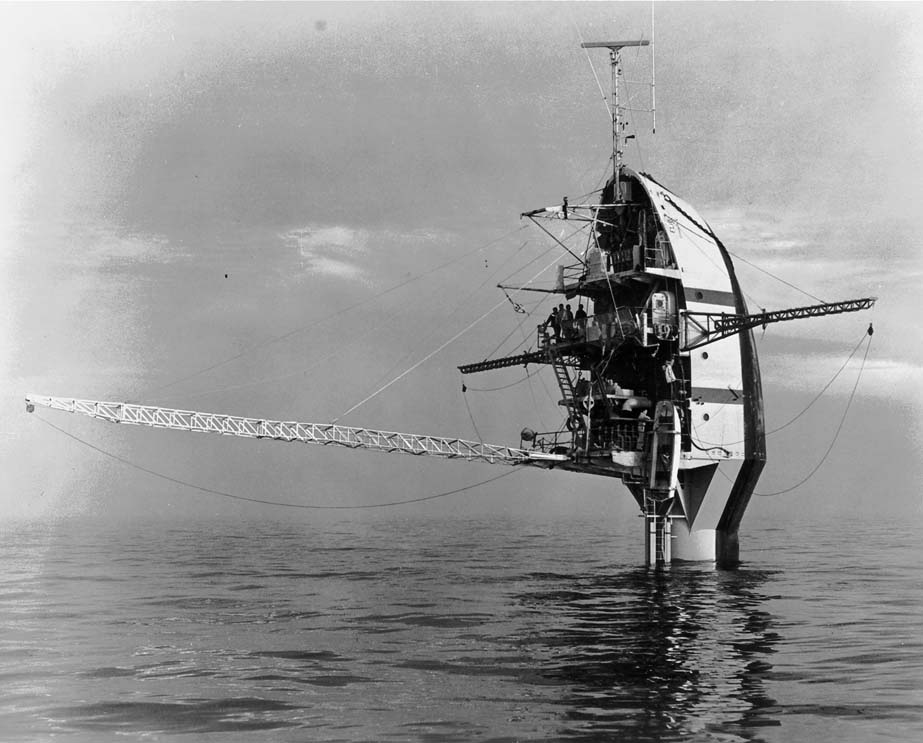
Munk contributed to many core areas of physical oceanography. During World War II he helped develop wave forecasting techniques that improved planning for amphibious operations—work often cited as influential in Allied naval strategy. He was a pioneer in the study of internal waves, ocean tides, and the dynamics of ocean circulation, and he helped to turn ocean acoustics into a quantitative tool for observing large-scale ocean variability. His work on acoustic tomography explored how sound can be used to measure temperature and current fields across ocean basins. Scholars often cite his combination of field experiments, theory and instrumentation as a model for durable scientific advances. Physical oceanography and geophysics were central to his approach.
Awards, positions and recognition
Munk held the Secretary of the Navy/Chief of Naval Operations Oceanography Chair at Scripps and later became professor of geophysics emeritus. His honors include some of the field's highest distinctions, reflecting both scientific depth and broad societal relevance. Key awards include:
- National Medal of Science (1985)
- Alexander Agassiz Medal (1977)
- William Bowie Medal (1989)
- Vetlesen Prize (1993)
- Crafoord Prize (2010)
- Kyoto Prize (1999)
Each of these honors highlights different aspects of his work: experimental craft, theoretical clarity and contributions that crossed oceanography, geophysics and climate science. Centennial recognition and retrospective profiles celebrated his long influence.
Legacy and influence
Munk's findings remain central to contemporary problems such as coastal sea-level change, climate-driven ocean variability and the interpretation of acoustic signals in the ocean. He also played a formative role in mentoring generations of oceanographers and in shaping institutional priorities at Scripps. Some of his later writings questioned and clarified how sea-level observations relate to melting ice and thermal expansion, stimulating ongoing research and debate. His death in La Jolla, California, in 2019 marked the close of a highly productive scientific life, but his methods, field campaigns and theoretical frameworks continue to inform both basic science and practical applications. For further reading and archival material, see institutional profiles and collected works. Biographical resources, research summaries, and additional retrospectives are available from several science institutions. Historical sources and professional records document his appointments and publications.
Selected themes in his work:
- Ocean wave forecasting and operational oceanography
- Internal waves, tides and barotropic/baroclinic processes
- Ocean acoustic tomography and observational innovation
- Sea-level change, climate connections and public engagement
Collectively, these contributions explain why Walter Munk is often described as one of the most influential oceanographers of the twentieth century. For curated bibliographies, award citations and oral histories, consult institutional archives and scientific society records. Award citations and prize summaries provide useful entry points to his published legacy. Remembrances capture personal and scientific perspectives on his long career.
Related articles
Author
AlegsaOnline.com Walter Munk: Pioneering Physical Oceanographer and Longtime Scripps Scholar Leandro Alegsa
URL: https://en.alegsaonline.com/art/106378
Sources
- britannica.com : "Walter Munk"
- newsweek.com : "Walter Munk, known as the 'Einstein of the ocean,' has turned 100"
- scripps.ucsd.edu : "Obituary Notice: Walter Munk, World-Renowned Oceanographer, Revered Scientist"