
Voivodeship: historical and modern territorial unit in Central and Eastern Europe
Voivodeship — a territorial unit historically governed by a voivode, now used for provinces in countries such as Poland and for the Serbian region of Vojvodina; overview of origin, structure and modern use.
Overview
A voivodeship is a territorial and administrative unit historically associated with parts of Central and Eastern Europe. The term identifies regions once governed by a voivode — a military and civil commander — and today describes certain modern provinces or historical regions. In general usage it denotes a form of geographical and administrative division with origins in medieval polities.
Image gallery
5 Images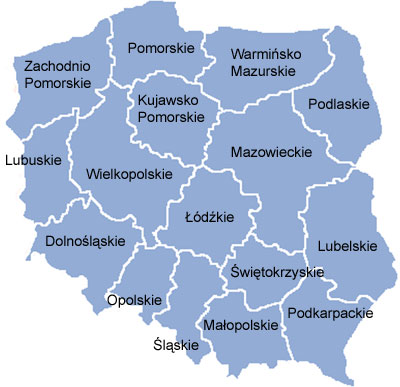


Names and etymology
The word appears in several languages and forms. In Romanian it is written as voievodat, in Polish as województwo, in Serbian as vojvodina or related variants, in Hungarian as vajdaság and in Lithuanian as vaivadija. Latin medieval sources used terms such as Palatinatus. Etymologically the title voivode (from Slavic roots meaning "war leader") signified a leader responsible for military command and often civil administration.
Characteristics and typical structure
Although details vary by era and polity, voivodeships typically shared several features:
- Governance by a voivode, originally a military commander with delegated authority from a monarch.
- Territorial organization around a central seat or stronghold, with subordinate local officials.
- Responsibilities combining defense, judicial oversight and tax collection in earlier periods.
- Adaptation over time into civil provincial units within emerging modern states.
Voivodeships first developed in several medieval states, including regions of Romania, Hungary, Poland and Lithuania, where the title and the territorial concept were integrated into local administration.
History and development
During the Middle Ages the voivode was commonly the second-most powerful official after the ruler in borderlands and military frontier zones. Over centuries the role evolved: some voivodes became hereditary nobles or regional governors, while the voivodeship as a unit shifted from primarily military command to broader civil administration. The idea and name spread across Slavic and neighboring lands, appearing in contexts that include Latvia, Russia and the southern Serbian lands such as Serbia and the province known as Vojvodina.
Modern usage and examples
Today the most familiar modern use of the term is in Poland, where voivodeships (województwa) are the highest-level administrative subdivisions, similar to provinces or regions. Poland reorganized its voivodeships in the late 20th century to balance administrative efficiency and regional identity. In Serbia, the historical name survives in the autonomous province of Vojvodina, which preserves cultural and administrative distinctiveness within the state. Other historical voivodeships are remembered in regional histories and place names across Central and Eastern Europe.
Distinctions and notable facts
Key points to distinguish: a voivode is the office-holder; a voivodeship is the territory. The title is comparable to medieval ranks such as duke or palatine in function but stems specifically from the military leadership role implied by the root meaning "leader of warriors." Over time, as centralized states formed, many voivodeships became standardized provinces with civil administrations rather than primarily military jurisdictions. For readers seeking more language-specific or regional detail, consult sources on the Romanian term (voievodat) and the Polish system (województwo), or studies of the Serbian province (Vojvodina).
Related articles
Author
AlegsaOnline.com Voivodeship: historical and modern territorial unit in Central and Eastern Europe Leandro Alegsa
URL: https://en.alegsaonline.com/art/105804