
Hungarian language (Magyar): overview, structure, history and use
Hungarian (Magyar) is a Uralic language of Central Europe, notable for its agglutinative grammar, vowel harmony, unique alphabet adaptations and a long literary and cultural tradition.
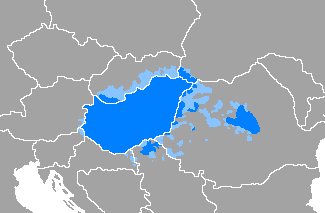
Overview: Hungarian, called Magyar by its speakers, is a member of the Uralic language family and not part of the Indo-European group. Its classification places it with other Finno-Ugric languages; for broader context see Uralic languages. Hungarian is the official language of Hungary and is spoken by communities in neighboring countries and diasporas worldwide.
Image gallery
10 Images


Classification and relatives
Hungarian is often discussed alongside other Finno-Ugric languages. Several better-known relatives include Finnish and Estonian, and the Sami (Lappic) languages Sámi. In the Russian domain, Khanty and Mansi are considered the most closely related languages to Hungarian among those still spoken in western Siberia (see related Siberian Uralic languages).
Distinctive features
Hungarian differs from most European languages in several structural ways. It is not an Indo-European language and has a number of typological characteristics that include:
- Agglutinative morphology: grammatical roles are expressed by adding suffixes in sequences rather than by word order alone.
- Vowel harmony: vowels influence which suffixes are used, a feature shared with other Uralic languages.
- Extensive case system: many locative and grammatical relations are carried by case endings rather than prepositions.
- Definite vs. indefinite verbal conjugation: verb forms change depending on whether the object is definite.
- Phonology and orthography: stress is typically on the first syllable; the Latin alphabet is used with accents and digraphs (for example letters such as á, é, í, ó, ö, ő, ú, ü, ű).
Vocabulary and contacts
Through centuries of contact with neighboring peoples, Hungarian has borrowed extensively from other language families. Loanwords of Slavic origin are common (Slavic), and earlier historical contacts brought elements from various Turkic languages. Later borrowings and technical terminology often derive from German and other European languages. Despite these layers of influence, the core grammar and much of the basic vocabulary remain Uralic in character.
History, distribution and cultural role
Proto-Hungarian groups migrated into the Carpathian Basin in the early medieval period and developed the modern language through internal change and external influence. Today Hungarian is used in government, education, media and literature. It has a rich written tradition, folk culture and modern literature, with internationally recognized authors among its contributors. Regional minorities and expatriate communities maintain the language across Central Europe and beyond.
Practical notes: Hungarian is valued for its clarity of pronunciation and relatively phonemic spelling, but learners encounter a steep learning curve in mastering suffix sequences and vowel harmony. For introductions or language resources see general overviews of the Uralic family and comparative materials on related languages such as Uralic, Finnish, and Estonian.
Questions and answers
Q: What is Hungarian?
A: Hungarian is a Uralic language.
Q: How is Hungarian known in its own language?
A: Hungarian is known as Magyar in its own language.
Q: What other languages are included in the Finno-Ugric language family?
A: The other languages included in the Finno-Ugric language family are Finnish, Estonian, Lappic (Sámi), and some other languages spoken in Russia such as Khanty and Mansi.
Q: Which languages are most closely related to Hungarian?
A: Khanty and Mansi are the most closely related languages to Hungarian.
Q: Is Hungarian an Indo-European language?
A: No, Hungarian is not an Indo-European language.
Q: What type of vocabulary can be found in the Hungarian language?
A: The Hungarian language has words from Slavic, Turkic, and German languages in its vocabulary.
Q: What is the Hungarian name for its own language?
A: The Hungarian name for their language is Magyar.
Author
AlegsaOnline.com Hungarian language (Magyar): overview, structure, history and use Leandro Alegsa
URL: https://en.alegsaonline.com/art/45736
Sources
- books.google.com.au : Hungarian Language Contact Outside Hungary