
Volcanic crater — formation, types, and significance
A volcanic crater is a bowl-shaped depression formed by volcanic activity. This article explains how craters form, their varieties, differences from calderas, hazards, uses, and how they are studied.
A volcanic crater is a generally circular, bowl-shaped depression at or near the summit of a volcano or along its flanks. It forms where volcanic material is erupted through one or more vents and where subsequent collapse or explosive removal of rock creates a distinct hollow. When active, a crater typically contains the open conduit(s) through which magma, gases and fragmented material are expelled; see the term magma for the molten rock involved in these processes.
Image gallery
6 Images


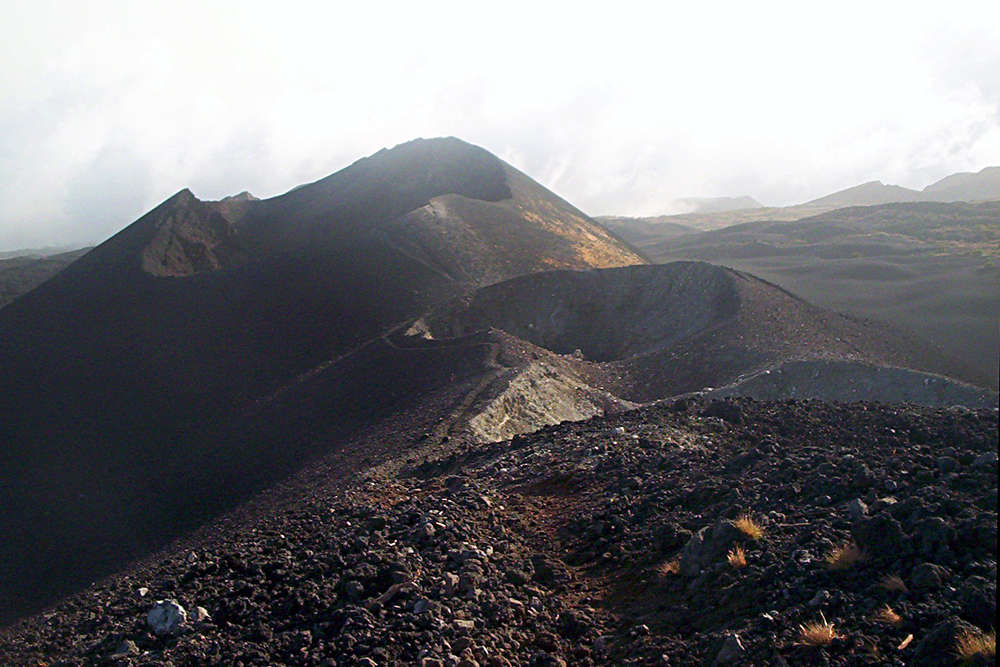
How craters form
Craters arise by several related processes: direct explosive excavation during powerful eruptions, gradual erosion and removal of loose volcanic deposits, or collapse when magma and volcanic gases are withdrawn from shallow reservoirs. Some craters are produced by single large explosive events that blow out the summit; others develop from repeated, smaller eruptions that build a rim around the vent. Craters may be shallow and broad or steep-walled and deep depending on eruption style, rock strength and later modification by erosion or collapse.
Common types and features
- Summit craters: the typical bowl at a volcano's top surrounding the main vent.
- Parasitic or flank craters: smaller craters that form on the sides of larger volcanoes where subsidiary vents open.
- Pit craters: formed mainly by collapse rather than explosive ejection, often without obvious eruptive deposits.
- Maar craters: low, wide craters created by explosive interactions between magma and groundwater, commonly filling with water to become lakes.
Craters range in size from modest hollows a few meters across to basins measuring hundreds or thousands of meters. Many host crater lakes when rainfall or groundwater collects in the depression; these lakes can be acidified by volcanic gases.
Crater versus caldera
Although the words are sometimes used loosely, a crater differs from a caldera in scale and process. A caldera is a much larger collapse feature that forms when a magma chamber empties sufficiently that the overlying rock subsides, producing a broad, often irregular depression. Small craters can sit within calderas or along their margins; for further context see caldera.
Hazards, uses and scientific importance
Craters can be sites of ongoing hazards: eruptions, gas emissions, phreatic explosions (steam-driven), and lahars if water is present. They are also important focal points for monitoring volcanic unrest because changes in shape, gas output and seismicity commonly precede eruptions. Conversely, many craters are popular destinations for tourism, scientific study and, in some regions, geothermal exploration.
Modern study of craters combines field mapping, geochemical analysis of gases and rocks, ground deformation measurements, and remote sensing from aircraft and satellites. Well-known examples range from the active summit craters of Kīlauea and Etna to the large water-filled depressions that are the remnants of ancient explosive systems. Understanding crater formation helps volcanologists assess eruption styles, potential impacts and long-term volcanic evolution.
Questions and answers
Q: What is a volcanic crater?
A: A volcanic crater is a circular depression in the ground caused by volcanic activity.
Q: What is the shape of a volcanic crater?
A: It is usually a circular basin.
Q: What kind of materials come out of the vent of a volcanic crater?
A: From the vent of a volcanic crater, magma erupts as gases, lava and ejecta.
Q: What is the maximum size of a crater?
A: A crater can be huge.
Q: Is it possible for an area above the magma chamber to subside?
A: Yes, during certain types of gigantic eruptions, the volcano's magma chamber may empty enough for an area above it to subside.
Q: What is a caldera?
A: A caldera is a dropped surface crater that occurs during certain types of gigantic eruptions.
Q: What is the shape of a caldera?
A: A caldera is circular in shape.
Related articles
Author
AlegsaOnline.com Volcanic crater — formation, types, and significance Leandro Alegsa
URL: https://en.alegsaonline.com/art/105818
Sources
- physicalgeography.net : Glossary of Terms: "Crater"