
Visigoths: origins, kingdoms, culture, and legacy
The Visigoths were a Western branch of the Goths who migrated across Roman Europe, sacked Rome in 410, and established kingdoms in Gaul and Iberia whose laws and culture shaped medieval Spain.
The Visigoths were one of the two principal branches of the Gothic peoples, commonly called the Western Goths. As an East Germanic group they emerged in late antiquity amid the larger movements often grouped under the Migration Period. Their identity developed through a mixture of Gothic tribal structures, contact with the Roman world, and interaction with other barbarian groups. The Visigoths are most often contrasted with the Ostrogoths, the eastern branch of the same Gothic stock, and with other Germanic peoples who pressed on the Roman frontiers. For broader context about their origins and name see the general entry on the Goths.
Image gallery
10 Images




Early history and relation with Rome
In the fourth and early fifth centuries the Visigoths came into sustained contact with the Roman Empire. They served at times as foederati—federated allies—and at other times fought Roman forces. Under their leader Alaric I they achieved a dramatic and symbolic victory when a Visigothic army entered and looted the city of Rome in 410, an event frequently cited as a milestone in the transformation of the late Roman world. After Alaric's death the Visigoths continued to operate on the fringes of imperial power, sometimes cooperating with, sometimes challenging, Roman authority.
Kingdoms in Gaul and Iberia
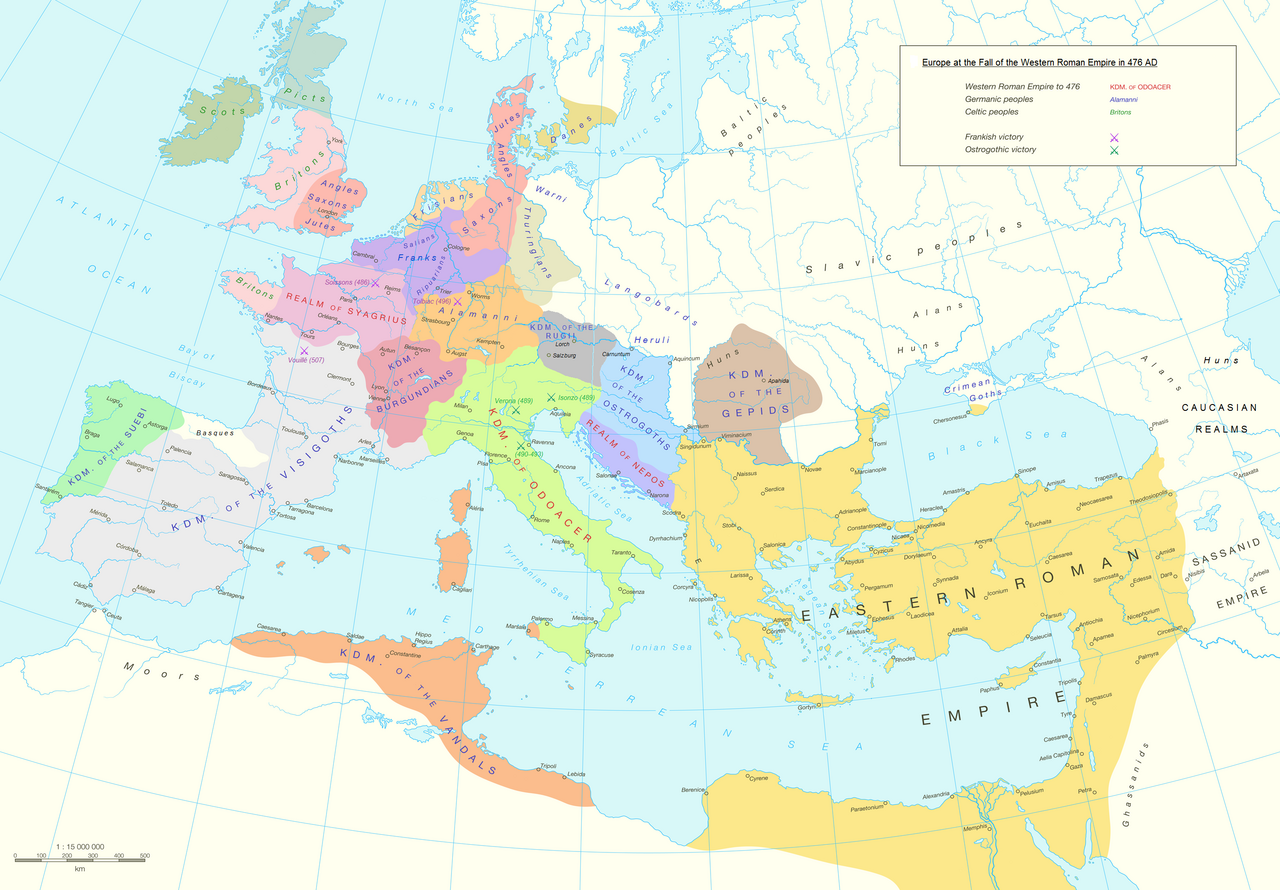
Following the disintegration of centralized Roman rule, Visigothic groups established territorial kingdoms. For a time they controlled parts of southern Gaul, founding a political center that blended Germanic leadership with Roman administrative practices. Subsequently the Visigoths expanded into the Iberian Peninsula, taking control of much of southwestern Europe—in particular Hispania—after displacing earlier occupants such as the Vandals and Alans. The resulting Visigothic realm adopted many Roman institutions, including taxation, urban centers, and Latin as a written language.
Law, religion, and culture
A notable achievement of the Visigoths was the formation of a unified legal tradition. Over time they produced law codes intended to regulate relations between Goths and the native Hispano-Roman population; these compilations influenced later medieval law in Iberia. Religiously, the Visigoths originally adhered to Arian Christianity, which differed Christologically from mainstream Nicene Christianity embraced by most Romans. During the seventh century their ruling elite converted to Catholicism, a shift that helped fuse Gothic and Roman identities and integrate the kingdom's diverse peoples.
Decline and legacy
The Visigothic political order endured for several centuries but was ultimately displaced in the early eighth century by the rapid expansion of Muslim forces into Iberia. Despite the fall of their kingdom, Visigothic legal concepts, artistic motifs, and administrative practices left a durable imprint on medieval Spanish institutions. Monastic communities, local law, and certain monuments continued to reflect Visigothic influence long after their political authority vanished.
- Distinctive features: a Germanic aristocratic leadership that adopted Roman dress and bureaucratic habits.
- Notable event: the sack of Rome in 410 under Alaric I, which signaled a new phase in late antiquity.
- Geographical legacy: governance in parts of Gaul and most of Iberia for centuries.
- Cultural continuity: legal codes and Christian institutions that bridged Roman and medieval Spain.
For further study, specialist works consider the Visigoths' relations with the Western Roman Empire, comparisons with the Ostrogoths, and their place among the broader category of Goths. Archaeological, numismatic, and textual evidence continues to refine understanding of how a once-migratory people shaped the post-Roman landscape of western Europe.
Additional resources and overviews are available online and in academic texts that chart the Visigoths' transformation from a migratory tribal group into a settled ruling elite of Hispania and southwestern Gaul. These sources help explain why their name remains important for the study of late antiquity and medieval Iberian history.
Related articles
Author
AlegsaOnline.com Visigoths: origins, kingdoms, culture, and legacy Leandro Alegsa
URL: https://en.alegsaonline.com/art/105612