
Western Roman Empire
The Western Roman Empire was the western political and administrative half of the Roman imperial world from the late third century until the late fifth century CE, whose institutions and collapse shaped medieval Europe.
Overview
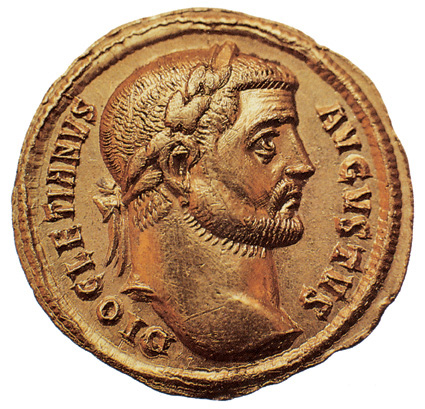
The Western Roman Empire was the western portion of the wider Roman Empire that developed as imperial administration was reorganized in the late third and fourth centuries CE. Reforms introduced by Diocletian and later emperors divided responsibilities across multiple senior rulers and, over time, produced a lasting distinction between western and eastern halves. The eastern half survived and evolved into what scholars often call the Byzantine or Eastern Roman state, while the western half faced mounting pressures and ultimately ceased to function as a unified imperial polity in the fifth century.
Image gallery
10 Images




Territories and administration
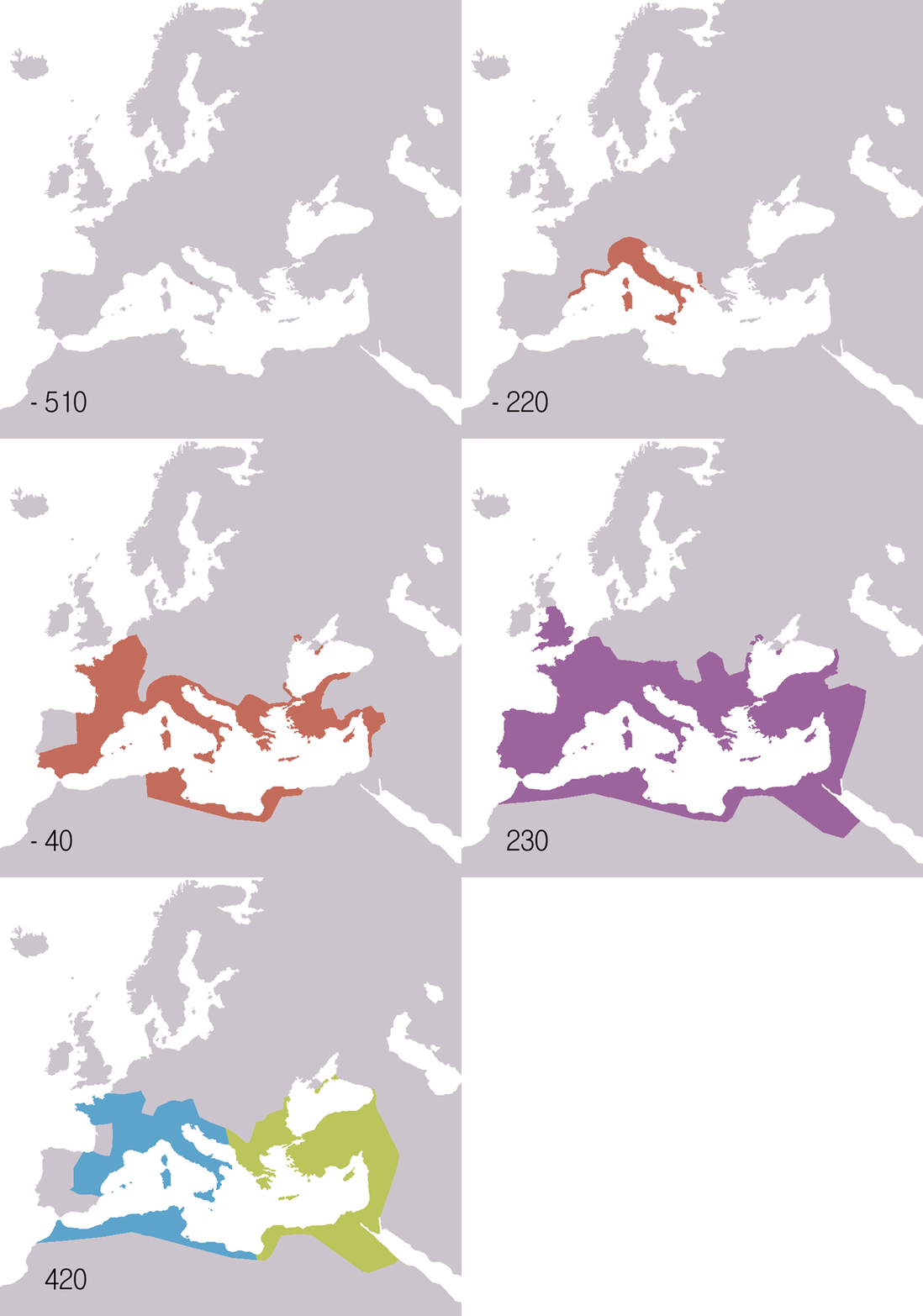
At its greatest administrative coherence the Western Empire encompassed peninsular Italy and the city of Rome, the provinces of Hispania, much of Gaul, the western sectors of the Danube frontier, and the coastal provinces of North Africa. It bordered Germanic tribal territories in what is now Germany and the Rhine frontier, and it contained Mediterranean islands and ports that tied its economy to long-distance trade. The empire's governance combined civil and military offices, extensive taxation systems, and networks of roads and cities; over time these institutions were stressed by repeated military demands and administrative change.
Capitals and centres of power
As imperial administration became more mobile, the symbolic and logistical centers of the western administration shifted. In the late third century emperors made use of Mediolanum (Milan) as a primary seat; later, for strategic and defensive reasons, a western court sat at Ravenna. Nevertheless Rome remained a powerful cultural and religious symbol, even when it no longer served as the main military headquarters.
Decline and key events
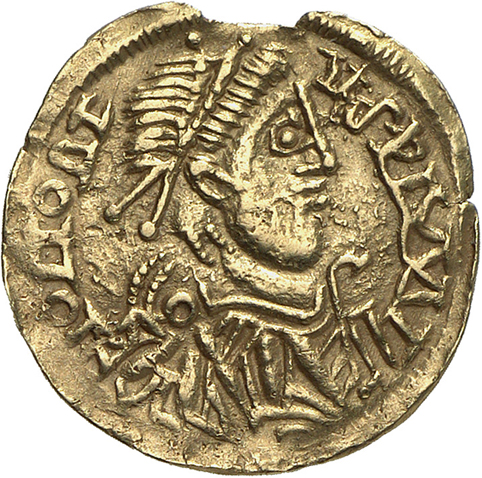
The late third-century instability often summarized as the Crisis of the Third Century weakened imperial cohesion. From the fourth century onward the western provinces endured repeated incursions and settlements by a variety of groups, including the Visigoths, Ostrogoths, Burgundians, Franks, and raiding forces such as the Huns. Economic strains, including episodes of inflation and heavier taxation to pay for defense, further eroded imperial control. Key episodes commonly cited by historians include the sack of Rome by the Visigoth leader Alaric in 410 CE and the later Vandal sack of 455. The traditional date for the end of imperial rule in the west is 476 CE, when the Germanic commander Odoacer deposed the last western emperor, often called Romulus (Romulus Augustulus), and assumed kingship in Italy.
Legacy and aftermath
The end of centralized Roman rule in the west did not erase Roman institutions overnight. Law, language (Latin), urban centers, Christian organization, and infrastructure persisted and shaped the successor kingdoms that emerged across Europe. Many Germanic rulers adopted Roman titles, codes, and administrative practices. In contrast, the eastern Roman state preserved an imperial bureaucracy and military capacity that allowed it to continue Mediterranean power politics for many centuries.
Notable features and distinctions
- Administrative split: The western and eastern administrations increasingly operated as separate political entities even before the western collapse.
- Military pressures: Frontier defense and the settlement of federate peoples altered the composition and loyalties of late Roman armies.
- Cultural continuity: Roman law, urban life, and the Christian church provided lines of continuity across the transition to medieval polities.
- Historiographical debate: Scholars debate whether 476 CE represents a sudden fall or the culmination of a long transformation.
For concise timelines, maps, and scholarly overviews consult general references and institution pages on late antiquity and the transformation of the Roman world: see summaries associated with the terms Roman Empire, Diocletian, Crisis of the Third Century, and studies of the barbarian groups such as the Ostrogoths, Huns, Franks, Visigoths, and Burgundians. For geographic context see entries on France, Italy, North Africa, and regions such as the Balkans, Asia Minor and Egypt.
This article outlines the broad contours of the western polity that existed in late antiquity, its difficulties, and the ways in which its end shaped medieval Europe.
Questions and answers
Q: What was the Western Roman Empire?
A: The Western Roman Empire was the western half of the Roman Empire that was divided by Diocletian in 286 AD.
Q: What happened to the other half of the Roman Empire after it was divided?
A: The other half of the Roman Empire became known as the Eastern Roman Empire and later became known as the Byzantine Empire.
Q: What caused difficulties for the Roman Empire since 190 AD?
A: Large Gothic tribes began moving into areas under Roman control, which caused difficulties for the Roman Empire since 190 AD.
Q: What did Diocletian try to do to bring back stable government?
A: Diocletian tried to bring back stable government by dividing the empire into sections.
Q: What regions were included in the Western Roman Empire?
A: The Western Roman Empire included Iberia, France, southern Britain, Italy, North Africa, and parts of Germany.
Q: What caused the economy of the Western Roman Empire to struggle?
A: The economy of the Western Roman Empire struggled due to increased military spending causing inflation, rising taxes, and rising prices.
Q: When did the Western Roman Empire fall and who removed Emperor Romulus?
A: The Western Roman Empire fell in 476 AD, and the leader of the Goths, Odoacer, removed Emperor Romulus.
Related articles
Author
AlegsaOnline.com Western Roman Empire Leandro Alegsa
URL: https://en.alegsaonline.com/art/107535