
Alaric I — Visigothic leader who sacked Rome (reigned 394–410)
Alaric I was the first Visigothic king to capture Rome in 410 AD. A former Roman soldier, he led campaigns across the late Roman world and left a complex legacy shaping the collapse of imperial authority.
Overview
Alaric I was a prominent leader of the Visigoths during the late fourth and early fifth centuries. Rising from service in the Roman military, he became the central figure in a series of campaigns that exposed the declining capacity of the Roman state and culminated in the sack of Rome in 410 AD. His career combined military skill, political negotiation, and the pursuit of secure territory and status for his people.
Image gallery
6 Images



Origins and early career
Details of Alaric's family and early life are sparse. He first appears in surviving narratives as a commander who had received part of his training within the Roman army. That background helped him operate effectively against and alongside Romans. He emerged as a leader of Gothic contingents after the death of Emperor Theodosius I and participated in conflicts such as the battle often called the Battle of the Frigidus. As leader of the Visigoths, he negotiated repeatedly with Roman officials for foederati status and land suitable for settlement.
Rise to power and campaigns
Following imperial succession crises and the partition of the empire, Alaric led his people in a series of incursions and campaigns across the Balkans and into Italy. Roman responses ranged from military engagement to attempted bribery and political accommodation. At times he was seen as a leader seeking recognition within the imperial system; at other moments he acted as an autonomous warlord. Contemporary sources describe episodes in which Alaric both attacked Roman provinces and made offers to serve as a stabilizing military force for emperors who lacked reliable troops.
Sack of Rome, 408–410
Alaric's approach to the city of Rome involved sieges, negotiations, and threats across several years. In 408 a payment persuaded him to withdraw temporarily; in 410 he entered and sacked the ancient city of Rome, an event that shocked contemporaries because the capital had not been captured by a foreign force in generations. The sack was limited in scope compared with later medieval sieges: churches, hostages and ransom arrangements played roles, and Alaric's aims appear to have involved securing concessions rather than wanton destruction.
Death, succession, and fate of the Visigoths
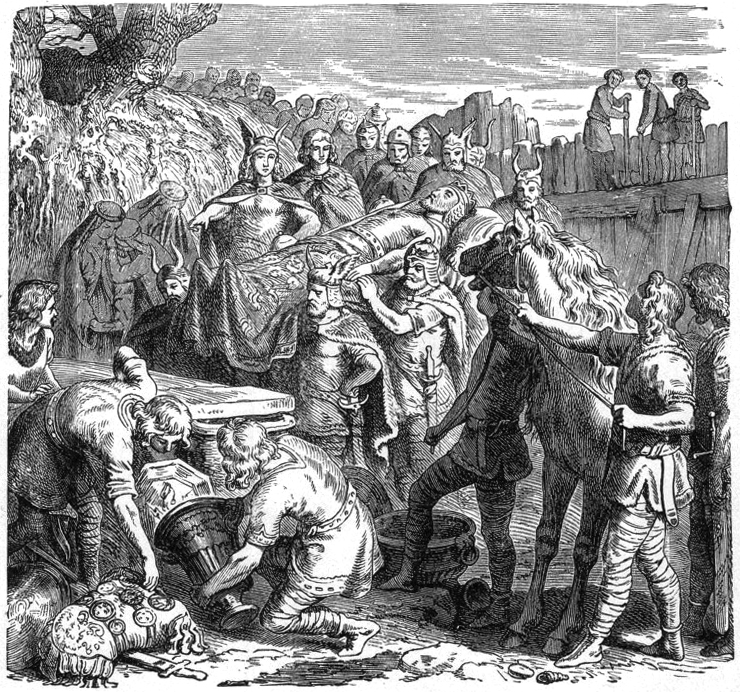
Alaric died not long after the sack and was succeeded by leaders who steered the Visigoths into new settlements and political arrangements. Sources narrate legendary accounts of his burial and of the movement of Gothic groups into Gaul and Hispania. After his death the Visigoths would go on to carve out a lasting kingdom in southwestern Gaul and Spain under later rulers.
Legacy, sources, and notable points
Alaric's career has been interpreted as both a symptom and an agent of Roman decline: it showcased the weakness of imperial structures, the importance of federate armies, and the pressures of migration and resource competition. Important points for readers include:
- Primary narratives are fragmentary and sometimes contradictory; chroniclers and later historians differ about motives and scale—some describe Alaric as an opportunistic war leader, others as a pragmatic negotiator.
- The sack of Rome did not end the Roman state; rather it punctured the aura of invulnerability surrounding the city and accelerated shifts in power between center and frontier.
- Alaric's interactions with imperial figures—including the emperor in Constantinople and with Western officials—illustrate late Roman diplomacy.
- Later traditions and legends—such as a famous story about his burial under a river—are culturally important but should be treated cautiously as they mix fact and folklore.
For further reading, modern studies place Alaric and the Visigoths within the broader context of the Migration Period and the transformation of Roman provincial life. These works examine the political bargains, military realities, and social movements that shaped the transition from Roman to post-Roman kingdoms.
Questions and answers
Q: Who was Alaric I?
A: Alaric I was a leader of the Visigoths.
Q: Where did Alaric I receive his military training?
A: Alaric I received much of his military training in the Roman army.
Q: What was Alaric I's role in the Battle of the Frigidus?
A: Alaric I was a war leader of Gothic forces fighting alongside Roman troops at the Battle of the Frigidus.
Q: When did the emperor Theodosius I die?
A: The emperor Theodosius I died in January 395.
Q: What did Alaric I do after the death of Theodosius I?
A: After the death of Theodosius I, Alaric I revolted and attacked parts of the Eastern Roman Empire.
Q: What did Alaric I do in 408?
A: In 408, Alaric I attempted to attack Rome but was bribed to leave.
Q: When did Alaric I die?
A: Alaric I died in 411.
Related articles
Author
AlegsaOnline.com Alaric I — Visigothic leader who sacked Rome (reigned 394–410) Leandro Alegsa
URL: https://en.alegsaonline.com/art/2000
Sources
- ancient.eu : "Alaric"
- bbc.co.uk : "Rome's Greatest Enemies Gallery"
- penelope.uchicago.edu : "The Sack of Rome"
- thefinertimes.com : "Visigoths Sack of Rome"
- history.com : "6 Infamous Sacks of Rome"