
Viola sororia (common blue violet)
Viola sororia is a perennial North American violet with heart-shaped leaves and purple flowers; notable for cleistogamous blooms, moth and butterfly associations, edible parts, and frequent presence in lawns and gardens.
Overview
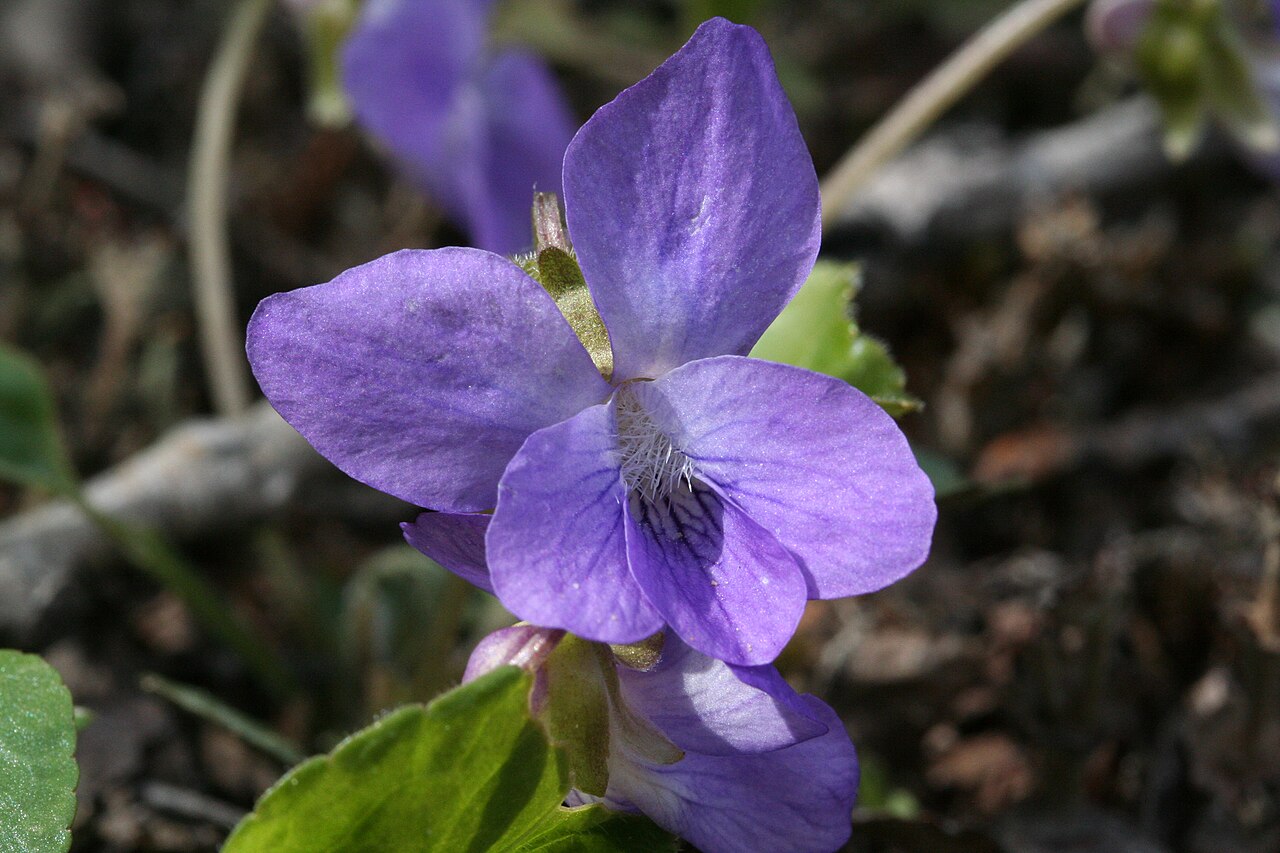
Viola sororia, also recorded under names such as Viola papilionacea and commonly called the common blue violet or purple violet, is a small perennial of the violet family. It typically grows in a basal rosette and produces solitary, five-petaled flowers in spring. The species is widely naturalized across much of eastern North America and commonly found in meadows, woodlands and managed turf.
Image gallery
7 Images




Description and life cycle
Plants form a clump of heart-shaped leaves with scalloped margins and send up short stalks bearing single showy flowers. Individuals produce open, pollinator-visited blooms as well as later-season cleistogamous (closed, self-pollinating) flowers. As a perennial flowering plant, it survives from year to year by resources stored in its roots and by continued seed recruitment.
Reproduction and dispersal
Seeds are often dispersed by ants (myrmecochory) that carry seeds to new sites, attracted by an oil-rich appendage on the seed coat. The mixed breeding strategy—open flowers that attract insects and closed flowers that self-fertilize—helps ensure reproduction under varying ecological conditions and explains the plant's persistence in fragmented urban landscapes.
Habitat, distribution and ecology
The common blue violet tolerates shade and a range of soils, from moist meadow to thin lawn turf. It is an important early-season nectar source for bees and a larval host for several fritillary butterflies. The species is linked culturally and officially to a number of U.S. states: see references to state symbols for Rhode Island, Illinois, New Jersey and other local recognitions recorded in regional sources (state floral emblems).
Human uses and perceptions
Leaves and flowers are edible and have been used as salad greens and for decorative candied flowers. In lawns the species is sometimes undesired and described as a weed, while native-plant advocates value it for biodiversity. Management choices range from hand removal and adjusted mowing to selective chemical control, depending on goals for habitat and aesthetics (lawn management).
Taxonomy and similar species
The taxonomy of violets includes several closely related taxa and synonyms; regional forms may vary in color and leaf shape. Careful observation of flower shape, leaf attachment and habitat helps distinguish Viola sororia from other small violet species. For identification and conservation guidance consult regional floras and trusted plant guides linked above.
Related articles
Author
AlegsaOnline.com Viola sororia (common blue violet) Leandro Alegsa
URL: https://en.alegsaonline.com/art/105454
Sources
- ct-botanical-society.org : Viola sororia
- ipm.ppws.vt.edu : Viola sororia