
Victor J. Stenger: Physicist, Author, and Skeptic
Overview of Victor J. Stenger (1935–2014): particle physicist, popular science writer, and prominent religious skeptic known for books arguing against theistic claims and for public science communication.
Victor John Stenger (1935–2014) was an American particle physicist and educator who became widely known as a public intellectual and writer. Combining technical training with a forceful public voice, he engaged topics ranging from quantum mechanics to philosophy of science. Stenger described himself as a religious skeptic and was associated with the movement often called New Atheism, arguing that scientific evidence does not support supernatural claims.
Image gallery
1 Image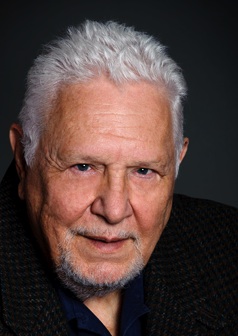
Academic career and scientific work
Trained as a research physicist, Stenger worked in experimental and theoretical areas related to high-energy physics and cosmology. He held appointments at institutions including the University of Hawaii and the University of Colorado Boulder, where he taught and conducted research. His professional background informed his popular accounts of physics, quantum mechanics, and cosmology, and he often emphasized empirical testing and the methodological limits of scientific inference.
Books, columns, and public outreach
Stenger was a prolific author of books aimed at general readers and fellow scientists. He tackled scientific misconceptions and what he regarded as pseudoscience, writing on philosophy, religion, and atheism. His 2007 book God: The Failed Hypothesis became a best-seller and exemplified his approach of examining theological claims with scientific criteria. His final major work, God and the Atom (2013), traced the idea of atoms from ancient philosophy to modern particle physics. He also wrote a science column for The Huffington Post, where he commented on contemporary debates about science and belief.
Selected works and ideas
- God: The Failed Hypothesis (2007) — empirical critique of theistic claims.
- God and the Atom (2013) — history and physics from Democritus to the Higgs.
- Popular science essays explaining core concepts in physics and cosmology.
Reception, controversy, and influence
Stenger's clear, polemical style won both praise and criticism. Supporters credited him with bringing scientific rigor to public conversations about religion and pseudoscience, while critics argued he sometimes overstated scientific conclusions about metaphysical questions. His work is often cited in discussions that intersect science, philosophy, and religion, and he remains a notable figure in late 20th and early 21st century skeptical literature.
Personal life and legacy
Born in Bayonne, New Jersey, Stenger came from a family of European immigrants—his father from Lithuania and his mother's parents from Hungary. He married Phylliss in 1962 and had two children. Stenger died of an aortic aneurysm on August 27, 2014, in Honolulu, Hawaii. His combination of scientific expertise, accessible writing, and outspoken skepticism left a lasting impression on public debates about science and religion.
For further reading, consult academic reviews and collections of his essays and interviews, which survey both his scientific contributions and his role as a public critic of supernatural claims.
Related articles
Author
AlegsaOnline.com Victor J. Stenger: Physicist, Author, and Skeptic Leandro Alegsa
URL: https://en.alegsaonline.com/art/104959