
Aortic aneurysm
Aortic aneurysm is a localized dilation of the aorta that weakens its wall and can lead to rupture. This article explains types, causes, symptoms, diagnosis, treatment, and prevention.
Overview
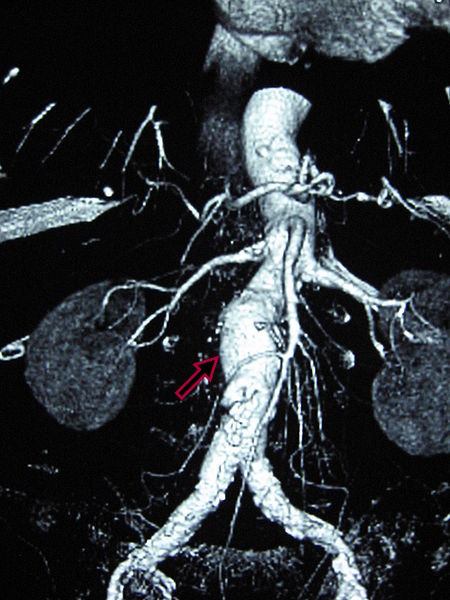
An aortic aneurysm is a focal enlargement of the aorta in which the vessel diameter increases substantially above its normal size, reflecting weakness of the arterial wall. Aneurysms are clinically important because they can grow silently and, if they rupture, cause life-threatening internal bleeding. Many are discovered incidentally during imaging for unrelated conditions.
Image gallery
4 Images


Causes and risk factors
Aortic aneurysms arise when the structural integrity of the aortic wall is compromised. Common contributing factors include long-standing high blood pressure, atherosclerosis (plaque disease), and genetic connective tissue disorders such as Marfan syndrome and Ehlers–Danlos syndrome. Additional risk factors are advancing age, male sex, smoking, and a family history of aneurysm. Infections and trauma are less common causes.
Types and clinical features
Aneurysms are classified by location. The two major categories are thoracic aortic aneurysms (in the chest) and abdominal aortic aneurysms (in the abdomen). Symptoms often do not appear until the aneurysm enlarges or complications develop. When present, symptoms may include:
- Deep, persistent chest, back or abdominal pain
- Pulsatile abdominal mass (sometimes felt on exam)
- Compression symptoms such as difficulty swallowing, hoarseness, or breathing problems for chest aneurysms
Diagnosis
Diagnosis relies on imaging. Common tests include abdominal ultrasound for screening and surveillance of abdominal aneurysms, and computed tomography (CT) or magnetic resonance imaging (MRI) for detailed assessment of size, extent, and suitability for repair. Plain X-rays and echocardiography can provide additional information in certain settings. Accurate measurement of diameter guides management decisions because risk of rupture increases with size.
Treatment and prevention
Management depends on aneurysm size, growth rate, symptoms, and patient health. Small aneurysms are usually monitored with periodic imaging and risk-factor modification: smoking cessation, blood pressure control, lipid management, and healthy lifestyle measures. Medical therapy often includes antihypertensive agents such as beta-blockers or other blood pressure medications. Larger or symptomatic aneurysms are treated surgically by either open repair or less invasive endovascular repair (EVAR or TEVAR for thoracic lesions). Choice of technique depends on anatomy, surgical risk, and available expertise.
Emergency, prognosis and screening
Rupture of an aortic aneurysm is a surgical emergency characterized by sudden severe pain, shock, and high mortality without prompt intervention. Prognosis varies: small, stable aneurysms monitored and managed conservatively may remain asymptomatic for years; repaired aneurysms generally have improved outcomes but require lifelong surveillance. Screening programs (for example, one-time ultrasound screening in older men with a history of smoking) aim to detect abdominal aneurysms before they become life-threatening.
Author
AlegsaOnline.com Aortic aneurysm Leandro Alegsa
URL: https://en.alegsaonline.com/art/4833
Sources
- pubmed.ncbi.nlm.nih.gov : 1999868