
Rat (Rattus and related muroids): overview, biology, and human interactions
Comprehensive overview of rats: biology, taxonomy, behavior, distribution, interactions with people (pets, pests, research, food), and notable species such as black and brown rats.
Overview
The term "rat" commonly refers to medium-sized muroid rodents, a group distinguished by a long tail, prominent incisors and adaptable diets. In broad usage the word covers members of several genera, though many familiar species belong to the genus Rattus. Rats are omnivores and will consume a wide variety of plant and animal matter in natural and human-altered environments: see general notes on rodent classification and diet via rodent and omnivory. They forage opportunistically for food and will exploit scraps, crops and small prey (dietary breadth). The genus Rattus contains many described species, and two of its members—the black rat and the brown rat—are especially well known.
Image gallery
10 Images
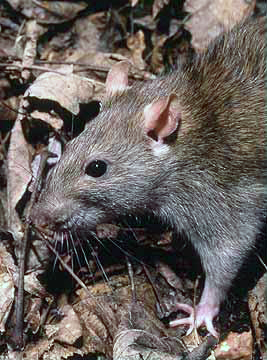






Characteristics and taxonomy
Rats are typically larger than the small muroid mammals commonly called mice, but these common names do not correspond to a strict scientific division. The muroid superfamily is taxonomically complex, so the labels "rat" and "mouse" are partly descriptive rather than systematic (taxonomic context). Some species that carry the name rat or mouse are not in the genera Rattus or Mus; for example, the pack rat (a Neotropical woodlands specialist) and the cotton mouse illustrate how common names span distinct lineages: pack rat, cotton mouse. Typical anatomical traits include ever-growing incisors, well-developed sensory whiskers, and a flexible body suited to burrowing or climbing.
Life history and behavior
Many rat species are social and breed rapidly where resources are available. Gestation, litter size and juvenile development vary by species and environment. In human care, "fancy rats" are selectively bred forms kept as companion animals; information on domesticated and pet varieties can be found at pet rat resources. Lifespan also varies: wild individuals often face high mortality and short average lives, while captive rats can live two to three years or more under attentive care.
Distribution, origin and notable species
Old World rats have origins in southern and eastern Asia and from there spread with humans to most continents. Two widely recognized species are the black rat (Rattus rattus) and the brown rat (Rattus norvegicus), both of which adapted successfully to living alongside people. Human trade, shipping and settlement enabled their global expansion from an Asian center of origin (Asian origins).
Human interactions: uses, impacts and culture
Rats have multiple and sometimes conflicting roles in human societies. They are agricultural pests, household scavengers and can be vectors for pathogens, which has led to long-standing efforts in control and public health. Conversely, rats play major roles in biomedical research as laboratory animals and in some cultures they are a local protein source. Rat meat is consumed in a number of regions; references to culinary use appear in discussions of food traditions and regional diets (rat as food), including documented consumption in parts of Cambodia, Laos, regions of Africa, parts of China and Vietnam.
Importance and distinctions
Beyond nuisance and health concerns, rats are ecologically significant as scavengers and prey for larger predators. They demonstrate notable cognitive and social flexibility, which helps explain their success in diverse habitats. Important distinctions to keep in mind: "rat" is an informal label applied across different genera; species differ widely in behavior, habitat, and relationship with humans. For practical information on identification, management and care, consult specialist sources and local guidance (rodent references, taxonomic notes).
- Examples of notable species: black rat, brown rat, pack rat.
- Common human roles: pest control target, laboratory animal, pet (fancy rat), occasional food source.
- Further reading: follow links in this article for general topics such as diet (what rats eat) and domestication (keeping pet rats).
Questions and answers
Q: What is a rat?
A: A rat is a medium-sized rodent that is an omnivore and eats various types of food.
Q: How many species of rats are there?
A: There are about 56 different species of rats.
Q: What are the most well-known species of rats?
A: The most well-known species of rats are the black rat (Rattus rattus) and the brown rat (Rattus norvegicus).
Q: Where did rats originate from?
A: Rats originated from Asia.
Q: What is the difference between rats and mice?
A: Rats are larger muroid rodents, while mice are smaller muroid rodents. The terms "rat" and "mouse" are not specific in a taxonomic way and can be applied to members of different genera.
Q: Do people keep rats as pets?
A: Yes, some people keep rats as pets, known as fancy rats.
Q: What is rat meat used for?
A: Rat meat is consumed as food in parts of Cambodia, Laos, Africa, China and Vietnam.
Related articles
Author
AlegsaOnline.com Rat (Rattus and related muroids): overview, biology, and human interactions Leandro Alegsa
URL: https://en.alegsaonline.com/art/81250
Sources
- ratbehavior.org : "How old is a rat in human years?"
- current-biology.com : "Metacognition in the rat"
- doi.org : 10.1016/j.cub.2007.01.061
- sciencedaily.com : Rats capable of reflecting on mental processes
- onlinelibrary.wiley.com : "Evidence for general cognitive ability (g) in heterogeneous stock mice and an analysis of potential confounds"
- doi.org : 10.1034/j.1601-183X.2002.10204.x
- ensembl.org : "Genome project"