
USS Ronald Reagan (CVN-76)
USS Ronald Reagan (CVN-76) is a Nimitz-class, nuclear-powered aircraft carrier of the United States Navy, named for President Ronald Reagan and notable for its power-projection role and forward-deployed service.
The USS Ronald Reagan (CVN-76) is a nuclear-powered aircraft carrier in service with the United States Navy. She is the ninth ship of the Nimitz class and carries the hull number CVN-76. The vessel is named for President Ronald Reagan, who served as U.S. president from 1981 to 1989; at the ship's christening in 2001 he was living, making this a notable naming decision in modern naval history. The carrier was built to the standard features of her class: a full-length flight deck, an island superstructure, catapult and arresting gear for fixed-wing aircraft, and nuclear reactors that supply long-range endurance.
Image gallery
9 Images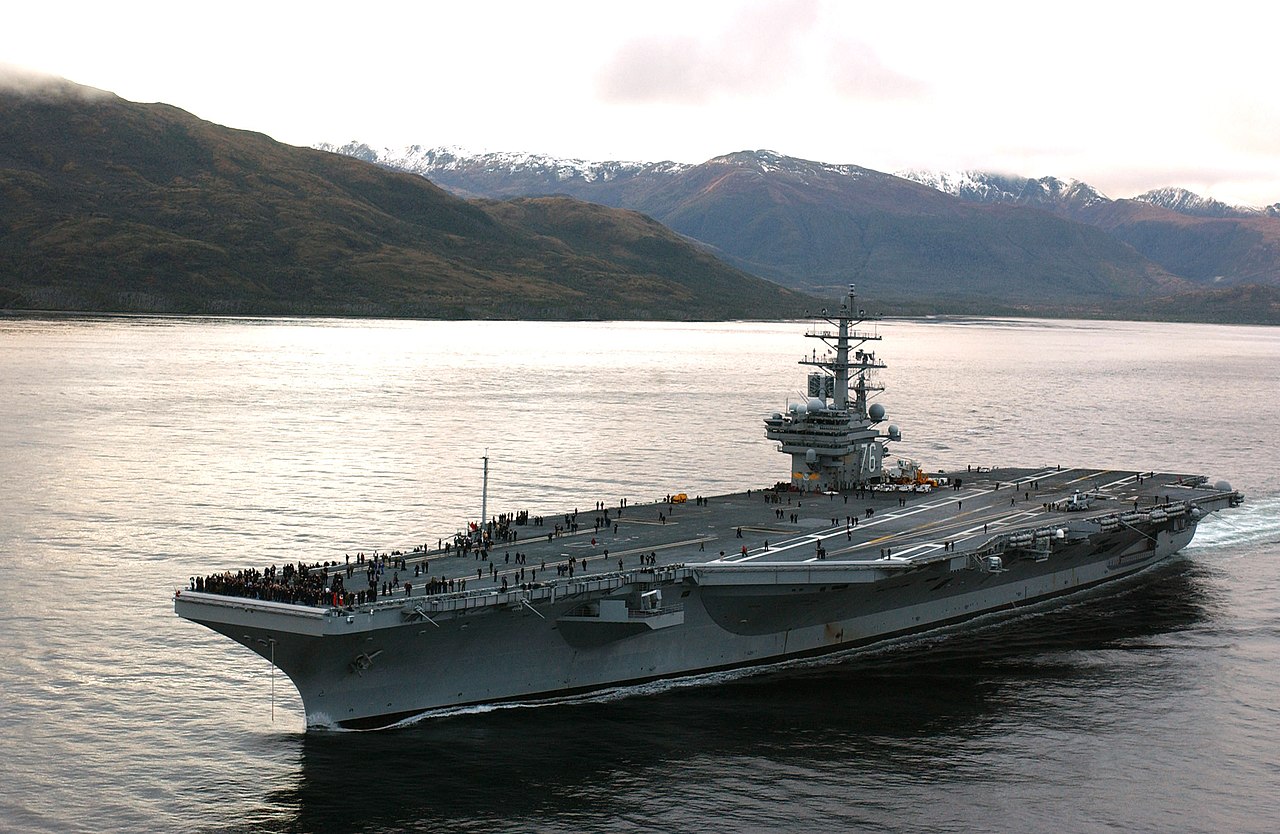


Design and capabilities
As a Nimitz-class carrier, the Ronald Reagan combines large flight-deck operations with nuclear propulsion to support sustained deployments. Key attributes include a multi-aircraft air wing, extensive maintenance and logistics facilities, and defensive sensors and weapons systems. Nuclear power provides the ship with the range and steaming endurance required for prolonged presence without frequent refueling, while the air wing enables the carrier to project air power, maintain maritime security, and support humanitarian operations.
Service history and deployments
The ship was constructed and launched in the early 2000s and subsequently commissioned into active service. Since entering the fleet she has completed multiple major deployments, exercises, and port visits in the Pacific and other regions, and has served as the core of a carrier strike group. On several occasions the carrier has been forward-deployed and acted as a mobile base for air operations, disaster response, and multinational training activities. The vessel has also been used as a visible element of U.S. naval presence and diplomacy.
Naming, christening, and notable events
The choice to name the carrier for a former president attracted attention because President Reagan was not a career Navy officer, though he served as Commander-in-Chief. At the carrier's christening, Mrs. Nancy Reagan participated in the traditional bottle-breaking ceremony alongside then-President George W. Bush. President Reagan did not attend the event owing to ill health; he later received a diagnosis of Alzheimer's disease. The ship was at sea when Reagan died in 2004, a moment that received widespread public attention within the fleet and beyond.
Roles and notable facts
- The Ronald Reagan serves as the center of a carrier strike group, enabling combined operations with surface ships, submarines, and air assets.
- Typical missions include power projection, sea control, deterrence, humanitarian assistance, and support for coalition operations.
- Her nuclear propulsion and large aviation facilities allow extended independent operations and rapid response to crises.
Distinctions and public profile
Beyond her operational role, the carrier is often highlighted in discussions of naval strategy, fleet composition, and the public symbolism of American sea power. The naming of a capital ship for a living former president at the time of christening drew both attention and commentary about tradition and civilian leadership of the armed forces. For more on design details, deployments, and the ship's public record, see official summaries and historical accounts available from naval authorities and reputable reference works.
Further reading and primary sources: ship specifications, commissioning and christening records, and assorted operational summaries and press releases are useful starting points for those researching CVN-76's technical features and service history.
Related articles
Author
AlegsaOnline.com USS Ronald Reagan (CVN-76) Leandro Alegsa
URL: https://en.alegsaonline.com/art/103695
Sources
- navy.mil : "USS Ronald Reagan Departs on Third Deployment"
- reaganfoundation.org : "USS Ronald Reagan (CVN-76)"
- transcripts.cnn.com : "USS Ronald Reagan Commemorates Former President's 90th Birthday"