
Nancy Reagan: Actress, First Lady of California and the United States
Biography of Nancy Reagan (born Anne Frances Robbins), her acting career, role as First Lady of California and the United States, policy initiatives, controversies, later life and legacy.
Overview
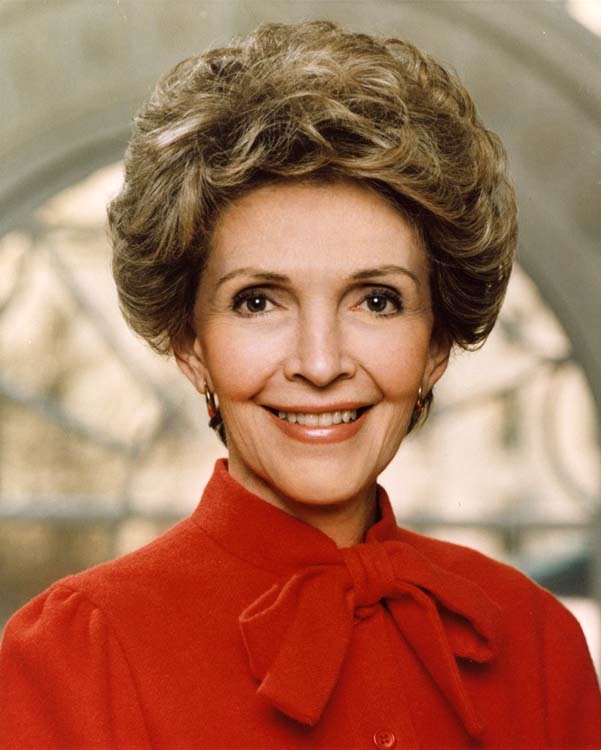
Nancy Reagan (born Anne Frances Robbins; July 6, 1921 – March 6, 2016) was an American actress and the wife of Ronald Reagan, the 40th President of the United States. She served as First Lady of the United States from 1981 to 1989 and earlier as First Lady of California during her husband's two terms as governor. Her public profile combined a background in film and stage with an active, often controversial role in White House life. Over decades she was known for advocacy on behalf of children, a high-fashion public image, and later, support for medical research.
Image gallery
10 Images


Early life and acting career
Nancy was born in Manhattan, New York City, and spent parts of her childhood on the East Coast, including time in Maryland. She adopted the professional name Nancy Davis when she pursued acting. During the 1940s and 1950s she worked in Hollywood as an actress, appearing in films and on television. Her screen credits included genre pictures and studio productions such as Donovan's Brain and Hellcats of the Navy, the latter of which co-starred her future husband. Her experiences in the entertainment industry also brought her into contact with labor and civic organizations tied to the film world.
Marriage, family, and role in California politics
She married Ronald Reagan in 1952, when he was a prominent actor and president of the Screen Actors Guild. The couple had two children together, a son and a daughter, commonly referred to as Ron and Patti. When Ronald Reagan served as governor of California, Nancy Reagan took on public duties typical of a gubernatorial spouse, including charitable work and programs aimed at families and seniors. During this period she helped promote community initiatives such as the Foster Grandparents Program and cultivated a reputation for elegance and careful public presentation.
First Lady of the United States: initiatives and influence
As national First Lady she was a visible figure in the Reagan administration. She launched and championed the anti-drug education campaign often summarized by the slogan "Just Say No", which targeted youth drug use through school and media outreach. Nancy Reagan also took an active interest in White House personnel, appointments, and public diplomacy; commentators and historians have noted that she exercised considerable influence behind the scenes. Her attention to style, interior renovation, and social protocol drew both admiration and criticism, and public reactions to such choices were a recurring theme of her time in the White House.
Controversies and public scrutiny
Several episodes became focal points for controversy. Early in her husband's presidency she faced criticism for domestic decisions such as changes to White House service items and entertaining priorities. Later disclosures revealed that after the 1981 assassination attempt on President Reagan she consulted an astrologer to help schedule the president's public events; this disclosure generated debate about the use of unconventional advisers. Her protectiveness of the president and efforts to influence staffing and policy sometimes generated public and media scrutiny, described in commentaries as instances of both support and overreach. These controversies remain part of how scholars and journalists assess her political role and personal style.
Later life, advocacy and legacy
After leaving the White House in 1989, Nancy Reagan devoted much of her attention to caring for her husband when he was diagnosed with Alzheimer's disease in the 1990s. She remained involved with the Ronald Reagan Presidential Library and with conservative causes, and later became an outspoken supporter of biomedical research including stem cell studies, which she argued could lead to treatments for degenerative conditions. Though often remembered for fashion and for private influence, her supporters emphasize her loyalty, fundraising work, and public campaigns on behalf of children and the elderly.
Notable facts
- She held the title of First Lady of the United States for eight years and previously was First Lady of California.
- Her husband, Ronald Reagan, served as the nation’s 40th president; she was a public partner throughout his political career and an active participant in public life.
- Her early career included work in film, with roles discussed in references such as Donovan's Brain and other studio productions.
- Public reactions to her initiatives and private advising ranged from supportive to critical; contemporary accounts debated her influence (see discussion and analysis at critical perspectives and defensive reassessments).
For further reading on her life and public role, many readers consult biographies, archival material at presidential collections, and contemporary news reporting. Researchers often place her career at the intersection of entertainment, politics, and the evolving role of the modern American first lady. Additional resources and archival links are maintained in official and academic repositories that document both her public work and private life, including materials that reflect her involvement in civic programs and later advocacy efforts.
Related topics and reference points: the presidency of Ronald Reagan, the Screen Actors Guild era in Hollywood, the development of presidential spouse initiatives in the late 20th century, and public debates over ethics and personal advisors in executive residences. Contemporary summaries and scholarly evaluations of Nancy Reagan continue to be revised as historians reassess primary sources and memoirs.
For online repositories, archival finding aids, and curated exhibits, see institution-specific guides and digital collections that collect papers, photographs, and recorded interviews documenting her life and public service; many of these are cited and cross-referenced in modern biographies and institutional catalogs (place of birth, city records, and regional histories in areas she lived).
Her family life—her marriage and children, including references to Ron and Patti—and her continuing presence in public memory through the Reagan Library and nonprofit activities keep her an object of study for those interested in twentieth-century American political culture and the role of presidential spouses.
Readers seeking primary documents, official statements, and a chronology of events may consult curated collections at libraries and presidential centers; for accessible overviews, encyclopedias and reputable news organizations provide summarized chronologies and analyses of her public roles and initiatives. For more detailed investigations into specific episodes—policy influence, post-assassination decisions, and biomedical advocacy—consult specialized biographies and peer-reviewed historical work.
Additional online and print resources referenced in biographies and archives are often linked from institutional pages; see archival catalogs and bibliographies for citations and document inventories across major repositories and historical associations.
Finally, her life illustrates the multiple roles a presidential spouse may play: ceremonial host, policy advocate, private confidante, and public symbol—each of which shaped how she was perceived during and after her time in the White House. For documentary material, archival collections and oral histories remain principal sources for continued scholarly assessment.
External resource anchors used above include institutional, biographical, and subject-specific guides: First Lady overview, presidential context, biographical entries, and document gateways at state and presidential archives that preserve records relating to her public life.
Further research directions include examinations of media coverage, the evolution of first-lady initiatives, and the long-term effects of public campaigns such as Just Say No on national prevention efforts.
Questions and answers
Q: When was Nancy Reagan born?
A: Nancy Reagan was born on July 6, 1921.
Q: Where did she grow up?
A: She grew up in Maryland.
Q: What movies did she star in during the 1940s and 1950s?
A: She starred in movies such as Donovan's Brain, Night Into Morning and Hellcats of the Navy.
Q: Who did Nancy Reagan marry?
A: She married Ronald Reagan who was then president of the Screen Actors Guild in 1952.
Q: What role did Nancy play when her husband was Governor of California from 1967 to 1975?
A: Nancy Reagan became First Lady of California when her husband was Governor from 1967 to 1975.
Q: What anti-drug campaign did she create during her husband's presidency?
A: She created the anti-drug campaign, "Just Say No" during her husband's presidency.
Q: How long did Nancy care for her ill husband after he was diagnosed with Alzheimer’s disease?
A:Nancy devoted most of her time to caring for her ill husband who was diagnosed in 1994 with Alzheimer's disease until his death in 2004.
Author
AlegsaOnline.com Nancy Reagan: Actress, First Lady of California and the United States Leandro Alegsa
URL: https://en.alegsaonline.com/art/127384