
Vasa — the 17th‑century Swedish warship
Vasa was a large, ornamented Swedish warship that sank on her maiden voyage in 1628. Raised in 1961, she is conserved and exhibited in Stockholm, offering unique insight into early modern naval design, art and daily life.
Overview
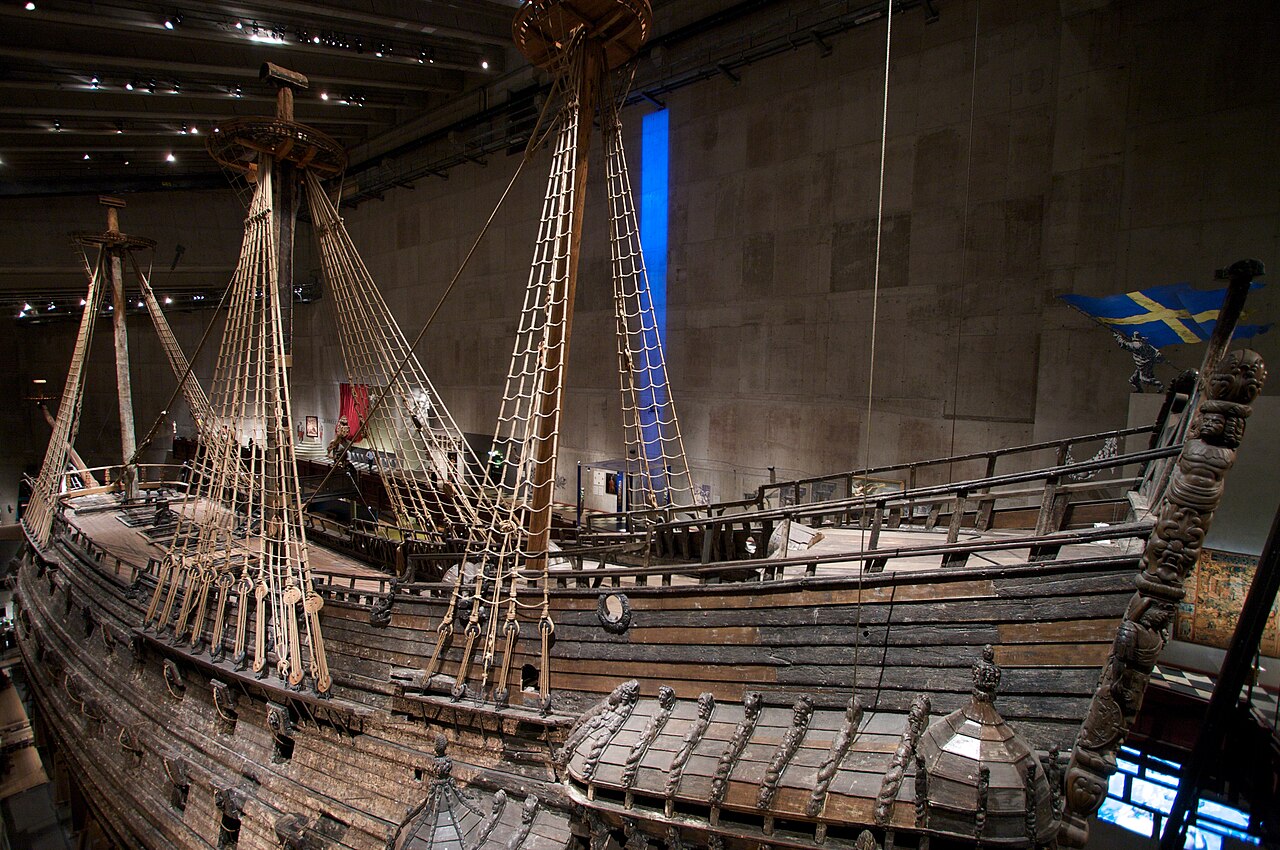
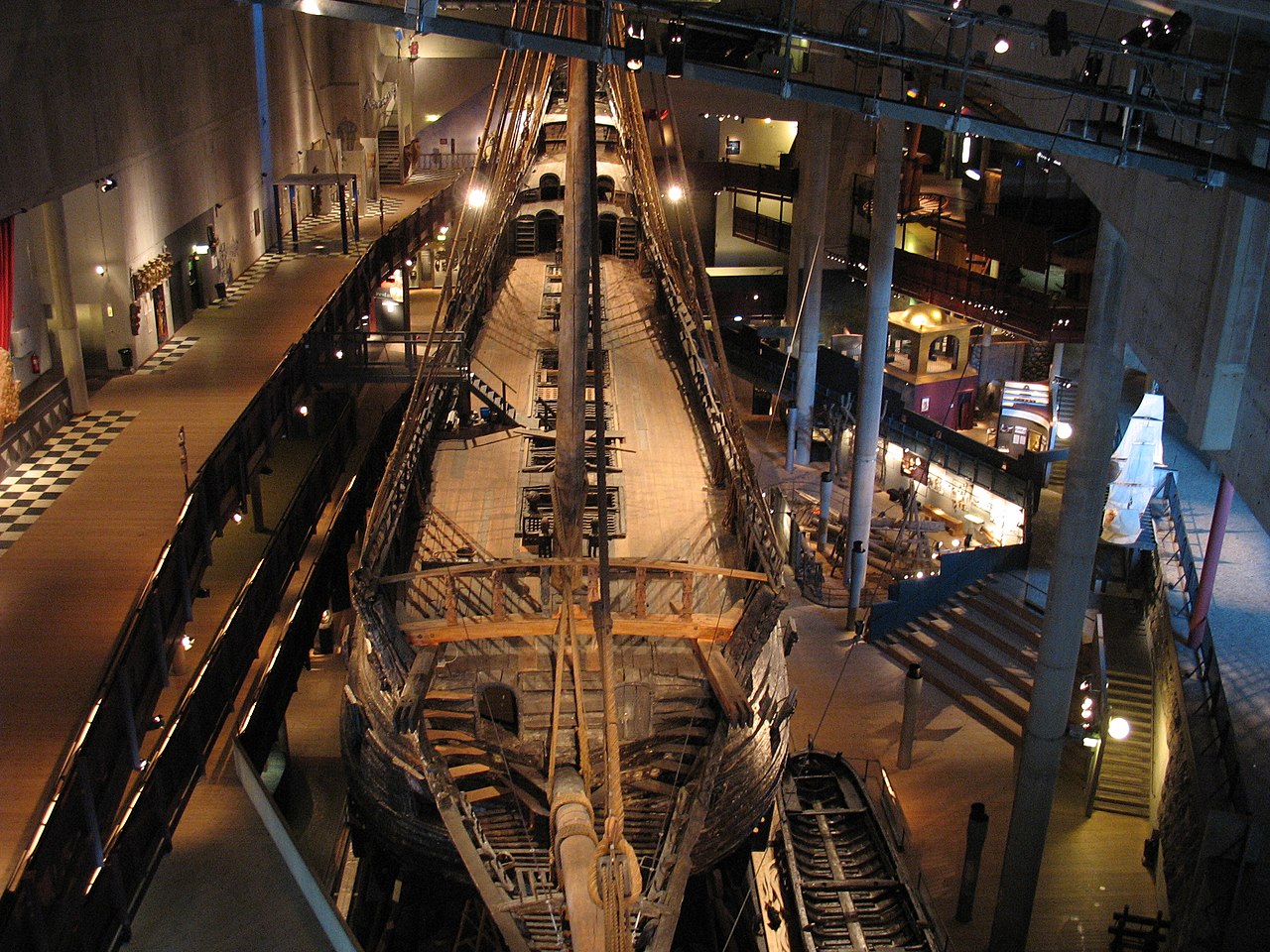
The Vasa was a heavily decorated warship built for the Swedish navy between 1626 and 1628. Intended as a flagship that would project royal power, she sank within minutes of leaving the harbor on her maiden voyage in 1628. The disaster left the hull and many onboard objects remarkably preserved in the brackish water of the Stockholm archipelago. The ship is now displayed in a purpose‑built museum in Stockholm and remains one of the best‑preserved 17th‑century ships in the world.
Image gallery
10 Images




Design, construction and armament
Vasa was commissioned to carry large numbers of heavy guns and to serve as a visible symbol of Sweden’s military ambitions during the early stages of the Thirty Years' War. She was richly carved and painted, with hundreds of wooden sculptures along her hull intended to impress allies and intimidate opponents. The vessel combined the era’s evolving naval design with ornate royal iconography.
- Size and layout: a two‑decked ship with numerous gun ports and a high sterncastle; intended to mount dozens of guns.
- Decoration: elaborate figurework on the bow and stern, reflecting royal propaganda and baroque taste.
- Armament and crew: built to carry a large battery of bronze and iron guns and a complement of soldiers and sailors.
Sinking and immediate aftermath
On her first short voyage out of Stockholm the Vasa heeled over in a light breeze and took on water through the open gun ports, capsizing and sinking within minutes. Contemporary and later investigations suggested that the ship was top‑heavy and lacked sufficient ballast to keep her stable. Pressure to complete the ship quickly and the influence of royal expectations have often been cited as contributing factors.
- Primary cause: instability from too much weight high in the ship and inadequate ballast.
- Contributory factors: rushed construction, changing specifications, and political pressure.
Early salvage, rediscovery and recovery
Shortly after the loss, divers using primitive diving bells recovered some of the heavier guns and other valuables in the 17th century. The wreck was largely forgotten until marine archaeologist Anders Franzén, studying archival sources, located it in 1956. Following careful preparation and public interest, the intact hull was raised in 1961 and towed to dry land for conservation.
During the salvage and excavation thousands of items were recovered, including weapons, clothing, personal items and human remains. These finds have given scholars an unusually detailed picture of shipboard life, material culture and maritime technology around 1628.
Conservation and display
Because the ship’s timbers had been saturated with saltwater for centuries, a long conservation program was required to stabilize the wood and remove salts. Conservators treated Vasa with a polymer spray that replaced water in the wood cells and then slowly dried and preserved the structure. This multi‑decade effort allowed the Vasa to be mounted in a climate‑controlled hall where visitors can view both the hull and thousands of associated artifacts.
Significance and legacy
Vasa is both an archaeological treasure and a cultural symbol. The preserved hull and the enormous assemblage of objects recovered inside provide concrete evidence for naval architecture, craftsmanship, clothing, armament and daily routines of the early modern Baltic world. The ship and its artifacts remain an active focus for research in maritime archaeology, conservation science and early modern history.
For further reading and institutional resources see links to primary topics: warship, maiden voyage, diving bells, cannons, Sweden, sails and historians.
Questions and answers
Q: What year was Vasa built?
A: Vasa was built from 1626 to 1628.
Q: Why did Vasa sink?
A: Vasa sank because she was too heavy on top.
Q: Who found the ship in 1956?
A: Anders Franzén found Vasa in 1956 after he had read about the ship in sources and looked for her in the water around Stockholm.
Q: How long did it take to complete the preservation treatment of Vasa?
A: The preservation treatment took almost 20 years to complete.
Q: Where is Vasa now located?
A: Vasa is now in the Vasa Museum in Stockholm, Sweden.
Q: How many visitors does the museum receive each year?
A: The museum gets more than one million visitors every year.
Q: What were some of the items found inside of Vasa when it was brought up?
A: When Vasa was brought up there were thousands of things inside her including bones of people, clothes, weapons, tools, coins, food and even some of the sails.
Related articles
Author
AlegsaOnline.com Vasa — the 17th‑century Swedish warship Leandro Alegsa
URL: https://en.alegsaonline.com/art/104292