
Turquoise-browed motmot (Eumomota superciliosa): description, range and significance
A compact overview of the turquoise-browed motmot (Eumomota superciliosa): identification, range, behaviour, habitat, cultural role and conservation status in Central America.
Overview
The turquoise-browed motmot (Eumomota superciliosa) is a distinctive, colourful bird of the family Momotidae. It occurs across parts of Mesoamerica, from south-eastern Mexico through countries of Central America to Costa Rica. Often seen on perches at forest edges and in open woodlands, this species is familiar to people living in its range and is not currently considered threatened.
Image gallery
10 Images




Identification and distinctive features
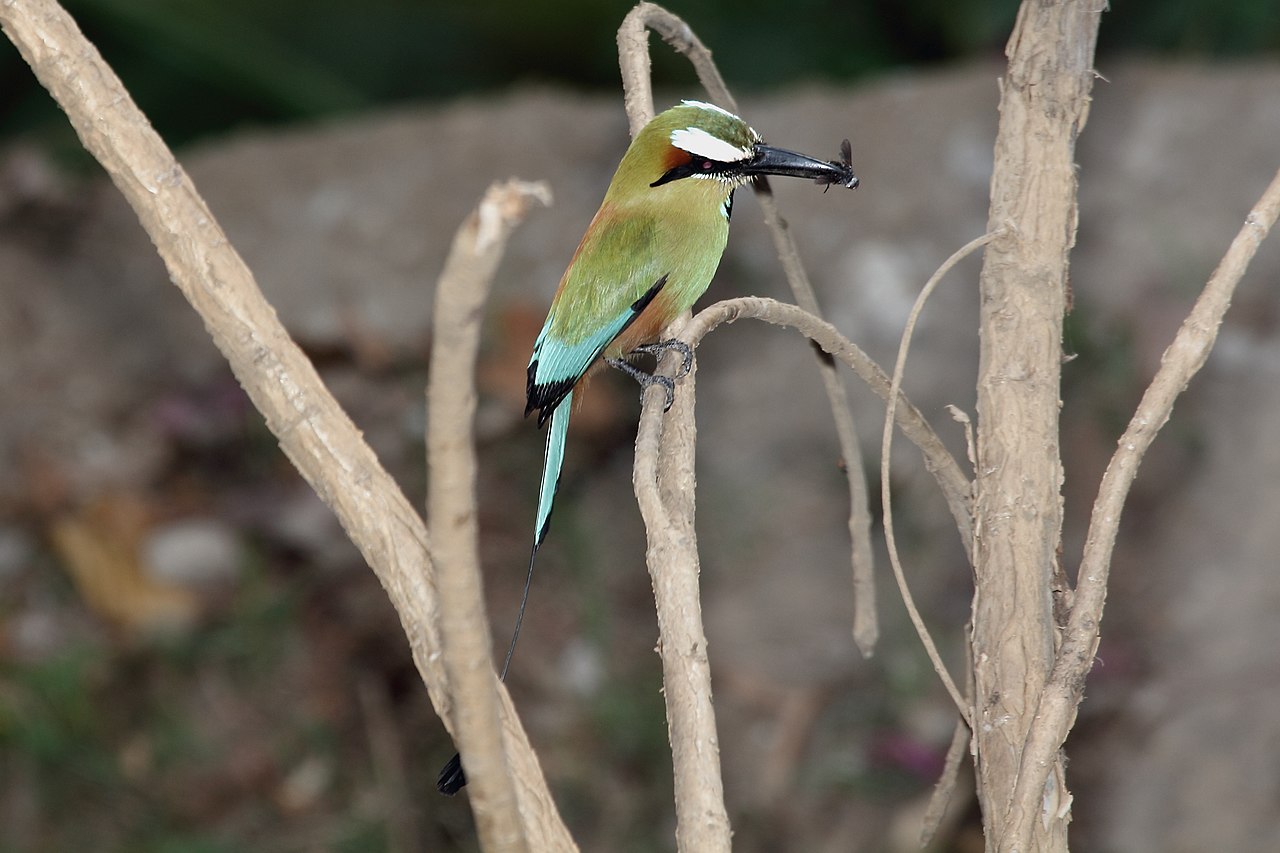
Adults are notable for bright turquoise and green plumage with warm orange or rufous underparts and a bold facial stripe. The species is best known for its unusual tail: the two central tail feathers are narrowed along much of their length so that only the shaft and a terminal tuft remain, producing a "racket" or "paddle" appearance. The tail is used in visual displays, including a characteristic slow pendulum-like wagging movement seen during courtship and territorial signalling. Its call is a low, repeated note that contributed to the common name "motmot."
Range, habitat and behavior
The turquoise-browed motmot inhabits a broad band of Central America. Its range includes the Yucatán Peninsula and adjacent regions of south-eastern Mexico (Yucatán area), through Belize, Guatemala, Honduras and Nicaragua, and into Costa Rica (Costa Rica). It prefers fairly open habitats such as forest edges, scrub, second-growth, and lightly wooded agricultural areas rather than dense interior forest. Individuals typically hunt from exposed perches, sallying to catch insects and other small prey and also taking fruit on occasion. The species often nests in burrows excavated in earth banks or similar substrates.
Breeding and diet
Turquoise-browed motmots usually nest in tunnels dug into slopes or banks; both partners may take part in excavation. Clutch sizes are small and parents feed young with insects and small vertebrates. Their feeding style combines sit-and-wait sallies for flying insects with gleaning of arthropods and small prey from foliage or the ground. In many parts of their range they are tolerant of human presence and can be seen along roadsides, clearings and in gardens.
Cultural importance and local names
The bird carries important cultural value in several Central American countries. It is called torogoz in El Salvador (El Salvador) and guardabarranco in Nicaragua (Nicaragua), where it is celebrated as a national symbol. Local familiarity with the species means it commonly appears in folklore, art and conservation education across its range. It is one of the most recognizable motmots to visitors and residents alike.
Conservation and notable facts
- Taxonomy: the species is placed in the genus Eumomota, and is widely treated as a single, well-defined species.
- Status: it remains relatively common within its range and is not regarded as globally threatened; formal assessments list it as of low conservation concern (range overview).
- Unique tail morphology: the racketed tail results from loss of barbs on the central shafts—a feature shared with other motmots but highly conspicuous in this species.
- Human associations: found in semi-open landscapes and often observed near human settlements (habitat notes).
Further reading and resources
For regional bird guides, range maps and natural history summaries consult local field references: species accounts and distribution pages for Mexico (Yucatán), Guatemala and Honduras (habitat details), and focused country pages for Costa Rica and neighbouring states (Costa Rica, Mexico). Additional cultural and conservation information can be found through national resources in El Salvador and Nicaragua (El Salvador, Nicaragua) and broader species summaries (family overview, range overview).
Field observers will recognise the turquoise-browed motmot by its vivid colours, racketed tail and deliberate tail-wag display; it remains one of the most emblematic birds of Mesoamerican open woodlands and rural landscapes.
Related articles
Author
AlegsaOnline.com Turquoise-browed motmot (Eumomota superciliosa): description, range and significance Leandro Alegsa
URL: https://en.alegsaonline.com/art/102142
Sources
- iucnredlist.org : "Eumomota superciliosa"
- springerlink.com : Racketed tail of the male and female turquoise-browed motmot: male but not female tail length correlates with pairing success, performance, and reproductive success