
Tyranni (Suboscines): a concise overview of the suborder
Tyranni, or suboscines, are a suborder of passerine birds largely found in the Americas. They differ from songbirds in syrinx anatomy and vocal learning and include roughly 1,000 species across several families.
The Tyranni, commonly called suboscines, form one of the two major suborders of passerine birds. They are a diverse group of small to medium-sized birds found mainly in the New World and are distinguished from the true songbirds (Passeri) by differences in voice production and behaviour. Contemporary estimates put the group at about 1,000 species, most of which occur in South America (see distribution).
Image gallery
3 Images
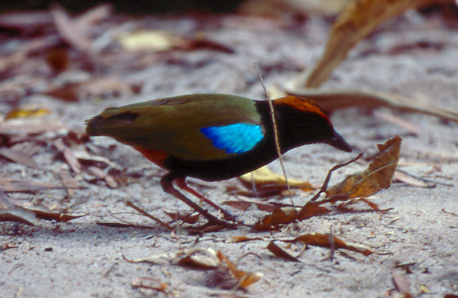

Key characteristics
Suboscines are best known for their simpler syrinx structure compared with oscines. The syrinx in Tyranni typically has fewer muscles and a different arrangement, so many suboscines produce species-typical calls that are largely innate rather than acquired by learning. This contrast in vocal learning is a central biological distinction between Tyranni and Passeri, and it influences behaviour, mating systems and communication.
Major groups and morphology
The suborder contains numerous families with varied ecologies. Commonly recognized families include the tyrant flycatchers (Tyrannidae), ovenbirds and woodcreepers (Furnariidae), antbirds (Thamnophilidae) and manakins (Pipridae). These groups show a range of bill shapes, feeding strategies (insectivory, frugivory and mixed diets) and habitat preferences from forest understory to open woodlands:
- Tyrannidae: largely insectivorous, many aerial foragers.
- Furnariidae: diverse foraging methods, including bark-gleaning and leaf-litter searching.
- Thamnophilidae and Pipridae: specialized territorial and courtship behaviours.
Distribution, ecology and examples
Tyranni are most speciose in South America, where complex habitats and long-term geographic isolation promoted diversification. Nevertheless, several tyrant flycatchers and other suboscines extend into North America and Central America. Ecologically they occupy roles as insect predators, seed dispersers and ecosystem participants; their behavioural diversity makes them important study subjects in ecology and evolution.
Evolution, taxonomy and evidence
Comparative studies of anatomy, molecular data (DNA analyses) and the fossil record (fossil evidence) support treating Tyranni as a distinct lineage from the oscine Passeri. Modern phylogenetic work continues to refine relationships within the suborder and to place fossil taxa in context, helping to reconstruct how South American landscapes shaped their radiation.
Notable distinction: the common name "suboscines" highlights their generally innate vocal repertoires, a feature that contrasts with the learned songs of true songbirds and that has made Tyranni central to studies of vocal development and the neurobiology of communication. For general context on passerine diversity see passerine overview.
Questions and answers
Q: What is the Tyranni suborder?
A: The Tyranni suborder is a group of passerine birds.
Q: How many species are in this suborder?
A: There are approximately 1,000 species in the Tyranni suborder.
Q: Where do most of these birds live?
A: Most of these birds live in South America.
Q: What makes the tyranni different from other passeri (songbirds)?
A: The tyranni have a different syrinx, which is part of their voice box that produces bird song, making them distinct from other passeri (songbirds).
Q: How do scientists know that the tyranni and passeri are different?
A: Scientists have conducted studies on DNA and fossils to show that the tyranni and passeri are distinct from one another.
Related articles
Author
AlegsaOnline.com Tyranni (Suboscines): a concise overview of the suborder Leandro Alegsa
URL: https://en.alegsaonline.com/art/102375
Sources
- stanford.edu : DNA and Passerine Classification