
Turkey (bird): biology, species, domestication and cultural significance
Large ground-dwelling birds of the genus Meleagris, native to the Americas. Overview of appearance, behavior, species, domestication, cultural roles and conservation.
Overview
Turkeys are large, ground-dwelling birds in the family Meleagrididae. They belong to the order of heavy-bodied game birds often grouped with chickens in the broad category of galliform-type birds. Wild turkeys are native to woodlands and open habitats in North America and parts of Central America, and one species is well known for its iridescent plumage and display behaviors.
Image gallery
10 Images


Physical characteristics and behavior
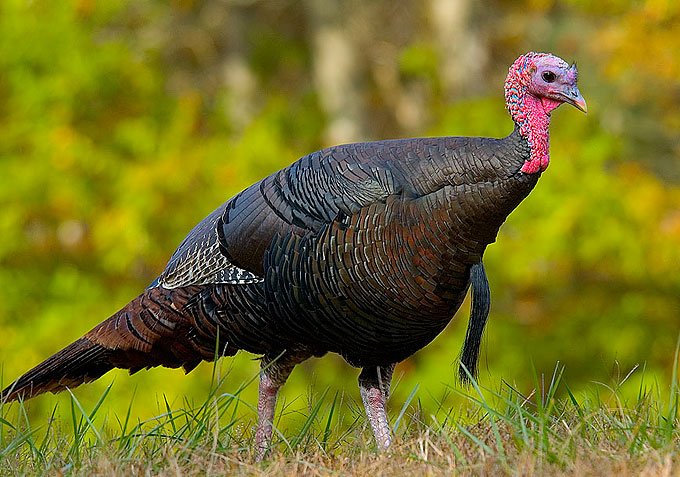
Turkeys are noticeably larger than domestic chickens, with stout bodies, long legs for walking and strong flight capability over short distances. Males (toms or gobblers) display a fan-shaped tail, wattles, a fleshy snood over the beak and vocalize with the distinctive "gobble" during mating season. They are omnivores that forage on the ground for seeds, fruits, insects and small vertebrates, and they form loose social groups outside the breeding season.
Species and classification
- The genus Meleagris contains the living species most commonly called turkeys. One widespread form is the wild or North American turkey, often associated with the subspecies complex linked to the domestic turkey (Meleagris gallopavo).
- The other living species is the ocellated turkey (Meleagris ocellata), native to the Yucatán Peninsula and known for its colorful eye-like tail markings.
Domestication, cultural role and uses
Indigenous peoples of Mesoamerica managed and eventually domesticated wild turkeys long before European contact, leading to the domestic birds raised worldwide today. In the United States the turkey is a traditional centerpiece of the Thanksgiving meal and a widely farmed source of meat. Cultural symbolism and culinary importance have made the bird a familiar element in festivals, cuisine and farming systems.
History, conservation and human interactions
Populations of wild turkey declined in the 19th and early 20th centuries due to overhunting and habitat loss, but extensive restoration and regulated hunting programs helped many regional populations rebound. Conservation efforts and habitat management are still important to maintain healthy wild flocks and their ecosystems. Hunters and wildlife managers monitor numbers and practices to balance recreation with species health.
Notable facts and distinctions
Young turkeys are called poults; adult females are hens. The domesticated turkey has been selectively bred for larger breast meat and different plumage than wild forms. For additional reference material and specialist information, see resources on game bird biology, agricultural breeding and cultural histories: comparative poultry, regional traditions, holiday customs, Thanksgiving context, and broader ecological guides at family accounts or order overviews.
Researchers and enthusiasts may consult field guides and wildlife agencies for identification, range maps and hunting regulations; institutional summaries and species accounts provide up-to-date conservation status and management recommendations: see general resources at range summaries and regional species pages at taxonomic references.
Related articles
Author
AlegsaOnline.com Turkey (bird): biology, species, domestication and cultural significance Leandro Alegsa
URL: https://en.alegsaonline.com/art/102089
Sources
- theguardian.com : "Naming of the Turkey"