
Turbellaria — free-living flatworms
Turbellaria are predominantly free-living flatworms found in freshwater, marine and damp terrestrial habitats. This article covers their form, behavior, reproduction, taxonomy and ecological role.
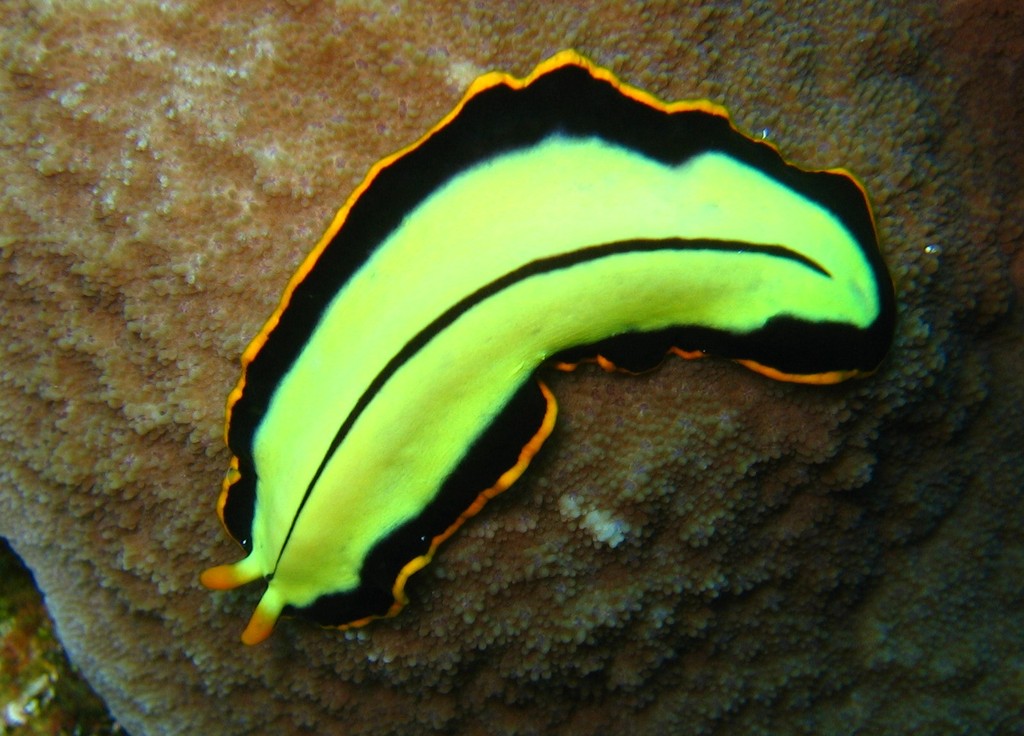
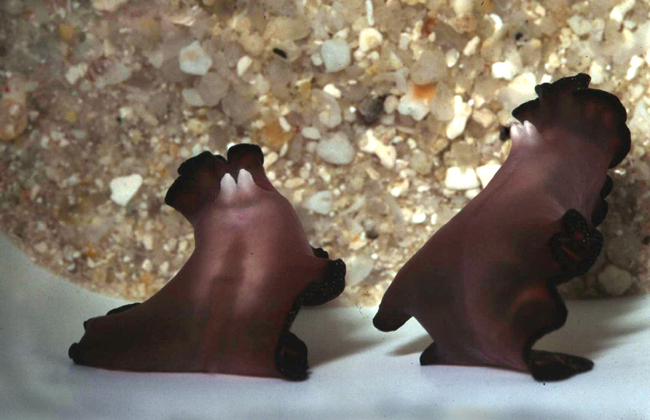
Turbellaria are traditionally recognized as a class of free-living flatworms within the broader group of platyhelminths. Unlike their parasitic relatives, most turbellarians live independently and many are active hunters or scavengers, with a large proportion described as carnivores. They occur in a variety of environments but are primarily aquatic, inhabiting marine and freshwater systems; a few species occupy moist terrestrial niches.
Image gallery
3 Images
Characteristics
Turbellarians are generally dorsoventrally flattened and lack a body cavity. Key features include a ciliated epidermis used for gliding, a simple gut often with a single opening, and a ladder-like nervous system with paired nerve cords. Many species have simple eyespots (ocelli) and chemoreceptive cells that help them detect prey and navigate their environment.
Typical forms and locomotion
Most turbellarians are small and elongate; many measure only a few millimetres to a few centimetres, though a few species grow larger. Movement is achieved by coordinated beating of cilia over a mucous layer, and by muscular contractions when crawling or twisting. Several species can swim actively by undulating their bodies.
Feeding and ecology
Many turbellarians are carnivorous predators or scavengers that feed on small invertebrates, protozoans and detritus. Some use an eversible pharynx to seize and ingest prey. In aquatic ecosystems they are important benthic predators and recyclers of organic matter; their presence can reflect habitat quality.
Reproduction and regeneration
Turbellarians display a range of reproductive strategies. Most are hermaphroditic and can reproduce sexually, often exchanging sperm with partners. Asexual reproduction by fragmentation and subsequent regeneration is also common in several groups, illustrating their notable regenerative capacity.
Taxonomy and historical notes
The name Turbellaria has a long history in zoology, but modern molecular studies have shown that traditional Turbellaria is not a single natural group (it is paraphyletic). Consequently, systematic revisions have redistributed many free-living flatworms among different lineages within Platyhelminthes. Despite taxonomic changes, the term remains useful in ecological and descriptive contexts.
Importance and distinctions
Turbellarians are valuable in studies of regeneration, development and simple nervous systems. They contrast with parasitic flatworms (such as flukes and tapeworms) in lifestyle and morphology, making them important comparators for evolutionary and ecological research. Their diversity and roles in food webs underline their ecological significance across aquatic habitats.
Related articles
Author
AlegsaOnline.com Turbellaria — free-living flatworms Leandro Alegsa
URL: https://en.alegsaonline.com/art/102054