
Flatworm (Platyhelminthes): biology, classification, and impact
Flatworms (Platyhelminthes) are dorsoventrally flattened invertebrates. This article summarizes their anatomy, diversity, life cycles, ecological roles, and significance as parasites and research models.
Flatworms belong to the phylum Platyhelminthes, a group of soft-bodied, relatively simple invertebrates characterized by a flattened shape and the absence of a true body cavity (acoelomate organization). The name derives from Greek roots: "platy" meaning flat and "helminth" meaning worm. There are roughly 25,000 described species that occupy a broad range of habitats, from marine and freshwater to moist terrestrial environments. Their relatively simple body plan and diverse lifestyles make them important subjects in ecology, parasitology and developmental biology.
Image gallery
10 Images



Key characteristics
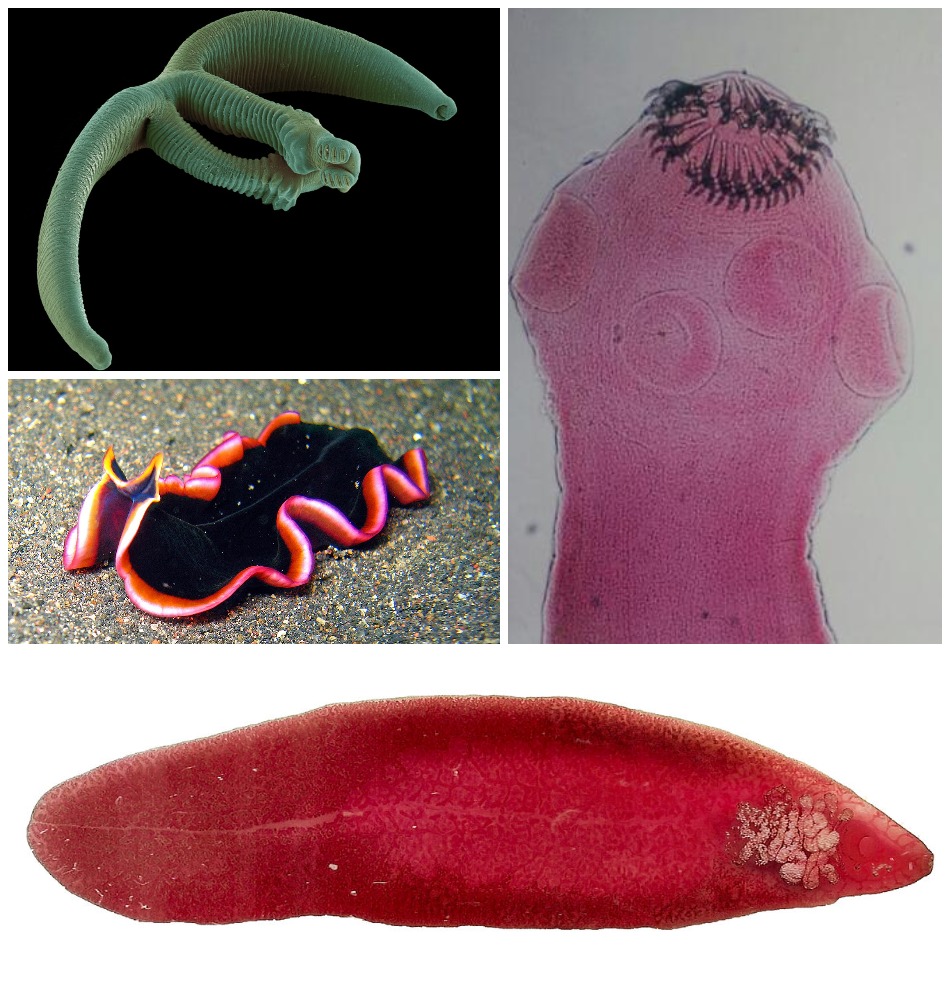
Flatworms display a suite of anatomical and physiological traits that distinguish them from many other animals. Typical features include bilateral symmetry and cephalization (a concentration of sensory structures toward a head region), a dorsoventrally flattened body that increases surface area for gas exchange, and the lack of specialized circulatory and respiratory systems — gases and nutrients move mainly by diffusion. Excretory functions are handled by protonephridia bearing flame cells. Nervous systems range from ladder-like nerve cords in free-living species to reduced arrangements in some parasites. Reproductive strategies vary; many are hermaphroditic, and some free-living forms can reproduce by fission and regenerate missing parts.
Classification and life cycles
The phylum is commonly divided into major groups that reflect ecological roles more than a single evolutionary lineage. These include:
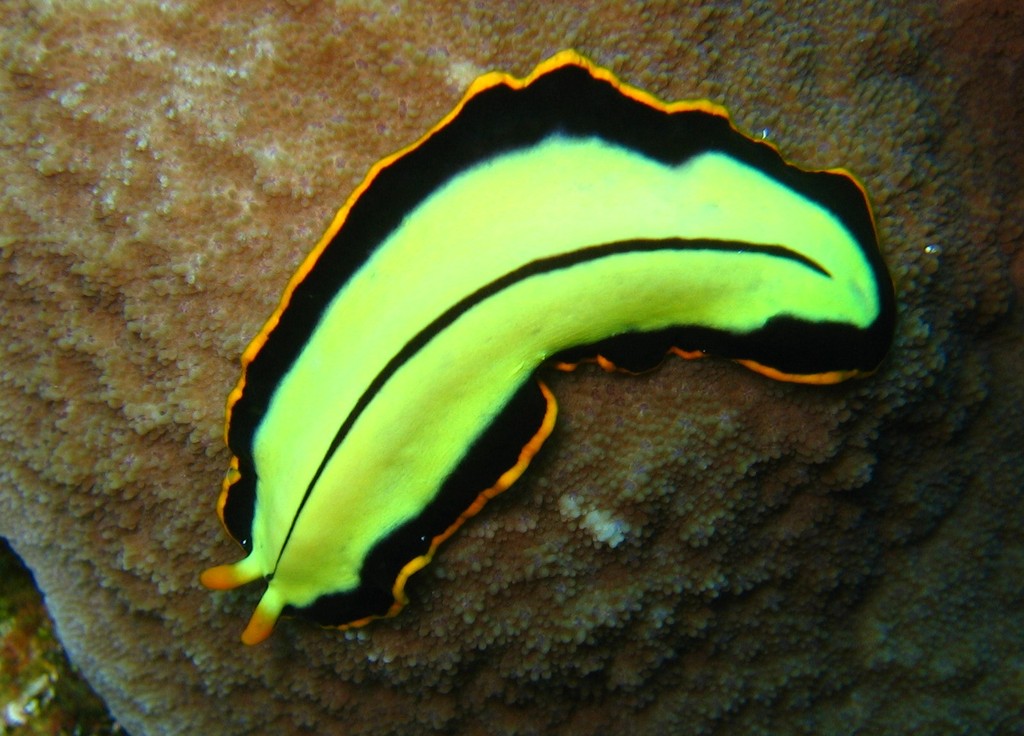
- Turbellaria (mostly free-living planarians noted for regenerative ability).
- Trematoda (flukes: internal parasites with complex life cycles often involving multiple hosts).
- Cestoda (tapeworms: intestinal parasites with segmented bodies and indirect life cycles).
- Monogenea (mostly external parasites of fish).
Parasitic flatworms often have complex, multi-host life cycles with larval stages adapted to transmission between invertebrate and vertebrate hosts. Free-living species tend to have simpler life histories and are found under stones, among sediments or on vegetation in aquatic and damp terrestrial sites.
Ecology, human health and economic importance
Many flatworms play neutral or beneficial ecological roles as predators or scavengers, but a substantial proportion are parasites of humans, livestock and wildlife. Diseases such as schistosomiasis (caused by some trematodes) affect millions of people worldwide and historically rank among the most significant human parasitic diseases. Tapeworm infections can lead to nutritional deficiencies and, in some cases, severe disease when larval stages invade tissues. Conversely, several free-living planarians are harmless and are used as educational specimens because their anatomy is easy to observe.
History and scientific significance
Flatworms have long been studied in natural history and medicine. They are standard subjects in school and university biology courses because they illustrate basic organ systems and life-cycle strategies. In modern research, certain planarians are famous for their extraordinary regenerative capacity and are model organisms in studies of stem cells, regeneration and pattern formation. Control of parasitic flatworms remains an important public health goal, and effective treatments exist for many infections, alongside preventive measures in agriculture and food inspection.
Further reading and links
- Platyhelminthes overview
- Invertebrate biology resources
- Comparative anatomy summaries
- Species diversity estimates
- Marine flatworms
- Terrestrial flatworm habitats
- Freshwater ecology
- Invasive species case studies
- Regional impacts in Ireland
- Regional impacts in Scotland
- Interactions with earthworms
- Classification notes and classes
- Monogenea information
- Turbellaria and planarians
- The genus Planaria
- Taxonomic details
- Veterinary concerns
- Agricultural impacts
- Schistosomiasis overview
- Comparisons with malaria
- Treatment and control
- Regulations and food safety
Questions and answers
Q: What is the scientific name for flatworms?
A: The scientific name for flatworms is Platyhelminthes.
Q: How many known species of flatworms are there?
A: There are approximately 25,000 known species of flatworms.
Q: Where can flatworms be found?
A: Flatworms can be found in marine, freshwater, and even damp terrestrial environments.
Q: What is an example of a troublesome terrestrial flatworm?
A: An example of a troublesome terrestrial flatworm is the New Zealand Flatworm, Arthurdendyus triangulatus.
Q: How big are most free-living flatworms found in Britain?
A: Most free-living flatworms found in Britain range from 5mm to less than 1 cm.
Q: What classes do parasitic flatworms belong to?
A: Parasitic flatworms belong to four classes; Trematoda (Flukes), Cestoda (Tapeworms), Monogenea (external parasites) and Turbellaria (free-living).
Related articles
Author
AlegsaOnline.com Flatworm (Platyhelminthes): biology, classification, and impact Leandro Alegsa
URL: https://en.alegsaonline.com/art/35047