
Turandot (Puccini)
Turandot is Giacomo Puccini's final opera, in three acts. Left incomplete at his death and finished by Franco Alfano, it is famed for the aria Nessun dorma and its exotic, large-scale staging.
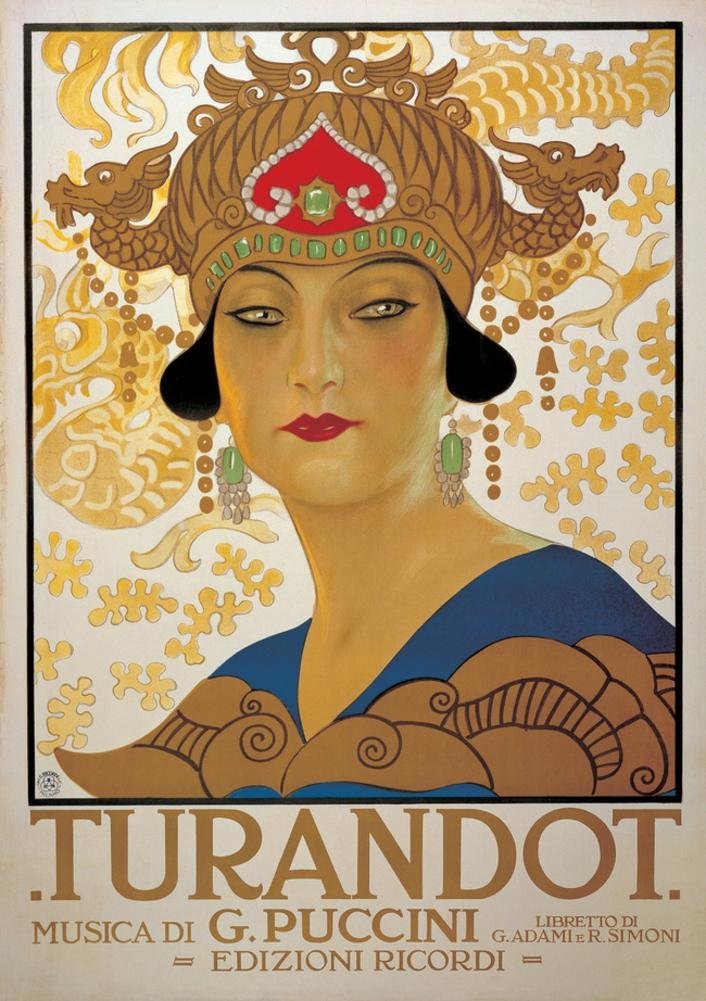
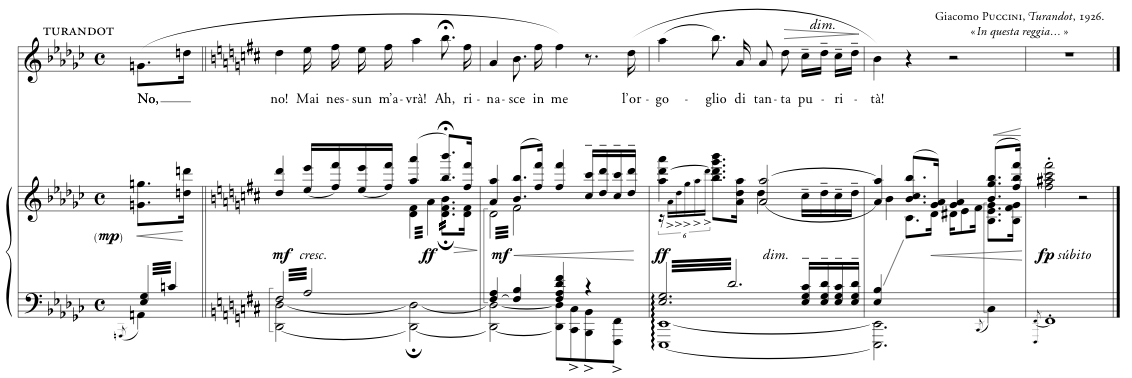
Turandot is an Italian-language opera in three acts by Giacomo Puccini, with a libretto by Giuseppe Adami and Renato Simoni. Puccini worked on the score late in life but died before completing the final pages; the composer Franco Alfano produced the most widely used completion. The work combines Puccini's late harmonic language and rich orchestration with a highly theatrical story set in a stylized, legendary Peking. Its best-known moment is the tenor aria Nessun dorma, which achieved global fame in the late 20th century.
Image gallery
6 Images


Composition and premiere
Puccini conceived Turandot after earlier successes and treated it as a major, atmospheric project. The composer completed most of the music but left the third act unfinished at his death in 1924. Alfano was commissioned to supply an ending based on Puccini's sketches; this completion has been performed in many productions, though several alternatives and editorial revisions exist. The opera premiered at the Teatro alla Scala in Milan on 25 April 1926 under the baton of Arturo Toscanini. That first performance is notable for Toscanini's decision to stop the performance at the point where Puccini's autograph score ended, before Alfano's additions were heard.
Plot, characters and setting
Set in a mythic version of Peking, the story centers on the icy Princess Turandot who poses three riddles to prospective suitors: failure means death, success means marriage. Key characters include the unknown prince Calaf, the slave girl Liù who loves him, Calaf's father Timur, and the comic but ominous trio Ping, Pang and Pong. The drama unfolds as Calaf attempts to win Turandot by answering her riddles; a secondary thread follows Liù's devotion and sacrifice. The plot mixes romance, cruelty and questions of identity and mercy rather than realistic historical detail.
Musical highlights and style
Puccini's score juxtaposes delicate lyricism with powerful choral writing and an expanded orchestra designed to evoke an exoticized East. The most famous number is the aria "Nessun dorma", sung by Calaf in the final act; its soaring climax and repeated "Vincerò!" have made it a staple of the tenor repertory. The aria reached a new popular audience when performed by the Three Tenors — Luciano Pavarotti, José Carreras and Plácido Domingo — and used as a theme for the 1990 FIFA World Cup.
Roles and notable numbers
- Princess Turandot — the icy sovereign
- Calaf — the unknown prince (tenor), sings "Nessun dorma"
- Liù — a devoted slave girl (soprano)
- Timur — Calaf's blinded father
- Ping, Pang, Pong — ministers who provide comic and political color
Reception, legacy and distinctions
Since its premiere at Teatro alla Scala in Milan on 25 April 1926, conducted by Arturo Toscanini, Turandot has remained a staple of the international operatic repertoire. Critics and audiences have praised its orchestral color, memorable melodies and theatrical impact, while some commentators note its indulgence in Western imaginings of the East. The work's dramatic ending and the question of the authentic "Puccini" finale ensured continuing interest from conductors, editors and scholars; as a result, several productions and recordings present slightly different closing measures and editorial choices. The opera continues to be staged in grand productions worldwide and retains particular cultural visibility because of the enduring popularity of "Nessun dorma" and landmark recordings by singers such as Pavarotti, Carreras and Domingo.
For further reading on Puccini and primary documentation, see general reference works on opera and composer biographies as well as specialized studies of Turandot's performance history and editions. Online resources and opera house program notes can provide up-to-date information about modern stagings and different endings, while scholarly editions discuss Alfano's contribution and later editorial interventions. A basic introduction to the genre and to Puccini's life may be found through general opera guides and composer surveys: opera overview, Giacomo Puccini, the libretto.
Related articles
Author
AlegsaOnline.com Turandot (Puccini) Leandro Alegsa
URL: https://en.alegsaonline.com/art/102051