
Tugboat (Towboat) — Function, Types, and Operations
Tugboats are small, powerful vessels that push or pull other craft to assist maneuvering, towing, salvage, and offshore work. This article outlines their design, history, uses, and notable types.
A tugboat, also called a towboat, is a specialized vessel built to maneuver other watercraft by pushing, pulling, or towing them. Tugboats make contact directly with a ship's hull or work at a distance using towlines and winches. They are routinely employed where large ships, barges, log rafts or disabled vessels need help in tight or constrained waters. Common operational settings include ports and marinas, where a harbor tug guides a liner into berth; narrow channels such as a canal; and occasions when floating units like barges or stationary structures such as oil platforms must be moved. The basic concept is simple: apply concentrated power and steering force to control a much larger object.
Image gallery
10 Images


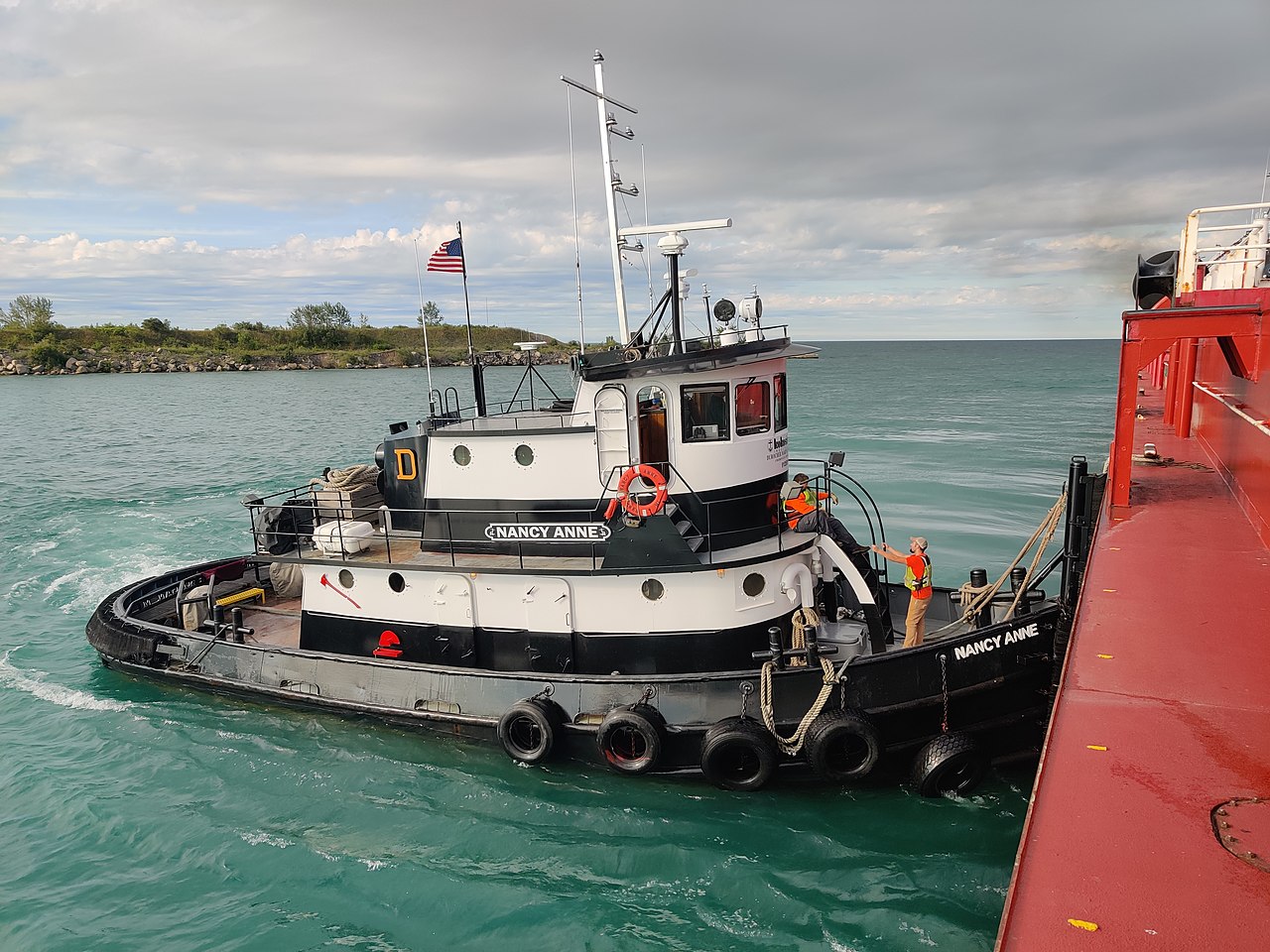


Key characteristics and equipment
Tugboats are compact but heavily built, with reinforced hulls and extensive fendering to absorb impact during pushing operations. They carry powerful engines, often with specialized propulsors, and robust towing gear—winches, tow pins, and fairleads—to manage loads. Performance is commonly described by bollard pull, a measure of the tug's static pulling strength. Wheelhouse visibility, low center of gravity and maneuverability are prioritized because tugs frequently work close to other vessels.
Modern tug propulsion systems include azimuth thrusters (360-degree steering), Voith-Schneider propellers and conventional screw propellers with rudders. Each arrangement offers trade-offs between bollard pull, precision, and agility. Tractor tugs, with propulsion units forward, excel at lateral control and quick turns; conventional stern-drive tugs are often used for long-distance towing.
Types and common roles
- Harbor tugs: assist ships in berthing, unberthing and short transfers inside ports.
- Escort tugs: accompany large vessels through confined or hazardous waters.
- Ocean-going tugs: designed for long-distance towing and salvage across open seas.
- Workboats and towboats: push barges on rivers and inland waterways.
- Anchor-handling tugs: service offshore rigs and handle anchors and heavy equipment.
Roles also extend to firefighting, emergency response and wreck removal. Many tugs are fitted with monitors and pumps to fight fires, while salvage tugs have extra towing capacity and specialized gear for recovery operations. Tow operations are planned carefully to control forces and prevent damage to the tug and towed unit.
Historically, tugboats evolved from early steam-powered vessels that appeared in the 19th century to support growing commercial navigation. Over time diesel engines, stronger steels and advanced propulsion transformed tugs into the highly capable units seen today. Crews are typically small but trained in line-handling, navigation and ship-assist procedures; safety, communication and port regulations govern most tug operations. For further reading, see general resources on small craft and port operations: boat, ships.
Distinctions worth noting: the words "tug" and "towboat" are sometimes used interchangeably, but regional and operational differences exist—towboats often push barges on rivers, while tugs usually perform ship-assist and open-water towing. Advances in propulsion and hull design continue to improve tug efficiency and safety, making them indispensable to modern maritime logistics and offshore industries.
Related articles
Author
AlegsaOnline.com Tugboat (Towboat) — Function, Types, and Operations Leandro Alegsa
URL: https://en.alegsaonline.com/art/101958
Sources
- books.google.com : "How Pygmy Tugboats Dock a Giant Liner."