
Oil platform
A large maritime structure for drilling, producing and processing oil and natural gas from beneath the seabed; types, components, history, operations, and environmental considerations.
Overview
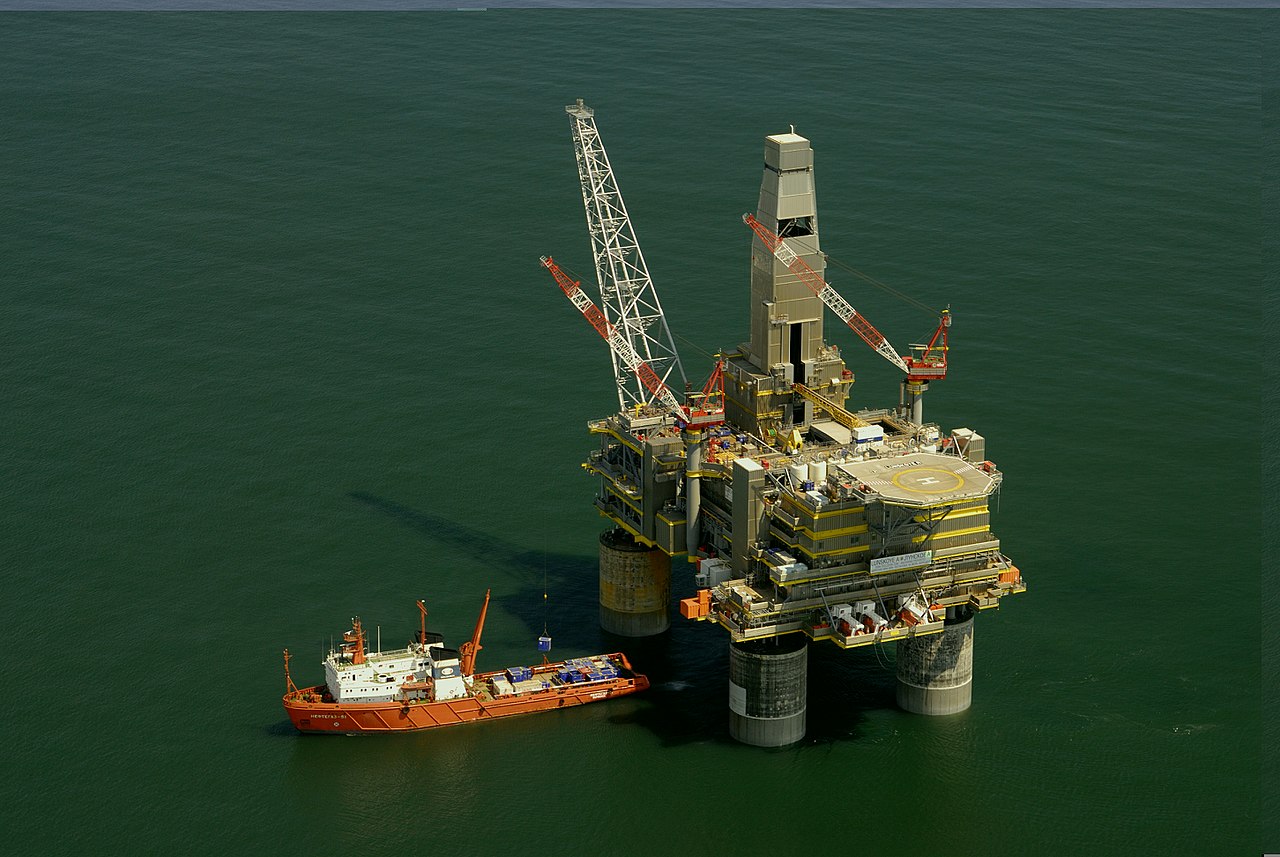
An oil platform is a substantial engineered structure placed offshore to access and produce hydrocarbons from beneath the seabed. Platforms provide a base for drilling wells, housing production equipment, and supporting personnel and supply operations. They are commonly found beyond the shoreline on the continental shelf and vary in design depending on water depth, weather and production needs.
Image gallery
10 Images



Design, components and types
Typical platforms combine a deck or "topside" that contains drilling and processing facilities with a supporting substructure. Common forms include fixed platforms that are anchored to the seabed (jackets and gravity-based structures), and floating systems such as semi-submersibles, drillships and FPSOs (floating production, storage and offloading units). Mobile drilling units can be moved between sites, while some installations are built to remain in place for decades.
- Fixed platforms: steel jacket or concrete bases for shallow to moderate depths.
- Floating platforms: used in deep water; include semisubmersibles and FPSOs.
- Mobile rigs: drillships and jack-up rigs that relocate as needed.
History and technological development
Offshore petroleum production began in shallow coastal waters and expanded with advances in materials, engineering and drilling technology. Over the late 20th century engineers developed deeper-water solutions and remote drilling techniques, including extended-reach drilling that allows wells to be drilled laterally for several kilometres from the platform — a capability that increased notably by the mid-2000s. Innovations in floating production and subsea systems have further extended where hydrocarbons can be recovered.
Operations, uses and examples
Platforms serve multiple roles: they host drilling operations to access reserves, separate and treat produced oil and natural gas, compress or re-inject gas, and store or export hydrocarbons. Support functions include accommodation for crews, helipads, cranes and safety systems. Offshore platforms are integral to many national energy programs and are found in major producing regions worldwide.
Safety, environment and decommissioning
Operating in a harsh marine environment requires robust safety, environmental protection and emergency response measures. Risks include spills, storms and structural failure; industry practices emphasize blowout prevention, monitoring and contingency planning. When fields are depleted, platforms may be decommissioned, removed or repurposed under regulatory oversight to limit ecological impact.
For further basic definitions and technical overviews see general resources on offshore structures and hydrocarbon production: offshore environments, oil extraction, and natural gas operations.
Related articles
Author
AlegsaOnline.com Oil platform Leandro Alegsa
URL: https://en.alegsaonline.com/art/72146