
Trans‑Karakoram Tract (Shaksgam Valley)
Remote high‑altitude region ceded by Pakistan to China in 1963 (provisionally), claimed by India as part of Jammu and Kashmir; includes major Karakoram peaks and glaciated terrain.
Overview
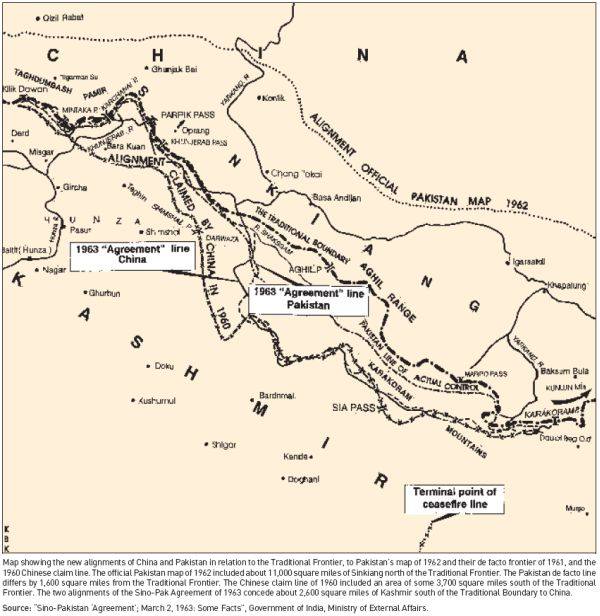
The Trans‑Karakoram Tract, often called the Shaksgam Valley, is a remote, high‑altitude area of roughly 5,300 km² in the Karakoram range. In 1963 Pakistan and China reached an understanding that transferred administrative control of the territory to China, described at the time as provisional and linked to a final settlement of the wider Jammu and Kashmir dispute. India continues to assert that the tract belongs to the erstwhile state of Jammu and Kashmir.
Image gallery
7 Images




Geography and natural features
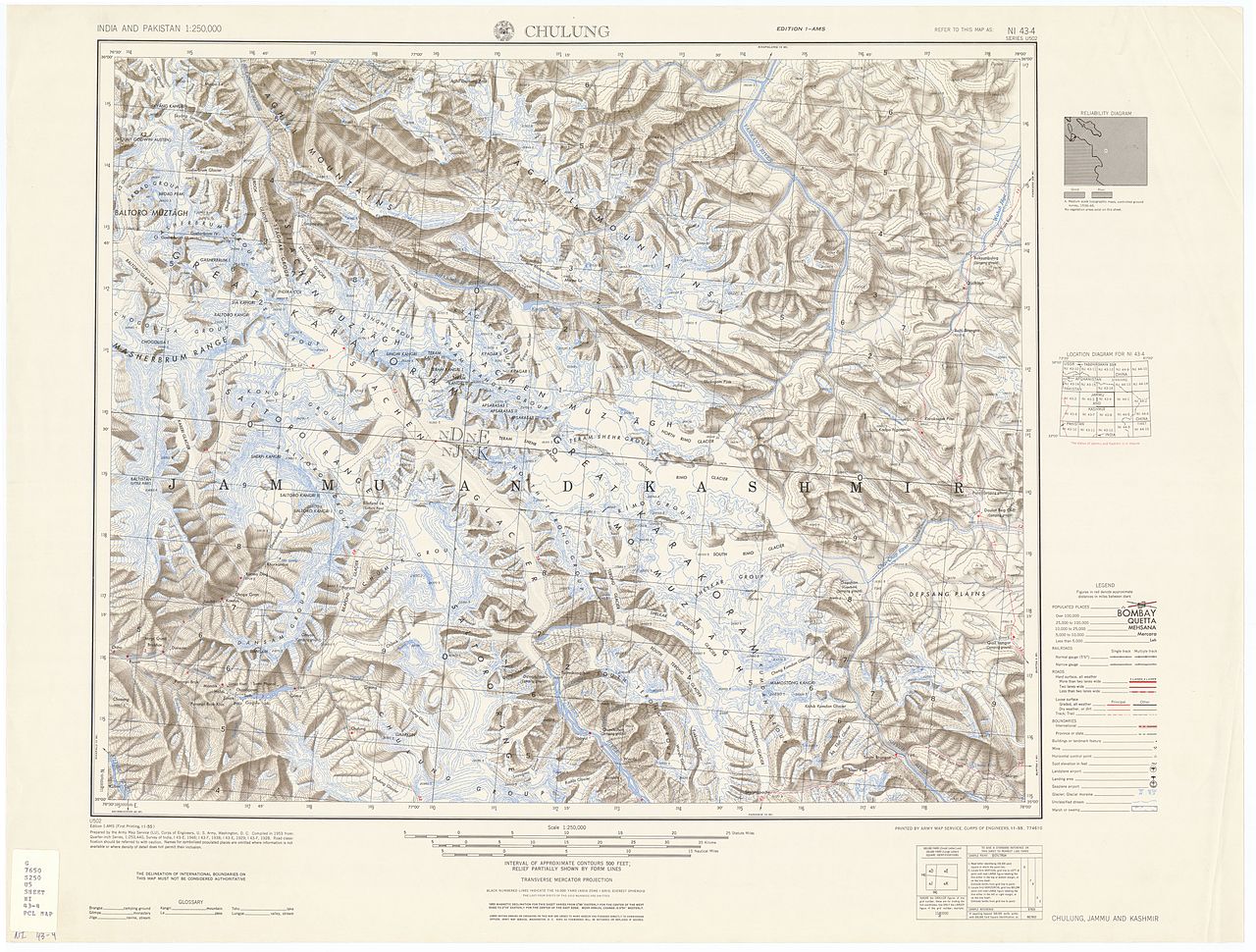
The tract lies among some of the world's highest mountains and extensive glaciation. Prominent massifs and peaks in or near the area include Broad Peak, the Gasherbrum group and Masherbrum. The terrain is dominated by steep valleys, ice fields and fast‑moving glaciers; human presence is extremely sparse and seasonal. The region is adjacent to other strategically sensitive glaciated zones of the eastern Karakoram.
Historical context
Historically the Shaksgam Valley has ethnolinguistic and toponymic connections to Baltistan and Ladakh: many local names for mountains, lakes and passes are from Balti/Ladakhi languages. The land was traditionally under the influence of local rulers from the Shigar area until mid‑20th century administrative changes. The 1963 arrangement between Pakistan and China was framed as a border settlement between the two states, with a clause linking its final status to the resolution of the Kashmir question.
Political status and claims
Pakistan administered the tract prior to the 1963 agreement; China has exercised control since that agreement. India maintains that the area is part of Jammu and Kashmir and regards any transfer as without legal effect until the sovereignty dispute is finally resolved. International commentary typically describes the 1963 instrument as provisional and contingent upon the outcome of broader negotiations over Kashmir.
Uses, access and significance
Because of its altitude, climate and difficult access the tract supports little permanent settlement. It has attracted mountaineers and glaciologists interested in high‑altitude geology and cryosphere science, and it occupies strategic significance for states bordering the Karakoram. The proximity of the tract to the Siachen Glacier — frequently described as the world's highest active battlefield — contributes to its geopolitical sensitivity.
Notable facts and further reading
- The name Shaksgam is commonly used in mountaineering and cartographic sources to denote the valley and its drainage.
- The area contains toponyms and cultural links to Baltistan and Ladakh, reflecting historical influence from the Shigar valley.
- Major peaks in the vicinity include Broad Peak, Gasherbrum and Masherbrum, which are important to high‑altitude climbing history and scientific study.
For official texts and treaty material see the Pakistan–China agreement documents (Pakistan–China border agreement (1963), text and commentary) and analyses concerning the Kashmir dispute (Kashmir dispute overview). India's position is summarized in government statements and maps (Indian claim). Historical and regional studies discuss Baltistan and Ladakh affiliations (Baltistan/Ladakh region) and local governance history including the former rulership of the Shigar rajas (Shigar history). Contemporary discussions of nearby military and glacier issues are available in analyses of the Siachen area (Siachen context).
Related articles
Author
AlegsaOnline.com Trans‑Karakoram Tract (Shaksgam Valley) Leandro Alegsa
URL: https://en.alegsaonline.com/art/101103