
Trans-Mexican Volcanic Belt
East–west volcanic arc across central-southern Mexico, containing the country's highest volcanoes, active stratovolcanoes, diverse ecosystems, and important water resources, cultural sites and geological hazards.
Overview
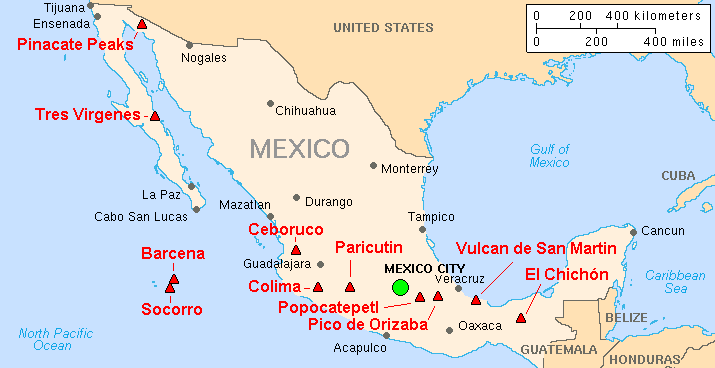
The Trans-Mexican Volcanic Belt, also called the Transvolcanic Belt or locally the Sierra Nevada, is a broad east–west volcanic arc that crosses central-southern Mexico for about 900 km. It forms a continuous highland corridor that separates the Mexican Plateau to the north from coastal lowlands to the south and contains many of Mexico's tallest and most prominent volcanoes. On clear days several of its snow-capped summits are visible from distant high plateaus and cities and they remain important landmarks in regional geography and culture. The belt is a defining physical feature of central-southern Mexico.
Image gallery
5 Images


Geology and structure
The belt results mainly from subduction-related processes at the Pacific margin, where oceanic plates descend beneath the North American Plate and drive melting in the mantle and lower crust. Volcanic centers along the arc include monogenetic cones, extensive lava fields, large stratovolcanoes and collapsed calderas. Rock compositions vary from basaltic to andesitic and dacitic types, reflecting varied magma sources and crustal interaction. Most volcanic activity is geologically young, spanning the Neogene into the Quaternary, and many centres remain potentially active. The Trans-Mexican Volcanic Belt is often described generically as a volcanic belt, though its orientation is transverse to the main mountain trends of North America.
Major peaks and landscapes
Major peaks include Pico de Orizaba (Citlaltépetl), Popocatépetl, Iztaccíhuatl, Nevado de Toluca and La Malinche. These high volcanoes produce steep relief rising from surrounding plateaus and support permanent or seasonal snowfields at the highest elevations, though some have receded with recent warming. The volcanic topography features crater lakes, lava domes, pyroclastic deposits and fertile volcanic soils that have influenced land use and natural vegetation.
Ecology and climate influence
The belt spans diverse climate zones from humid montane forests on southern slopes to drier high-elevation grasslands on plateaus. Elevation and volcanic soils support varied plant communities, including pine–oak forests, cloud forests in wetter areas, alpine meadows and specialised flora near summits. Mountains affect regional climate by intercepting moisture and feeding springs and rivers; volcanic aquifers and snowpack are important water sources for downstream communities.
Human importance, hazards and culture
Volcanic soils provide productive agricultural land, while mountain watersheds supply water for cities and irrigation. Archaeological sites, pilgrimage routes and indigenous traditions are closely tied to many of the volcanoes, which often have mythological significance. At the same time active centers such as Popocatépetl produce ashfall, explosive eruptions, pyroclastic flows and lahars that periodically threaten nearby towns and infrastructure. Seismicity associated with the subduction zone is common and contributes to regional hazard risk.
Monitoring, research and conservation
Volcanologists and geologists monitor prominent volcanoes for unrest, study eruption histories in deposits and use geophysical methods to understand magma systems. Hazard assessments, early-warning systems and land-use planning aim to reduce risks to populated areas. Several peaks and surrounding forests are managed as national parks or protected areas to conserve water sources, biodiversity and cultural landscapes. Visitors often view the range and its snow-capped summits from highland viewpoints and observatories; some of these vantage points are popular destinations for recreation and scientific observation (highland viewpoints).
Significance
Distinctive for crossing Mexico transversely rather than following the coast, the Trans-Mexican Volcanic Belt contains the country's tallest volcano and many active centers, making it both a vital resource for ecosystems and people and a persistent geological hazard. Ongoing research, monitoring and conservation are essential to balance human use with risk reduction and to preserve the belt's ecological and cultural values.
Related articles
Author
AlegsaOnline.com Trans-Mexican Volcanic Belt Leandro Alegsa
URL: https://en.alegsaonline.com/art/101106
Sources
- books.google.com : México, estructuras, política, económica y social