
Transnistria (Pridnestrovie) — de facto state on the Dniester River
Transnistria (Pridnestrovie) is a self-proclaimed, internationally unrecognised polity on Moldova's eastern bank of the Dniester, with a distinct administration, mixed population, and a frozen conflict involving Russian influence.
Overview
Transnistria, also called Transdniestria or Pridnestrovie, is a self-governing territory along the eastern bank of the Dniester (Nistru) River. It proclaimed independence from Moldova in 1990 and established separate institutions after a short war in 1992. The entity operates with its own government, currency, armed forces and border controls but lacks widespread international recognition; officially most states consider it part of Moldova.
Image gallery
10 Images




Names and language
The administration uses several names and languages. The official Russian-language name is Приднестровская Молдавская Республика, often rendered in English as the Pridnestrovian Moldavian Republic. Local public life routinely uses Russian, Moldovan/Romanian and Ukrainian; written scripts include Cyrillic for official Moldovan in some institutions.
Geography, population and economy
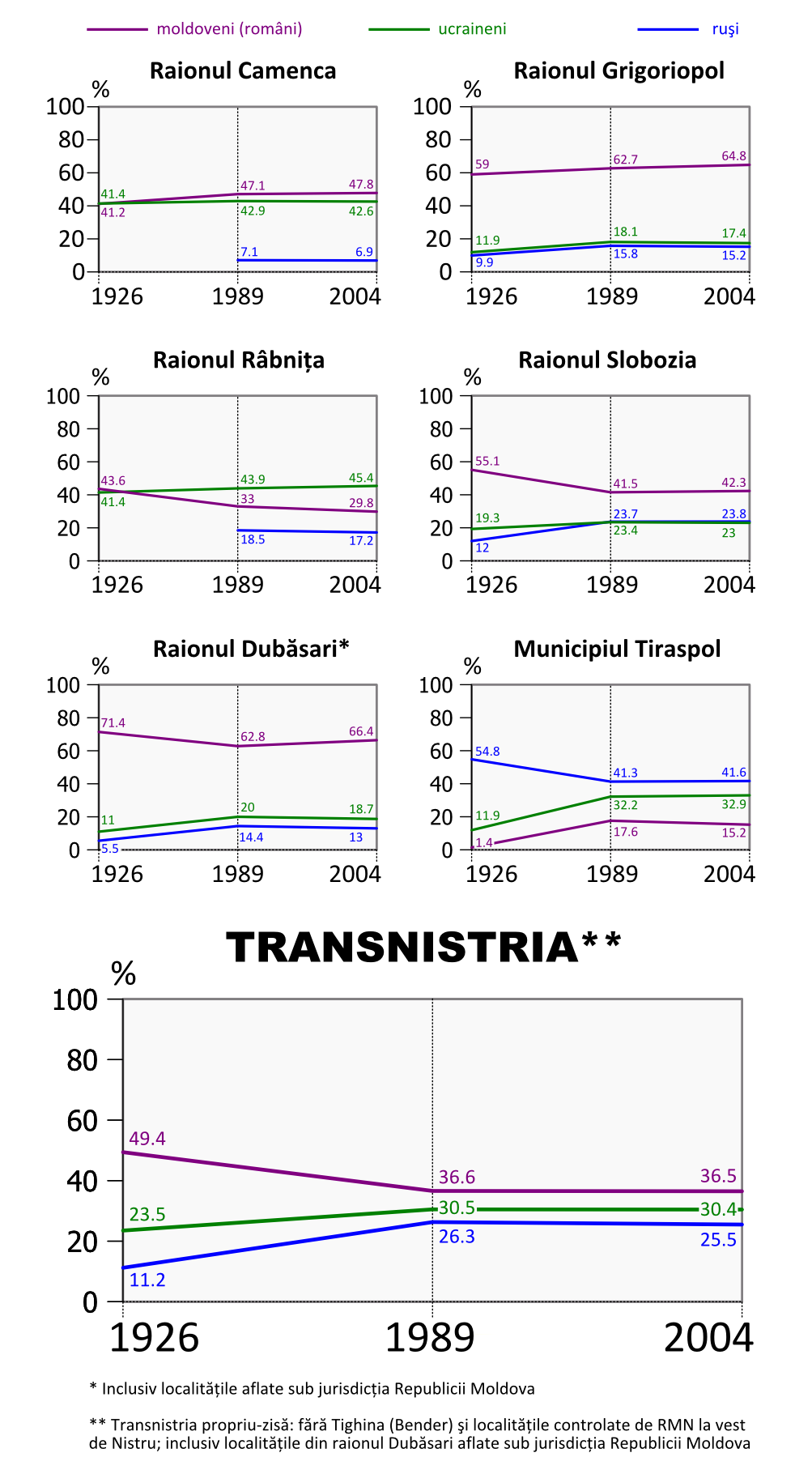
Transnistria is narrow territory stretching roughly along the Dniester River. Its economy historically relied on Soviet-era heavy industry, energy and metallurgy; today the private sector, cross-border trade and services are important. Demographically the population is ethnically mixed, with sizable communities of Moldovans, Russians and Ukrainians. Socioeconomic indicators differ from Moldova's and have been shaped by the political stalemate and external ties.
History and political status
Political tensions rose as the Soviet Union dissolved; Transnistria's leaders declared independence on 2 September 1990. Armed conflict with Moldova in 1992 ended with a ceasefire and a frozen conflict. The Council of Europe and other international actors describe the situation as unresolved and subject to negotiation. Transnistria held a 2006 referendum on reaffirming independence and closer ties with Russia; Moldova rejects its legality and refers to the area as the "Left Bank of the Dniester" (Left Bank of the Dniester).
International relations and security
Transnistria is not recognised by United Nations member states, though it maintains relations with other unrecognised or partially recognised entities such as Abkhazia, the Nagorno-Karabakh/Artsakh authorities (relevant links) and South Ossetia. Russia exerts significant political, economic and military influence; peacekeeping and Russian military personnel have been present since the 1990s, with estimates of stationed troops and various security formations varying by source. Diplomatic efforts involve Moldova, Transnistrian representatives, Russia and international mediators working on confidence-building and settlements (regional context, Council of Europe outlook).
Institutions, symbols and notable features
Transnistrian authorities operate a president, a parliament and ministries functioning independently from Chişinău. The region issues its own passports, license plates and a separate currency. Its flag and public symbolism retain Soviet-era iconography, including the hammer and sickle on some official emblems — a feature that underscores the region's historical ties to the Soviet past. Relations with Moldova and other neighbours remain central to everyday life, trade and travel (declaration of independence, Moldova, Russian role).
Current situation and significance
The Transnistrian case is frequently cited as an example of a "frozen conflict" in Europe: active hostilities have largely ceased but the legal status and long-term resolution remain unsettled. Negotiations continue under various formats and international attention focuses on human security, the rights of residents, and the broader implications for regional stability (symbols and legacy, official name). Understanding Transnistria requires attention to history, ethnic composition, external patronage, and the practical governance that affects the lives of its inhabitants.
- Key themes: de facto statehood, mixed population, frozen conflict.
- For further reading: follow international reports and diplomatic communiqués on Transnistria and Moldova (Moldova, Council of Europe).
Geography
The area of the Transnistrian Moldavian Republic covers 3567 or 4163 square kilometres, depending on the definition, which corresponds to 10.5% or 12.3% of the area of Moldova. In terms of area, Transnistria is larger than Luxembourg.
The length from northwest to southeast is 202 kilometers. Transnistria is located in the lowlands, approximately 50 to 200 meters above sea level, between the territory of Moldova to the west and Ukraine to the east, along the eastern bank of the Dniester River. The capital, Tiraspol, has a population of about 150,000 and is located in the south of the country, roughly between Odessa (100 kilometers) and Chișinău (70 kilometers). West of the Dniester is the town of Bendery and some suburbs, as well as the village of Kizkany near Slobodzeja. Some villages in the Transdniestrian rayon of Dubossary east of the Dniester are under Moldovan government control but claimed by Transdniestria, as are the Moldovan government-controlled towns of Varnița and Copanca west of the Dniester.
The most important Transdniestrian cities, apart from the capital Tiraspol, are Bendery, Rybnitsa and Dubossary. In addition, Dnestrovsk, the site of an important power plant, and the district capitals of Grigoriopol, Kamenka and Slobodzeya are of certain regional importance.
The majority of the population lives in the southern rajons with the highest population density. Tiraspol, Bendery, Slobodzeja and some surrounding municipalities together form an agglomeration of almost 350,000 inhabitants and thus by far the largest urban area of the region, where most of the economy is concentrated.
The nearest international airport (KIV) is located outside Transnistria at Chișinău, 60 kilometres northwest of Tiraspol. There is a military airfield in Tiraspol, which is to be developed for passenger traffic.


Admin
Transdniestria is divided into a total of five rajons, and the two cities of Tiraspol and Bendery are independent administrative subjects (literally "cities of republican subordination").
| Rajon | Russian term | Romanian name | Administrative headquarters |
| Kamenka Rajon | Каменский район | Raionul Camenca | Camenca (Kamenka) |
| Dubossary Rajon | Дубоссарский район | Raionul Dubăsari | Dubăsari (Dubossary) |
| Grigoriopol Rajon | Григориопольский район. | Raionul Grigoriopol | Grigoriopol |
| Rybnitsa Rajon | Рыбницкий район | Raionul Rîbnița | Rîbnița (Rybnitsa). |
| Slobodzeya Rajon | Слободзейский район | Raionul Slobozia | Slobozia (Slobodzeja) |
| City of Tiraspol | Тирасполь | Tiraspol | Tiraspol |
| City Bender | Бендеры | Bender | Bender (Bendery) |
Related articles
Author
AlegsaOnline.com Transnistria (Pridnestrovie) — de facto state on the Dniester River Leandro Alegsa
URL: https://en.alegsaonline.com/art/101182
Sources
- president.gospmr.ru : "Конституция Приднестровской Молдавской Республики"
- osce.org : "On the situation of Russian schools in Moldova"
- usefoundation.org : "Law of the Moldavian Soviet Socialist Republic on the Functioning of Languages on the Territory of the Moldavian SSR"
- korrespondent.net : "Russian language in Moldova could lose their status (Русский язык в Молдове может потерять свой статус)"
- flux.md : Populația Transnistriei a scăzut cu 14,3 la sută · web.archive.org
- bbc.com : bbc.com/travel/article/20131212-bribery-and-brandy-in-a-country-that-doesnt-exist
- commons.wikimedia.org : Transnistria