
Timbre: the distinguishing quality of sound
Timbre is the attribute of sound that lets us tell instruments, voices, or tones apart when they have the same pitch and loudness. This article explains its causes, history, perception, and uses.
Overview
Timbre is the perceptual property that allows listeners to distinguish two sounds that share the same pitch and loudness. It is often called "tone color" or "tone quality." For example, a guitar and a piano playing the same note at the same volume sound different because their timbres differ. The Acoustical Society of America defines timbre as the attribute enabling the judgement that similarly presented sounds are dissimilar, and notes that it depends primarily on the frequency spectrum as well as on temporal properties of the sound.
Image gallery
5 Images



Physical and perceptual components
Timbre arises from several interacting acoustic and perceptual factors. Important physical components include:
- Harmonic content: the distribution and relative strength of overtones and partials in the frequency spectrum. A rich harmonic series produces a different color than a predominately fundamental tone.
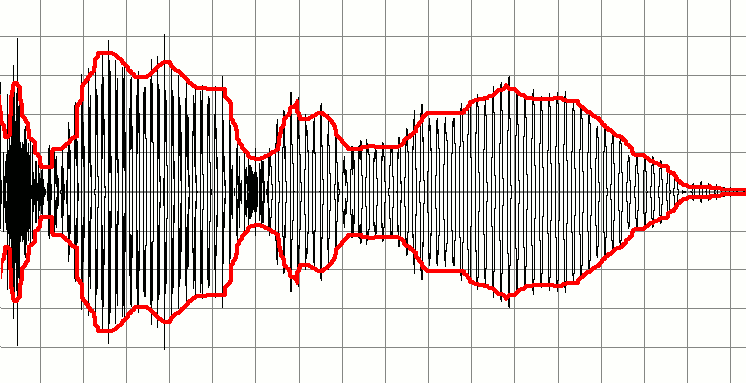
- Envelope: the time-varying shape of a sound—attack, decay, sustain, and release—affects how we identify an instrument or voice.
- Transients and inharmonicity: rapid changes at onset and non-harmonic partials (common in percussion) add distinctive character.
- Modulations: vibrato, tremolo, and other periodic variations influence perceived warmth or brightness.
History and scientific development
Ideas about timbre date back to early organologists and theorists who described instrumental "color." Scientific understanding advanced with the development of Fourier analysis in the 19th century, which showed that complex sounds can be decomposed into sine-wave components. Hermann von Helmholtz and others linked the overtone makeup of a sound to its perceived quality. Later work in psychoacoustics refined how humans process spectral and temporal cues to form the impression of timbre.
Uses, examples, and importance
Timbre is central in music, speech, and audio technology. Composers and arrangers exploit timbral contrasts to create texture and emotion; orchestration depends on selecting instruments whose timbres blend or contrast as desired. In speech, timbre differences distinguish vowels and speaker identity. Audio engineers and instrument makers shape timbre through material choices, body design, and electronic processing. Examples commonly cited are the bright, piercing timbre of a trumpet versus the mellow sound of a clarinet, or the bell-like quality of a piano's hammered strings compared to the plucked sound of a guitar.
Measurement, perception, and notable distinctions
Measuring timbre involves spectral analysis, temporal measurements, and perceptual tests. Terms such as spectral centroid (roughly related to perceived brightness), roughness, and attack time are used in descriptions. Timbre should be distinguished from related attributes: pitch (frequency of the perceived note), loudness (perceived intensity), and duration. Perception of timbre is also context-dependent—room acoustics, playing technique, and listener experience all influence identification and preference.
Further resources
For concise definitions and technical details, consult authoritative glossaries and research summaries. See general overviews and specialized entries for acoustics, psychoacoustics, and musical instrument design: timbre definition, pitch, loudness, guitar, piano, frequency.
Related articles
Author
AlegsaOnline.com Timbre: the distinguishing quality of sound Leandro Alegsa
URL: https://en.alegsaonline.com/art/99913