
Pitch (music): Perception, measurement and musical role
Pitch is the perceived highness or lowness of a sound. This article explains its acoustic basis, perceptual aspects, historical tuning practices, musical uses, and distinctions between pitch and frequency.
Overview
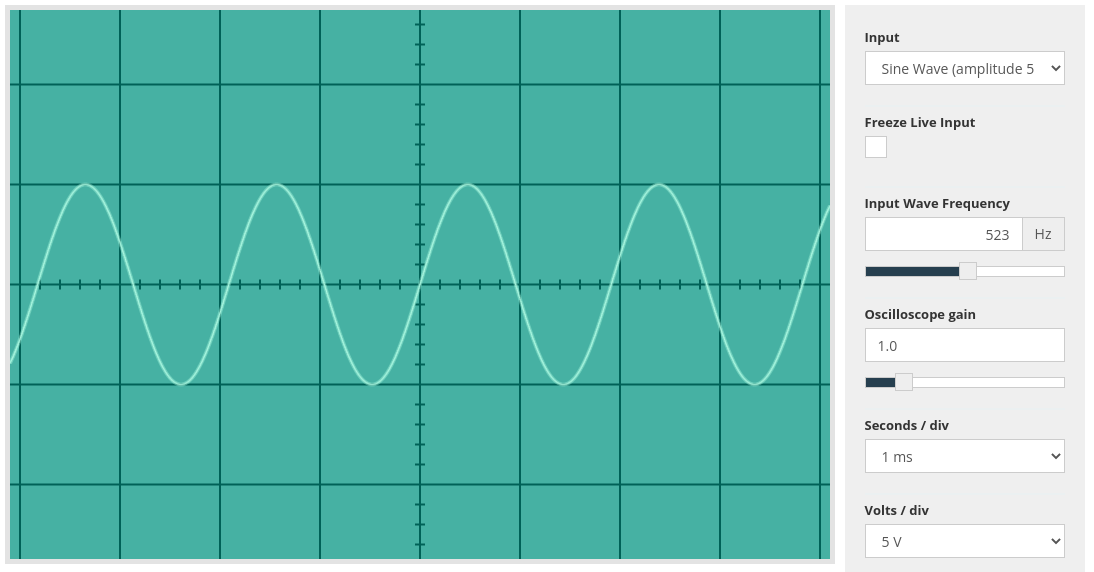
In music, pitch describes how high or low a single sound appears to a listener. At a basic level pitch correlates with the frequency of a sound wave — the number of vibrations per second — a concept described by physics. Frequency is expressed in a unit called Hertz, so a tone vibrating about 261 times a second is commonly associated with Middle C on a piano. That connection between cycles per second and perceived pitch is a useful bridge between acoustic measurement and musical description.
Image gallery
5 Images



Physical basis and instrument examples
Pitch arises from a sound's fundamental frequency together with its overtone structure and the instrument’s construction. Two instruments that illustrate pitch differences are the violin and the double bass: the violin typically produces higher fundamental frequencies than the bass. Some musical instruments such as drums, triangles and cymbals are primarily rhythmic and may lack a single clear pitch; such sounds are often described as having indeterminate pitch and are used chiefly to support rhythms.
Perception and cognition
Although frequency is an objective measure, pitch is a partly subjective sensation. The auditory system in the human ear analyzes sound spectra and temporal patterns and the brain interprets those cues to produce the percept of pitch. This is why pitch is called a psychological attribute as well as an acoustic one. Some individuals possess absolute or perfect pitch: certain musicians can identify or reproduce a note without an external reference. That ability varies widely in populations and does not, by itself, determine musical skill.
History, tuning and notable figures
Tuning standards have changed over time and location. Earlier eras and different regions adopted varying reference pitches; modern concert pitch settled largely on A4 = 440 Hz in the 20th century, though other standards exist for historical performance. Well-known composers of classical music worked in contexts where pitch and tuning choices affected instrument design and ensemble practice. Understanding historical pitch helps performers recreate timbres and balances intended by past composers.
Uses, importance and scientific measurement
Pitch underpins melody, harmony and much of musical notation and theory. Composers and performers rely on shared pitch references to tune ensembles, to design scales, and to construct chord relationships. In a more technical or scientific setting, pitch is analyzed with spectrograms and frequency analysis to measure fundamentals, overtones and inharmonicity; instrument makers and acousticians use these measurements to refine sound quality.
Key distinctions and quick facts
- Pitch vs frequency: frequency is a physical quantity (Hz); pitch is the auditory attribute built from frequency plus spectral context.
- Definite vs indefinite pitch: many melodic instruments produce definite pitch, while some percussion yields indefinite pitch.
- Factors affecting perceived pitch:
- Fundamental frequency and harmonics
- Relative intensity of overtones
- Inharmonicity and sound envelope
- Listener experience and context
- Practical note: Middle C (around 261 times a second) is a commonly cited reference point on the piano, but real instruments and historical tunings may differ from textbook values.
For further reading on acoustics, perception and performance practice, follow introductory resources in musical acoustics and auditory neuroscience; these bridge measured frequency and experienced psychological pitch in practical musical settings.
Questions and answers
Q: What is pitch in music?
A: Pitch in music is how high or low a note sounds.
Q: How does pitch depend on frequency?
A: Pitch mostly depends on the frequency of the sound, which is measured by a unit called Hertz and refers to how fast the air vibrates back and forth.
Q: Do all musical instruments make notes of a certain pitch?
A: No, not all musical instruments make notes of a certain pitch. Many percussion instruments like drums, triangles and cymbals are used for rhythms and do not play tunes because they have no definite pitch.
Q: What is absolute or perfect pitch?
A: Absolute or perfect pitch means that someone always knows what note is being played without comparing it to another note.
Q: Does having absolute or perfect pitch make someone a good musician?
A: Having absolute or perfect pitch does not necessarily make someone a good musician, although it can be very useful.
Q: Did well-known classical composers have developed their sense of absolute/perfect pitch?
A: There is evidence to suggest that well-known classical composers such as Haydn, Beethoven, Mozart, and Bach had developed and perhaps even mastered their sense of absolute/perfect pitch.
Q: Is there any difference between frequency and pitch?
A: Frequency is used as a scientific means for measuring and changing sound and its possible pitches while Pitch is more psychological quality depending on how the ear perceives sounds, and how the brain interprets them.
Related articles
Author
AlegsaOnline.com Pitch (music): Perception, measurement and musical role Leandro Alegsa
URL: https://en.alegsaonline.com/art/77120