
Tilopa: Indian mahasiddha and source of the Kagyu Mahamudra tradition
Tilopa (c. 988–1069) was an Indian tantric mahasiddha whose concise, experiential teachings on Mahamudra were transmitted through Naropa and became foundational for the Kagyu school of Tibetan Buddhism.
Tilopa is remembered as an influential figure in medieval Indian tantric Buddhism, traditionally dated to c. 988–1069. He appears in Himalayan and Tibetan biographies as a spontaneous, often iconoclastic practitioner who transmitted direct methods for recognizing the nature of mind. Variants of his name include Tilopada in Sanskrit traditions. He is widely described as a tantric practitioner and revered as a mahasiddha, an accomplished tantric adept who embodied both meditative realization and unconventional teaching methods.
Image gallery
3 Images
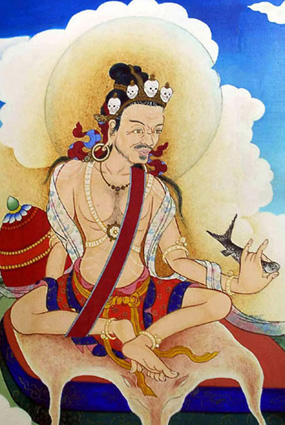

Origins and early life
Accounts of Tilopa’s birth and background differ. Some sources place his origins in Chativavo, often associated with Chittagong, while others identify regions of Bengal. Traditional biographies say he was born into a Brahmin family within the local caste framework but renounced conventional priestly roles to practice more experimental tantric and yogic disciplines. These narratives combine historical detail with hagiographic themes intended to teach as well as record.
Teachers, practice, and realization
Tibetan and Indic sources describe Tilopa receiving instruction from a range of teachers and traditions. He is said to have meditated intensively under masters named Saryapa, Lawapa, Indrabhuti, Matanga and the philosopher Nagarjuna, among others. From these encounters he distilled a set of pith instructions and experiential practices that, according to later accounts, led to his realization of Mahamudra — the direct recognition of mind’s nature.
Teachings and transmission
Tilopa’s teachings are preserved primarily as terse, oral pith instructions and a few attributed verses or dohas. Famous short instructions attributed to him include concise advice intended to uproot conceptual fixation. His principal disciple in the classical lineage is Naropa. Through Naropa and subsequent Indian and Tibetan holders these methods entered the Tibetan tradition and became associated with the Kagyu school of Vajrayana Buddhism.
Legacy
- Lineage: Tilopa is honoured as the source of a direct oral lineage that prioritizes teacher-to-student transmission of experience over scholastic commentary.
- Mahamudra emphasis: his praxis stresses insight into mind’s nature through pointed instructions and meditation rather than lengthy doctrinal exposition.
- Practical style: biographical anecdotes emphasize unconventional methods and the use of daily life as the field for practice.
While precise historical details remain debated, Tilopa’s role as a formative figure for the Mahamudra teachings and for the Kagyu tradition is broadly acknowledged in both religious and academic literature. For introductions and comparative studies, consult traditional Kagyu biographies and modern scholarly treatments that trace how these tantric lineages moved from medieval South Asia into Tibet.
Related articles
Author
AlegsaOnline.com Tilopa: Indian mahasiddha and source of the Kagyu Mahamudra tradition Leandro Alegsa
URL: https://en.alegsaonline.com/art/99885