
Vajrayana Buddhism: the Tantric or Diamond Vehicle
Vajrayana is a major branch of Buddhism originating in India that developed tantric methods, distinctive rituals, and a rich textual and monastic culture, especially associated with Tibet and the Himalayan region.
Overview: Vajrayana is one of the principal streams of Buddhism, often called the Diamond Vehicle or Tantric Buddhism. It developed from earlier Mahayana ideas and ritual innovations in medieval India, and emphasizes methods intended to accelerate the attainment of awakening. Western writers sometimes label it esoteric because many of its practices are traditionally transmitted through a formal teacher-student relationship and specific initiations.
Image gallery
10 Images


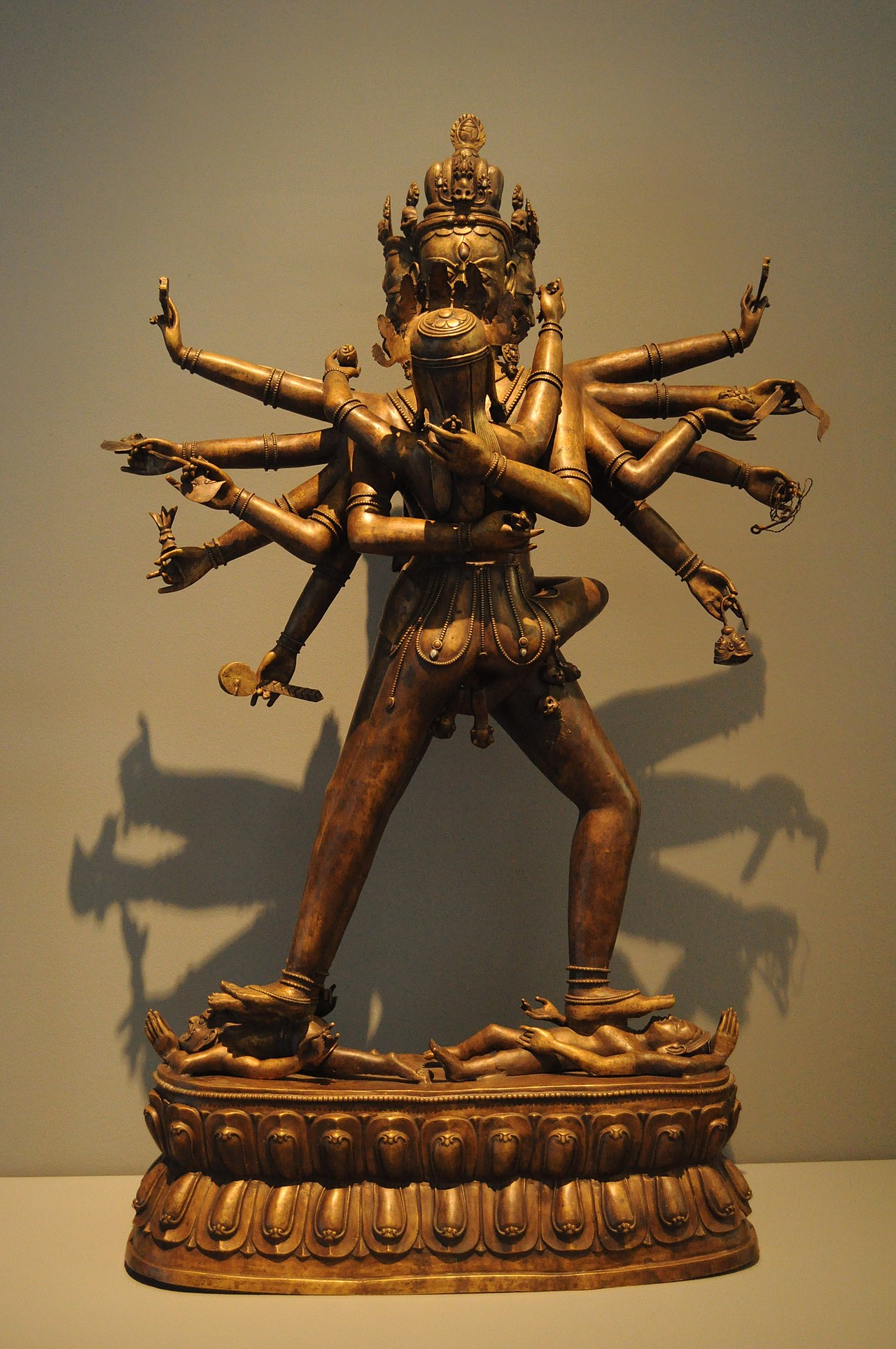


Core characteristics and practices
Vajrayana contains a range of ritual and contemplative techniques that supplement the moral and philosophical foundations of Mahayana. Common elements include mantras (sacred syllables), mudras (ritual gestures), mandalas (symbolic diagrams), deity yoga (visualization and identification with enlightened figures), and subtle-body practices aimed at transforming ordinary experience. These methods are often performed within a structured setting, with guidance from an authorized teacher and receiving an empowerment or initiation.
- Ritual and symbolism: elaborate visual and verbal forms used to reinforce insight and devotion.
- Transmission: emphasis on living lineages and instructor authorization.
- Speed: an aim to realize awakening more rapidly than some other paths.
Texts and languages
The Vajrayana tradition preserves a large corpus of tantric treatises and commentaries, many of which were composed in or translated into Sanskrit and later rendered into Tibetan. While its doctrinal foundations draw heavily on Mahayana sutras and Indian scholastic works, the canon and practice corpus differ from the Pali-based literature that underlies Theravada Buddhism. Scholarly and monastic literature in Vajrayana therefore tends to combine tantric manuals with broader Mahayana philosophy.
History and geographical spread
From its Indian roots, Vajrayana spread north and east into the Himalayan region and Central Asia. It became the dominant form of Buddhism in Tibet and influenced religious life in Tibet, Mongolia, and Bhutan. Medieval centuries saw institutional development, the formation of distinct schools and monastic systems, and a flowering of ritual arts. In the twentieth century political changes — including the annexation of Tibet by the People's Republic of China and the resulting exile of many teachers and communities — contributed to the international spread of Tibetan Vajrayana practices and teachings.
Schools, distinctions and contemporary presence
Vajrayana is commonly described as a third vehicle alongside Theravada and Mahayana, though the boundaries are porous and historical. Within Tibetan Buddhism several major schools preserve different emphases and lineages. Outside Asia, Vajrayana traditions have attracted interest for their ritual arts, meditation techniques, and devotional practices, while scholars and practitioners continue to explore ethical, cultural, and modern adaptations.
Notable facts: the tradition has produced an extensive visual culture (thangka painting, sand mandalas), distinctive liturgies and chant, and a rich teacher-disciple literature. For introductions, histories, and resources on practice one can consult academic overviews, monastic websites, and translations of classic tantric texts (see links for further reading): Pali context, tantric practices, and broader resources on Buddhism and regional cultures via Buddhism entries and regional histories.
For targeted study, readers may follow translations of primary texts and contemporary teacher commentaries, explore artistic and ritual examples in Himalayan museums and monasteries, or seek instruction from authorized teachers within established lineages.
Questions and answers
Q: What is Vajrayana?
A: Vajrayana is a school of Buddhism that originated in India and is sometimes called esoteric Buddhism.
Q: Where did Vajrayana spread to after being practiced in India?
A: Vajrayana spread to Tibet, Mongolia, and Bhutan.
Q: When did Tibetan Vajrayana Buddhism spread to many Western countries and gain popularity?
A: Tibetan Vajrayana Buddhism spread to many Western countries and gained popularity after the annexation of Tibet by the People's Republic of China in 1959.
Q: What are the three major schools of Buddhism?
A: The three major schools of Buddhism are Theravada, Mahayana, and Vajrayana.
Q: What is the relationship between Mahayana Buddhism and Vajrayana Buddhism?
A: Vajrayana Buddhism comes from Mahayana Buddhism.
Q: Does Vajrayana Buddhism have its own texts? If so, in what languages are they written?
A: Yes, Tibetan Vajrayana Buddhism has its own texts in the Tibetan and Sanskrit languages. It also contains the older Mahayana texts in Sanskrit and Theravada texts in the Pali language.
Q: What is another name for Vajrayana Buddhism in the West?
A: Another name for Vajrayana Buddhism in the West is Tantric Buddhism.
Related articles
Author
AlegsaOnline.com Vajrayana Buddhism: the Tantric or Diamond Vehicle Leandro Alegsa
URL: https://en.alegsaonline.com/art/103893