
Kagyu (Kagyü) school of Tibetan Buddhism
One of the main schools of Tibetan Buddhism, the Kagyu tradition emphasizes meditative transmission, the Mahamudra teaching, and lineages traced through experiential master–disciple transmission.
Overview
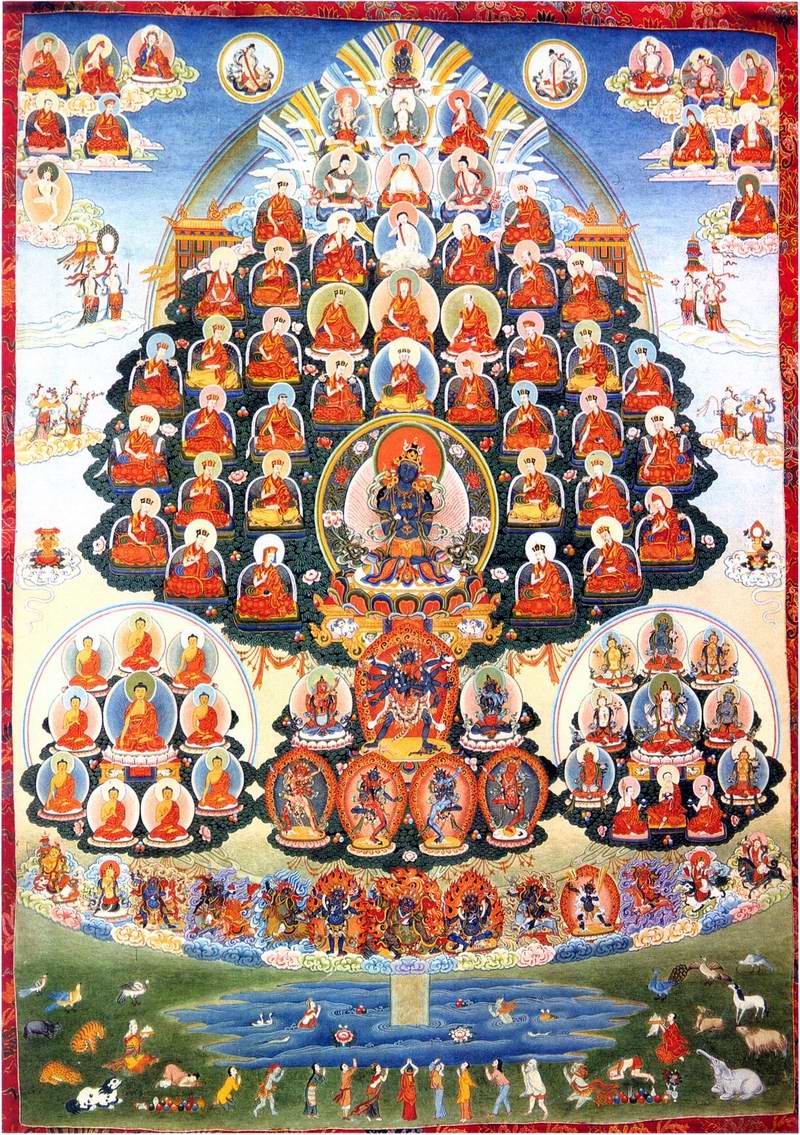
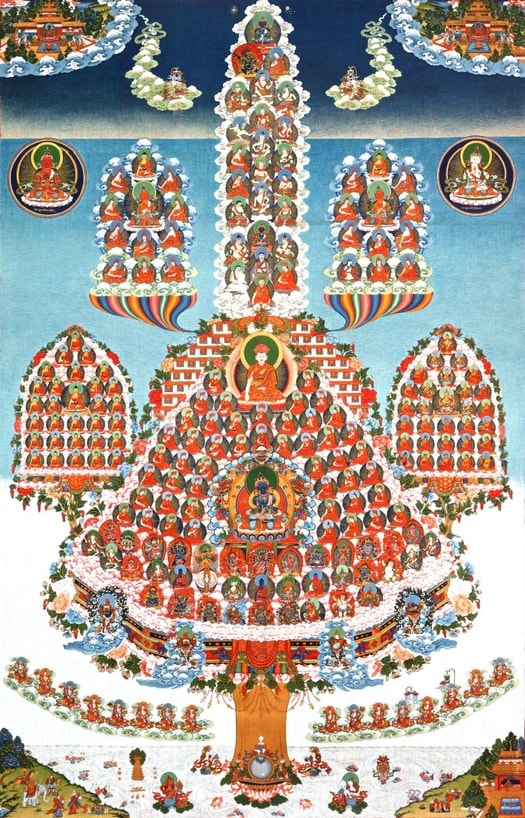
The Kagyu (or Kagyü) tradition is a major lineage within Tibetan Buddhism known for its focus on direct, experiential transmission of meditation practice from teacher to student. The name Kagyu is often rendered as “oral lineage” or “lineage of instruction,” reflecting a strong emphasis on personal guidance, meditative realization, and the role of the guru.
Image gallery
10 Images



History and development
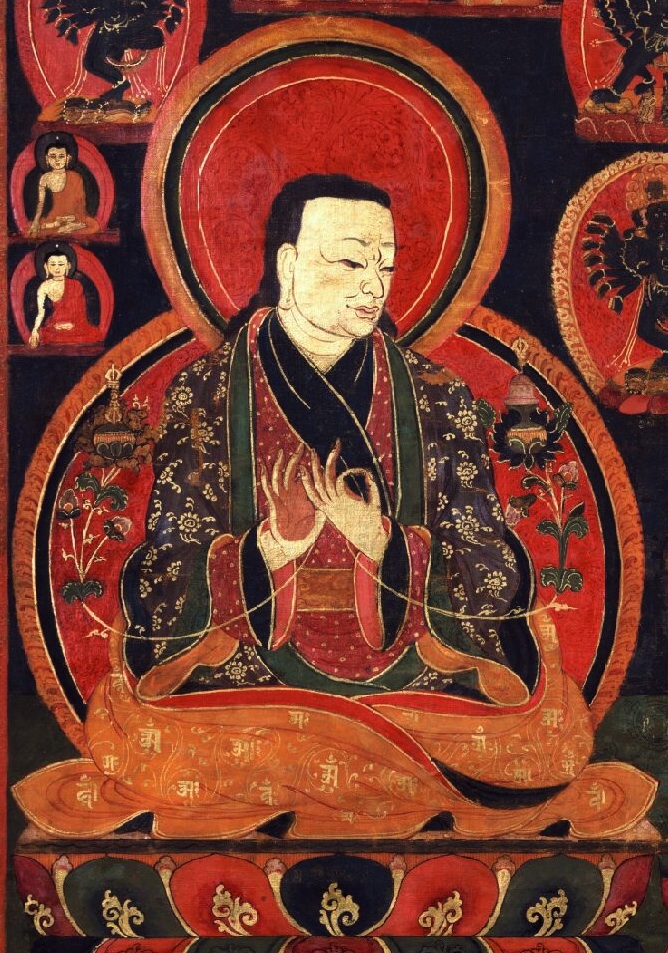
Kagyu traces its formative roots to Indian tantric adepts and early tantric masters who taught methods later transmitted into Tibet. Key figures in the early lineage include Tilopa and his principal student Naropa in India, and Marpa the Translator, who brought these teachings into Tibet. Marpa’s disciple Milarepa became a seminal exemplar of rigorous practice, and Gampopa synthesized the oral lineage with monastic scholarship, establishing recognizable Kagyu institutions in the 11th–12th centuries.
Teachings and practice
The tradition places special weight on practices designed to produce direct insight into the mind. Two central elements are:
- Progressive meditation instructions culminating in Mahamudra, a set of teachings aimed at recognizing the nature of mind.
- Advanced yogic practices inherited from Naropa, often called the Six Yogas, which include techniques for working with subtle body processes in tantric contexts.
Practitioners engage in a combination of guru devotion, analytical contemplation, and stabilizing meditation methods; both monastic and lay practitioners participate in these paths.
Lineages, institutions, and contemporary presence
Kagyu comprises several sub-lineages, each of which preserves particular lineal transmissions and institutional structures. Prominent branches include the Karma Kagyu, Drukpa Kagyu, Drikung Kagyu and others, each centered historically on important teachers and monasteries. The Karma Kagyu is widely known for its system of reincarnate lamas (tulkus). In the modern era Kagyu teachers and communities have established centers around the world, maintaining traditional retreat practices while adapting teaching formats for contemporary students.
Related articles
Author
AlegsaOnline.com Kagyu (Kagyü) school of Tibetan Buddhism Leandro Alegsa
URL: https://en.alegsaonline.com/art/51884