
Thurgood Marshall: Civil Rights Lawyer and First African American Supreme Court Justice
Overview of Thurgood Marshall (1908–1993): his life, legal career with the NAACP, landmark cases including Brown v. Board, judicial service, positions such as opposition to capital punishment, and lasting legacy.
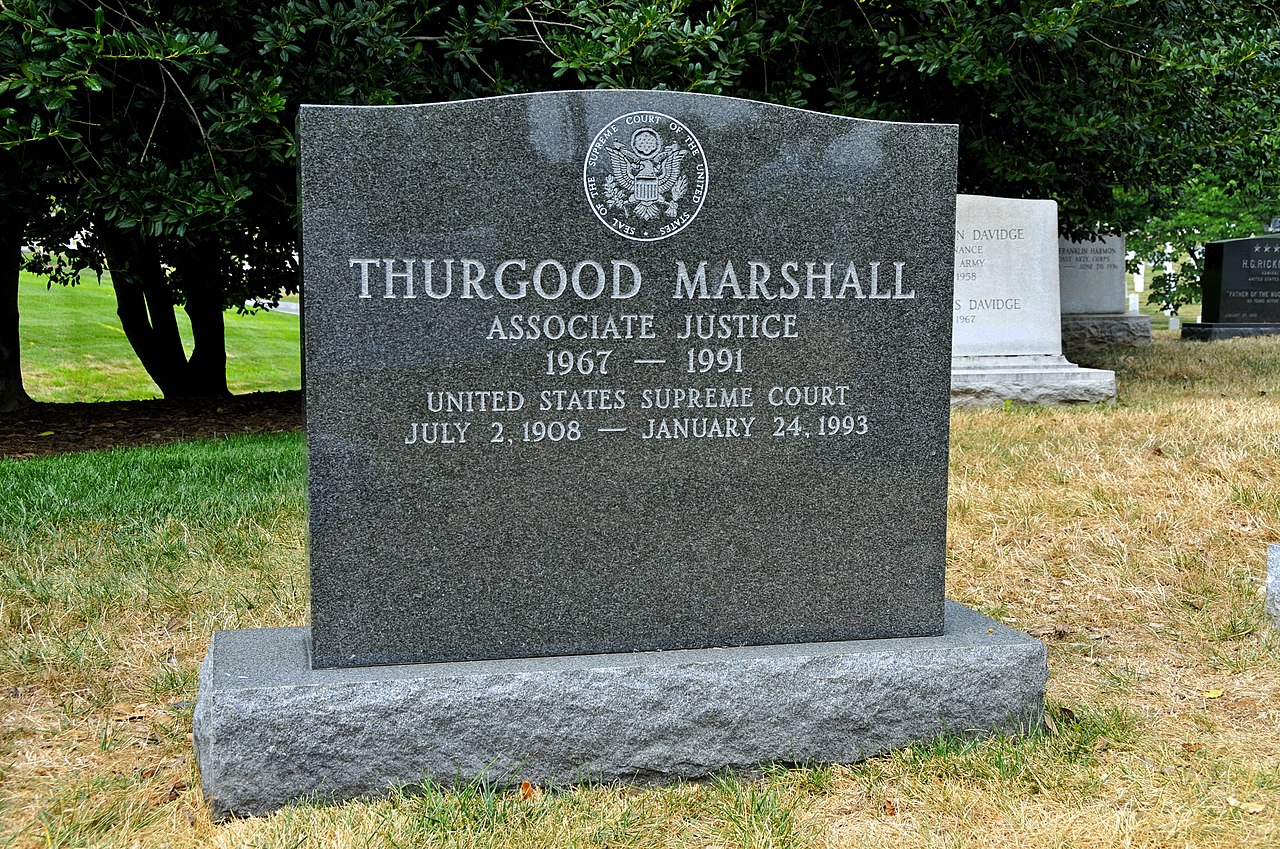
Thurgood Marshall (July 2, 1908 – January 24, 1993) was a prominent American lawyer, civil rights advocate and jurist who became the first African American to serve on the Supreme Court of the United States. Over four decades he moved from courtroom advocacy for racial equality to the nation’s highest bench, shaping constitutional law on civil rights, criminal procedure and equal protection. His career combined litigation, public service and a consistent emphasis on the practical effects of law for disadvantaged people.
Image gallery
10 Images



Early life and education
Born in Baltimore, Baltimore, in the state of Maryland, Marshall grew up in a working-class family that emphasized education and independence. Denied admission to the University of Maryland Law School because of racial segregation, he attended Lincoln University for undergraduate study and then enrolled at Howard University School of Law, where he studied under and worked with influential teacher and strategist Charles Hamilton Houston. Houston trained a generation of civil rights lawyers to use the federal courts and the Constitution as tools to challenge racial discrimination.
Legal career and the NAACP
Marshall joined the legal staff of the National Association for the Advancement of Colored People (NAACP) and later became the director-counsel of its Legal Defense and Educational Fund. He developed a litigation strategy that attacked segregation and discriminatory practices incrementally, relying on careful legal research and the Fourteenth Amendment’s equal protection guarantee.
- He argued and won many cases before state and federal courts challenging segregated education, voting restrictions, and racially biased criminal procedures.
- Among important precedents in which he played a central role were decisions dismantling the white primary and striking down discriminatory school policies, culminating in the school desegregation case Brown v. Board of Education.
- He also litigated voting-rights cases such as Smith v. Allwright, attacking exclusionary practices that kept Black citizens from meaningful participation in primary elections.
Marshall’s courtroom record attracted national attention. He argued numerous cases before the Supreme Court and recorded a high success rate in obtaining favorable rulings that expanded civil liberties and dismantled statutory and de facto segregation across the United States.
Judicial appointments and service
In the 1960s Marshall transitioned from advocacy to public office. He served on the United States Court of Appeals and was appointed Solicitor General of the United States, representing the federal government in the Supreme Court. His appointment as Solicitor General is a notable chapter in his career of public legal service; he later received nomination to the Supreme Court, where he served from 1967 until his retirement in 1991.
As a Justice, Marshall did not shy from dissent when he believed majority decisions undermined individual rights. He consistently defended expansive readings of the Constitution’s protections for defendants and minorities and opposed doctrines that he viewed as privileging states’ discriminatory practices over individual equality.
Philosophy, positions, and notable views
Marshall’s legal philosophy combined pragmatic concern for the real-life effects of law with a firm commitment to equal protection and civil liberties. He argued that constitutional rules must be enforced to give practical meaning to the promise of equal rights. Over time he also became a vocal opponent of capital punishment, contending that the death penalty was applied in arbitrary and discriminatory ways and therefore incompatible with constitutional principles of justice.
Marshall often expressed the moral aim that law should narrow the gap between legal equality and lived reality. One frequently cited formulation of his view insisted that the promise of equal rights must be turned into actual opportunity for children born into different circumstances — a challenge, in his words, central to American democracy.
Legacy and honors
Thurgood Marshall’s impact is visible in American law and public life: his litigation helped dismantle legal segregation, his opinions and dissents influenced criminal justice and civil liberties doctrine, and his presence on the Court symbolized a change in the nation’s institutions. He received honors during his lifetime for his legal work and civil rights leadership, and numerous schools, libraries and public programs bear his name as part of his continuing public legacy.
- He was awarded major recognitions for his civil rights work and leadership in the mid-20th century.
- His advocacy strategy remains a model for using litigation to achieve social change within constitutional frameworks.
- Public memorials and institutions — including schools named in his honor — commemorate his contributions to equality and justice.
Notable facts and further reading
Key milestones associated with Marshall’s life and work include his role as lead counsel for the NAACP in major civil rights litigation, successful arguments that helped end state-supported racial segregation in public schools, service as the federal government’s advocate before the Supreme Court, and his historic appointment to the Court itself. For succinct background on his Supreme Court tenure see the entry for the Supreme Court, and for primary cases he argued consult resources on Brown v. Board of Education and Smith v. Allwright. His service as Solicitor General and earlier appointments are also notable steps in his public career.
Marshall’s life story — from a segregated public school system to the highest court — remains an influential example of legal advocacy tied to social purpose. His work illustrates how litigation, public office and principled judicial service can combine to expand constitutional protection for historically marginalized groups.
For additional context about his Baltimore roots and formative years, see local histories of Baltimore and the state of Maryland, and consult collections of his papers and biographies for detailed chronologies of his cases and opinions.
Related articles
Author
AlegsaOnline.com Thurgood Marshall: Civil Rights Lawyer and First African American Supreme Court Justice Leandro Alegsa
URL: https://en.alegsaonline.com/art/99716