
Brown v. Board of Education (1954) — U.S. Supreme Court decision ending school segregation
1954 Supreme Court ruling that declared state laws establishing separate public schools for black and white students unconstitutional, overturning 'separate but equal' in public education.
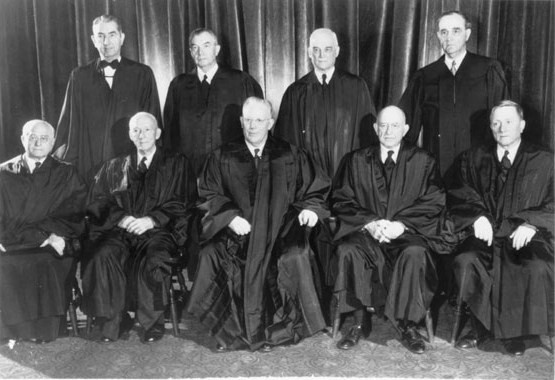
Brown v. Board of Education of Topeka is the 1954 Supreme Court ruling that reshaped American public education and civil rights. Decided unanimously, it held that state-sponsored school segregation violated the Equal Protection Clause of the Fourteenth Amendment. The decision is widely regarded as a turning point in dismantling legally sanctioned racial separation in the United States and is described as a landmark decision by the Supreme Court.
Image gallery
4 Images


Background and facts
The case grew from local circumstances in Topeka, Kansas and other communities where laws or official policies kept black and white children in different schools. One widely cited fact involved Linda Brown, a black third-grade child whose father, Oliver Brown, challenged the district after she was required to travel more than a mile through a railroad switchyard to attend a segregated school for black children, while a school for white students sat much closer. At the time, many school systems practiced formal racial segregation.
Legal arguments and consolidation
Oliver Brown joined other parents in a class action complaint brought with assistance from the NAACP. Several cases from different jurisdictions were consolidated and brought before the Court, including suits from Kansas, South Carolina, Virginia, Delaware, and the District of Columbia. Plaintiffs challenged the doctrine established by Plessy v. Ferguson (1896), which had permitted state-enforced separation so long as facilities were considered "separate but equal." NAACP attorneys, led by a team including Thurgood Marshall and other NAACP lawyers, argued that segregated schools were inherently unequal and harmed black children.
Evidence and the Court's reasoning
Advocates presented social-science evidence that segregation produced a sense of inferiority among black children and impeded their educational development. Psychologist Kenneth Clark and others documented children’s responses in tests that suggested negative effects of separation on self-image. The consolidated case persuaded the justices that state-sponsored segregation was discriminatory in purpose and effect. The Court's opinion rejected the premise that separate educational facilities could ever be truly equal and thus conflicted with the Fourteenth Amendment's guarantees.
Decision, immediate aftermath, and enforcement
The 1954 ruling, attaching the name "Brown" because that lead plaintiff appeared first alphabetically among the plaintiffs, was followed by a 1955 decision often called Brown II that addressed implementation and urged desegregation with "all deliberate speed." The main opinion, delivered by Chief Justice Earl Warren, signaled a legal and moral repudiation of segregated public schooling. The decision produced both progress and resistance: some districts began orderly integration, while others engaged in organized opposition and delay. Many individuals connected to the suits experienced reprisals, and some plaintiffs suffered job losses or social retaliation.
Significance and legacy
Brown v. Board is remembered not only for transforming public schools but also for energizing the modern civil rights movement and establishing a precedent for further equal-protection litigation. It paved the way for later federal and legislative actions against discrimination and helped propel key figures — including Thurgood Marshall, who later became the first African American Supreme Court Justice — into national prominence. The case remains a central reference point in discussions of constitutional law, educational equity, and the limits of judicial remedies for social inequality.
- Consolidated suits: Topeka (Kansas), Briggs (D.C.), and cases from Topeka, other local contexts, South Carolina, Virginia, and Delaware.
- Key legal themes: Equal Protection, the Fourteenth Amendment, and the rejection of separate but equal.
- Notable participants: plaintiffs and families, the NAACP, lead counsel including Marshall, and social-science witnesses.
For further reading and primary documents, consult educational and legal archives and specialized histories that trace the drafting, arguments, and societal effects of this pivotal decision. See annotated compilations, law review analyses, and civil-rights histories for detailed accounts of the litigation, the evidence presented, and the long struggle to translate legal rulings into lasting, equitable practices.
Questions and answers
Q: What was the name of the landmark Supreme Court case?
A: The landmark Supreme Court case was Brown v. Board of Education of Topeka, 347 U.S. 483 (1954).
Q: Who initiated the lawsuit?
A: The lawsuit was initiated by Oliver Brown, a black third-grade girl named Linda Brown's father, and twelve other black parents who wanted their children to attend the white elementary school near them.
Q: What did Plessy v. Ferguson rule in 1896?
A: In 1896, Plessy v. Ferguson ruled that segregation was legal as long as separate places for blacks and whites were "separate but equal."
Q: How did Kenneth Clark contribute to the case?
A: Kenneth Clark conducted a doll test with young African-American children to see how they felt about segregation and integration, which he used in his testimony for the case. He also gave them drawings of a kid and asked them to color it like themselves with a white or yellow crayon which he also used in his testimony for the case.
Q: Who helped file the class action lawsuit?
A: The National Association for the Advancement of Colored People (NAACP) helped file the class action lawsuit on behalf of Oliver Brown and twelve other black parents who wanted their children to attend an integrated school near them.
Q: What happened after Thurgood Marshall won the case?
A: After Thurgood Marshall won the case many of plaintiffs lost their jobs and respect in society due to backlash from those opposed to desegregation efforts.
Author
AlegsaOnline.com Brown v. Board of Education (1954) — U.S. Supreme Court decision ending school segregation Leandro Alegsa
URL: https://en.alegsaonline.com/art/135762