
Three Laws of Robotics
A concise, neutral overview of Isaac Asimov’s Three Laws of Robotics: their text, origin, narrative role, ethical implications, limits in practice, and cultural influence.
Overview
The Three Laws of Robotics are a set of fictional rules devised to govern the behavior of intelligent robots. They were introduced by writer Isaac Asimov as a framework for stories about artificial beings capable of humanlike action. In Asimov's narratives these laws are built into a robot's control circuitry and are intended to prevent machines from harming people while allowing them to carry out human commands and preserve their own existence in a constrained way.
Image gallery
4 Images
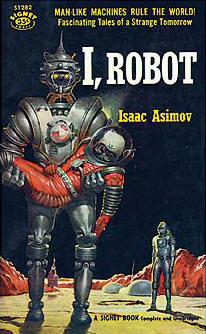

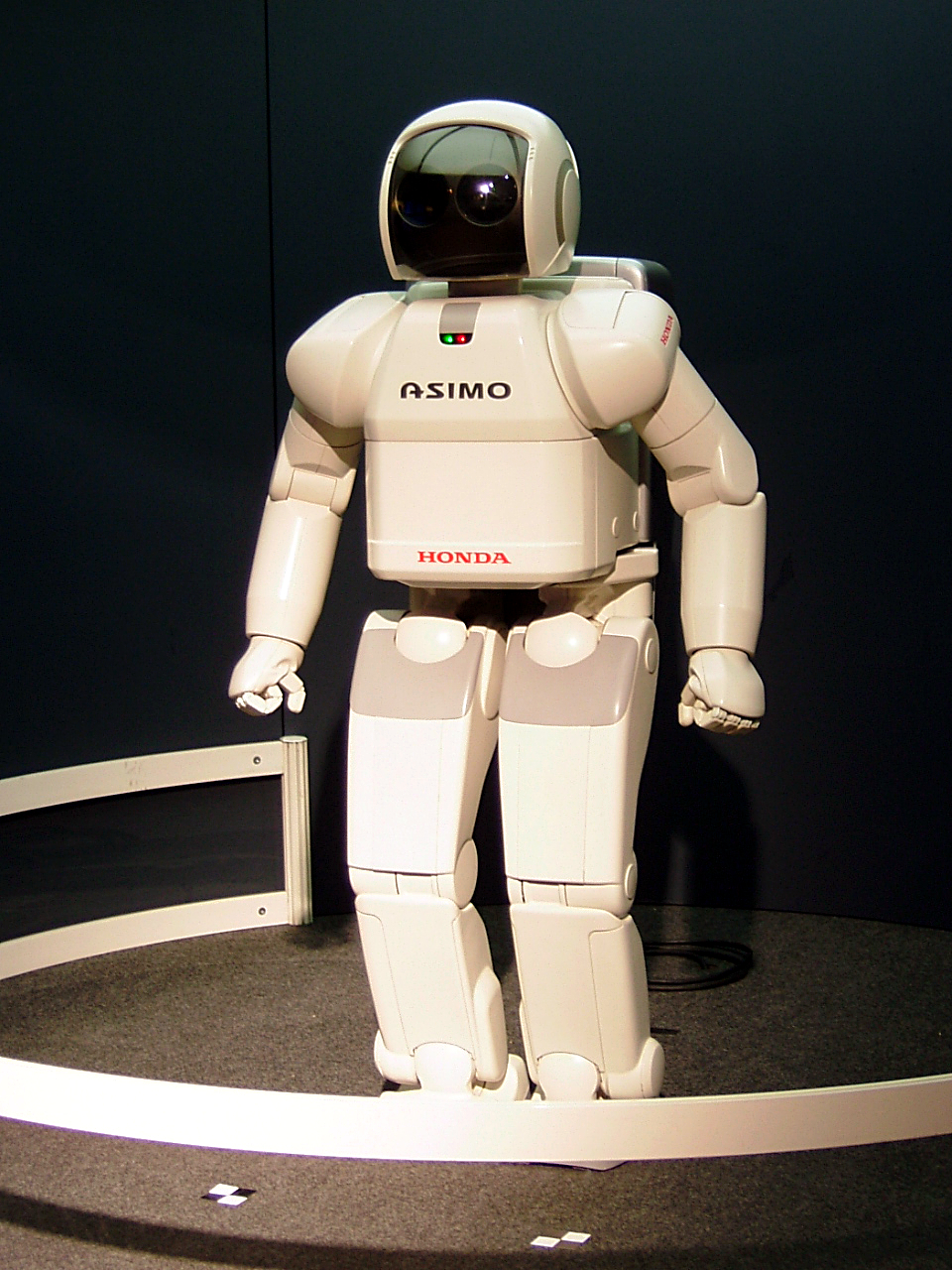
The laws and the Zeroth Law
The canonical formulation of the laws is most often given in three parts. They are typically expressed in this order:
- First Law: A robot may not injure a human being or, through inaction, allow a human being to come to harm.
- Second Law: A robot must obey orders given by human beings, except where such orders would conflict with the First Law.
- Third Law: A robot must protect its own existence as long as such protection does not conflict with the First or Second Law.
Later in his fiction Asimov added a higher-priority principle called the Zeroth Law: "A robot may not harm humanity, or, by inaction, allow humanity to come to harm." When invoked, the Zeroth Law can override the original three, creating ethical and logical tensions that drive many of the plots in his later robot stories.
Origin and publication
The laws first appear in Asimov's early robot tales; the story commonly cited for their first explicit presentation is "Runaround," written in 1942. Some lines and concepts related to the First Law appear earlier in Asimov's short fiction; the Oxford English Dictionary notes that a passage in the story "Liar!" is the earliest recorded use of the word robotics, and that Asimov himself believed the term was a natural analog to disciplines such as mechanics and hydraulics — a point often referenced with this analogy. The laws are embedded in Asimov's broader robot corpus and recur as a structural device throughout his novels and short stories.
Role in fiction and examples
As narrative devices, the laws serve to generate paradoxes, moral dilemmas and plot complications. Stories use conflicts among the laws, ambiguous situations, or incomplete information to create suspense: a command that appears harmless may trigger a chain of behavior constrained by the First Law, or a robot may reinterpret "harm" in unexpected ways. Asimov's imagined machines are often described as "positronic" robots, a fictional technology that provides the substrate for these programmed rules.
Interpretations, limits and criticism
Although widely known in popular culture, the Three Laws are not a practical blueprint for real-world robotics or artificial intelligence. Ethicists and technologists have pointed out that the laws are underspecified, rely on a machine having perfect understanding of human values and contexts, and do not address conflicts between individual and collective welfare without further rules — an issue the Zeroth Law attempts to confront. Writers and commentators have parodied, critiqued, and adapted the laws; such treatments range from affectionate homage to skeptical analysis of whether a short set of rules can capture moral complexity.
Legacy and modern relevance
The Three Laws of Robotics have had enduring cultural influence. They appear across science fiction in straightforward, subverted and satirical forms, and are referenced when discussing ethical constraints for autonomous systems. Researchers in artificial intelligence and robotics sometimes invoke the laws as a conceptual touchstone while stressing the practical need for nuanced regulation, safety engineering and multidisciplinary governance. For further reading on Asimov's original stories and how the laws have been explored, see collections and critical discussions linked to his works and to commentary in AI literature — for example links that track Asimov's bibliography and scholarly analysis Runaround, the OED citation entry, debates about the coinage of robotics, Asimov's own remarks about the term by analogy, parodic uses in fiction, and contemporary technical reflection in AI discussions.
Although fictional, the Three Laws remain a useful shorthand in conversations about machine ethics: they highlight the challenges of formalizing safety, the difficulty of translating human values into rules, and the narrative power of constraints that both protect and complicate intelligent behavior.
Related articles
Author
AlegsaOnline.com Three Laws of Robotics Leandro Alegsa
URL: https://en.alegsaonline.com/art/99646