
The Mark of Zorro (1920 film)
Silent 1920 swashbuckler starring Douglas Fairbanks, first screen adaptation of Johnston McCulley’s masked-hero story and the inaugural release through United Artists.
The Mark of Zorro is a 1920 silent adventure film that brought the newly created masked hero Zorro from page to screen. The movie adapts Johnston McCulley’s 1919 story "The Curse of Capistrano," which introduced the character, and it established many of the visual and narrative conventions associated with cinematic swashbucklers. The film stars Douglas Fairbanks in the lead and features Noah Beery in a prominent supporting role. The screenplay was adapted by Fairbanks (under the pseudonym "Elton Thomas") and Eugene Miller.
Image gallery
4 Images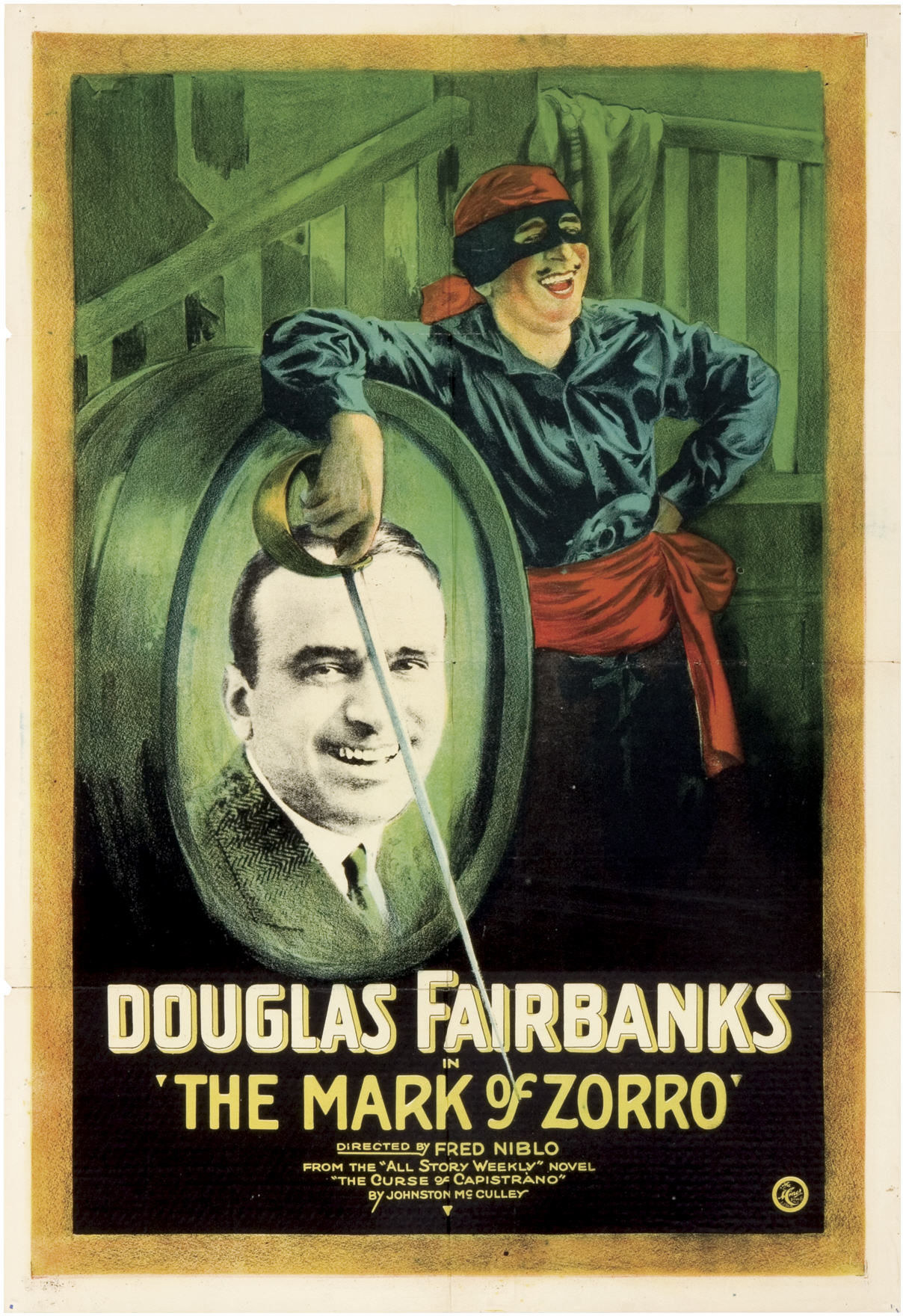


Overview and production
Produced by Douglas Fairbanks for his Douglas Fairbanks Pictures Corporation, the picture was notable for being the first release distributed through the newly formed United Artists, a company created by Fairbanks along with Mary Pickford, Charlie Chaplin and D. W. Griffith. As a silent movie, it relies on expressive physical acting, period sets, and intertitles to tell a tale of secret identities, romance and daring feats. Fairbanks’ energetic performance and athletic stunt work were central to the film’s appeal.
Characteristics and style
The Mark of Zorro exemplifies the swashbuckler: swordplay, horseback chases, daring rescues, and a clear moral oppositions between the masked hero and corrupt officials. As a silent film, it uses visual composition, costume and choreographed action to convey character and mood rather than spoken dialogue. Fairbanks’ interpretation emphasizes charm, acrobatics and showmanship, helping to define how masked adventurers would appear in later films and serials.
Cast, adaptation and credits
Douglas Fairbanks portrays the dual identity of the nobleman and the masked avenger; Noah Beery appears in a key supporting role. The transformation from McCulley’s story to screen was handled by Fairbanks and Eugene Miller, who streamlined the plot to showcase Fairbanks’ strengths as an action star. The film’s production values and star-driven promotion reflect the era’s studio practices and the growing influence of major performers in shaping their projects.
Reception, legacy and remakes
Upon release the film was popular with audiences and helped codify the cinematic Zorro as a heroic, swashbuckling figure. Its success contributed to the popularity of adventure films throughout the 1920s and influenced later portrayals of masked vigilantes. The movie was remade twice in widely seen studio versions: a 1940 adaptation starring Tyrone Power and a 1974 version starring Frank Langella. Over time the character inspired numerous other adaptations across film, radio, television and comics, becoming one of the enduring figures of popular culture.
Notable facts
- Silent film techniques such as intertitles and expressive pantomime carry the narrative.
- It was the first screen version of McCulley’s masked hero; the original story was published as The Curse of Capistrano in 1919.
- Douglas Fairbanks served as both star and producer, adapting the screenplay under the name Elton Thomas.
- The picture was the inaugural release through the artist-led distribution company United Artists.
- Co-founders of that company included Fairbanks, Mary Pickford, Charlie Chaplin and D. W. Griffith, a notable development in early Hollywood business history.
- Later studio remakes include a 1940 version starring Tyrone Power and a 1974 film featuring Frank Langella.
Today the 1920 The Mark of Zorro is remembered for kickstarting the cinematic life of Zorro and for showcasing Douglas Fairbanks’ athletic screen persona. It remains an important early example of star-driven production, the swashbuckler genre and the silent era’s capacity to create enduring popular icons.
Related articles
Author
AlegsaOnline.com The Mark of Zorro (1920 film) Leandro Alegsa
URL: https://en.alegsaonline.com/art/98418