
The Marriage of a Young Stockbroker (1971 film)
1971 American romantic comedy-drama directed by Lawrence Turman, adapted from Charles Webb's novel. Stars Richard Benjamin, Joanna Shimkus, Adam West, and Elizabeth Ashley; distributed by 20th Century Fox.
Overview
The Marriage of a Young Stockbroker is a 1971 American romantic comedy-drama directed by Lawrence Turman and adapted from a novel by Charles Webb. Released by 20th Century Fox, the film belongs to a strand of early 1970s cinema that mixed satirical humor with domestic drama to examine changing attitudes toward marriage and personal identity. While rooted in a literary source, the film presents its material through a blend of comic situations and more introspective moments.
Image gallery
1 Image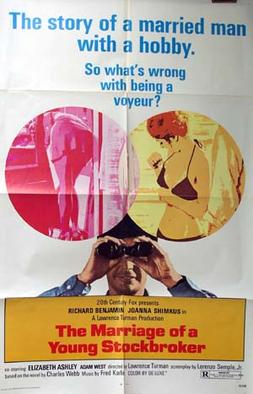
Cast
The picture features a small ensemble led by Richard Benjamin and Joanna Shimkus. Other principal performers include:
- Richard Benjamin — leading role
- Joanna Shimkus — leading role
- Adam West — supporting part
- Elizabeth Ashley — supporting part
Production and adaptation
The screenplay was derived from Charles Webb’s novel of the same name. Webb, who also authored the novel that inspired The Graduate, often explored the complications of relationships and social expectations, and this adaptation aimed to transfer that focus to a contemporary cinematic setting. Lawrence Turman was better known as a producer before moving into directing; his background influenced the film’s approach to performance and pacing.
Reception and legacy
On release the film attracted attention for its cast and its attempt to straddle comedy and more serious domestic concerns. It did not become a major landmark of the period and has remained a lesser-known entry in the filmographies of its principal artists. Contemporary and retrospective commentary tends to treat it as a period piece that reflects the transitional mood of American cinema and social attitudes in the early 1970s.
Themes and context
Broadly speaking, the film engages themes common to its era: the strains of marriage, questions of personal fulfillment, and the tensions between public roles and private desires. Its tone varies between light, situational comedy and more reflective passages, a balance that was typical of dramas attempting to appeal to mainstream audiences while addressing social change. For readers interested in related works, Charles Webb’s novels and films dealing with late 1960s–early 1970s social shifts provide useful context.
Related articles
Author
AlegsaOnline.com The Marriage of a Young Stockbroker (1971 film) Leandro Alegsa
URL: https://en.alegsaonline.com/art/98420