
Texas coral snake (Micrurus tener)
A concise encyclopedia entry on the Texas coral snake: appearance, behavior, venom, range, identification tips, and human interactions, with notes on mimic species and conservation.
Overview
The Texas coral snake is a small, secretive elapid best known for its bright ringed coloration and potent neurotoxic venom. Scientifically referred to as Micrurus tener, it inhabits parts of Texas and adjacent regions of northeastern Mexico. Historically it has sometimes been treated as a subspecies of the eastern coral snake, but it is commonly recognized as a distinct taxon in modern field guides.
Image gallery
4 Images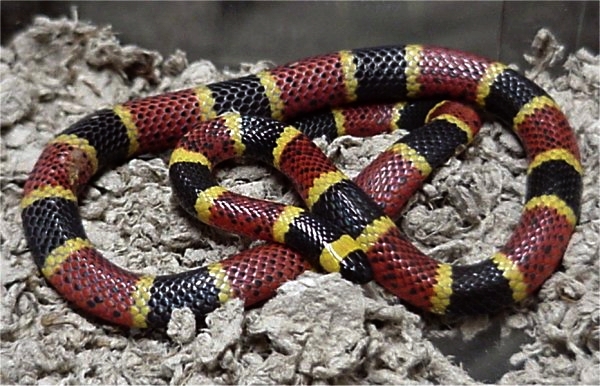


Identification
Adults are relatively slender and typically reach modest lengths compared with many North American snakes. Their most distinctive feature is the pattern of alternating colored bands—usually red, black, and yellow or white. In the United States, an often-cited rhyme helps distinguish true coral snakes from similar-looking harmless species: "red touch yellow, kill a fellow; red touch black, friend of Jack." This rule applies to mainland North American coral snakes but should be used cautiously and never as a substitute for keeping a safe distance.
Behavior and habitat
Texas coral snakes are primarily nocturnal and secretive. They spend much of their time concealed in leaf litter, under logs, or in burrows and are more frequently encountered during warm, humid nights. Typical habitats include pine and mixed woodlands, sandy soils, scrub, and the edges of wetlands. They are not aggressive and will usually retreat if given the opportunity.
Diet and reproduction
These snakes prey on small reptiles and other snakes, using a combination of stealth and a quick bite to subdue prey. Like other coral snakes, they are oviparous, laying eggs that hatch young resembling the adults. Reproductive timing and clutch size vary with local climate and conditions.
Venom and human safety
The Texas coral snake has a primarily neurotoxic venom that affects the nervous system. Bites are relatively rare because of the snake's reclusive habits and small mouth, but envenomation can be serious and may require antivenom and supportive medical care, including respiratory support in severe cases. For general information on medically important species, see resources about venomous snakes. The best precautions are avoidance, not handling, and keeping pets and children away from suspected coral snakes.
Conservation and notable facts
Populations are affected locally by habitat loss, fragmentation, and road mortality, though the species is not regarded as imminently endangered across its entire range. A notable ecological point is the presence of common mimic species—such as certain kingsnakes and milk snakes—that imitate coral snake banding as a defensive strategy. This mimicry can complicate identification for the casual observer and underscores the value of treating any unfamiliar, brightly banded snake with caution.
Related articles
Author
AlegsaOnline.com Texas coral snake (Micrurus tener) Leandro Alegsa
URL: https://en.alegsaonline.com/art/97290